






Table of Content
- What is Mobile App Development?
- Primary Approaches of Mobile App Development
- What is the Importance of Mobile App Development?
- Understanding Mobile App Development Process
- 1. Idea Generation and Research
- 2. Planning and Requirements Analysis
- 3. UI/UX Design
- 4. Technical Feasibility Assessment
- 5. Development
- 6. Mobile App Testing
- 7. Deployment and Distribution
- How to Outsource Mobile App Development?
- What Are The Best Mobile App Development Platforms?
- How Much Does it Cost to Build an App From Scratch?
- Conclusion
Creating a mobile app may seem complex, but with the right steps, anyone can start. First, decide what your app will do—whether it’s for fun, business, or daily tasks.
Next, choose a platform like Android or iOS. Then, select a programming language such as Java, Kotlin, or Swift. You’ll also need development tools like Android Studio or Xcode.
Good app design is important. Focus on user experience (UX) and user interface (UI) so the app is easy to use and looks clean.
Testing your app before launch ensures everything works smoothly. With practice and the right resources, mobile app development becomes a rewarding skill that helps you bring your ideas to life.
Key Takeaways
- The article highlights the importance of mobile apps in today’s digital landscape and how they have become integral for businesses to engage with their customers effectively.
- You need to perform careful planning and strategy before embarking on a mobile app development project.
- We will discuss in detail about various platforms available for mobile app development, such as iOS and Android, and emphasizes the importance of choosing the right platform based on the target audience and business objectives.
- It delves into the key considerations for designing a user-friendly and intuitive mobile app interface, including responsiveness, ease of navigation, and visual aesthetics.
- The article highlights the significance of incorporating essential features and functionalities into the app, such as push notifications, social media integration, and in-app purchases, to enhance user engagement and drive business growth.
What is Mobile App Development?
Mobile app development is the process of making software applications that run on mobile devices like smartphones, tablets, and smartwatches. These apps are built for operating systems such as iOS and Android.
The process includes several steps—planning the idea, designing how the app will look and work, writing the code, testing it to fix any issues, and finally launching it for users.
Developers also need to maintain and update the app regularly. Good mobile app development focuses on creating apps that are easy to use, work well on different devices, and provide a smooth user experience.
Primary Approaches of Mobile App Development
Mobile app development can be divided into two main categories: native app development and cross-platform app development.
Native App Development
Native app development is the process of building mobile applications specifically for one operating system, like iOS or Android. For example, developers use Swift or Objective-C to build iOS apps and Java or Kotlin for Android apps.
Since native apps are designed for a particular platform, they can use the device’s full features like camera, GPS, and notifications. This makes the app faster, smoother, and more reliable for users.
Working with a trusted mobile app development company can help ensure your app meets platform standards and offers a great user experience. Native apps follow the design rules of their platform, making them look and feel natural to users.
Choosing native app development is ideal if performance, speed, and quality are top priorities for your mobile app. It may take more time and effort, but it often leads to better results for both businesses and users.
Advantages of Native App Development
- Performance: Native apps are optimized for the specific platform, resulting in faster performance and smoother user interactions compared to other types of apps.
- Access to platform features: Native development allows direct access to platform-specific features, such as camera, GPS, contacts, and notifications, enabling developers to create richer and more integrated app experiences.
- User experience: Native apps can provide a seamless and intuitive user experience, as they are designed according to the platform’s UI guidelines, ensuring familiarity and consistency for mobile app users.
- Offline capabilities: Native apps can store data locally, allowing users to access certain features and content even without an internet connection.
However, native app development also has some challenges:
- Development time and cost: Building separate native apps for multiple platforms (e.g., Android and iOS) can require additional time and resources compared to cross-platform development approaches.
- Maintenance: As each platform requires its own codebase, maintaining and updating native apps for multiple platforms can be more complex and time-consuming.
- Learning curve: Developing native apps often requires platform-specific knowledge and programming languages, which may require developers to learn and adapt to different technologies.
- Limited reach: Native apps are platform-specific, meaning they can only run on the operating system they were developed for. This can limit the potential audience and reach of the application.
Despite these challenges, native app development remains a popular choice for building mobile apps that are high-performance and feature-rich applications that deliver an optimal user experience on specific platforms.
Native apps have the advantage of being able to access all the features and capabilities of the underlying operating system, resulting in high performance and seamless integration with the device.
Develop High-Performing Mobile Apps using React Native
We have a team of top-notch mobile app developers that are expert in building engaging cross-platform mobile apps that are tailored to your unique business goals.
Cross-Platform App Development
- Cross-platform mobile apps are built using frameworks and tools that allow developers to write code once and deploy it across multiple platforms.
- Cross-platform app development refers to the process of creating mobile applications that can run on multiple operating systems or platforms, such as iOS, Android, and Windows, using a single codebase. It allows developers to write the application’s code once and deploy it on various platforms, saving time and effort compared to developing separate apps for each platform.
Cross-platform mobile app development frameworks provide a layer of abstraction that enables developers to develop mobile apps using common programming languages, libraries, and tools.
These frameworks facilitate the creation of platform-agnostic apps that can access native device features and functionalities.
There are several popular cross-platform app development frameworks available, including:
- React Native: Developed by Facebook, React Native uses JavaScript and allows developers to build native-like apps for iOS and Android using a single codebase. So, you need to be aware of React Native best practices to make your mobile application development easier.
- Flutter: Developed by Google, Flutter utilizes Dart programming language and offers a rich set of customizable UI components, enabling developers to build high-performance apps for multiple platforms.
- Xamarin: Owned by Microsoft, Xamarin uses C# and .NET framework, providing a comprehensive toolset for developing cross-platform apps that have a native look and feel.
- Ionic: Based on web technologies like HTML, CSS, and JavaScript, Ionic allows developers to build hybrid mobile apps that can run on various platforms using a single codebase.
Benefits of cross-platform app development include:
- Code Reusability: Developers can write code once and reuse it across multiple platforms, saving time and effort in the development process.
- Cost-Effectiveness: Building a single cross-platform app reduces development costs compared to creating a separate native mobile app for each platform.
- Faster Time to Market: Cross-platform development enables simultaneous deployment on multiple platforms, reducing the time it takes to reach a broader user base.
- Maintainability: With a single codebase, updates and bug fixes can be applied more efficiently, as changes are reflected across all platforms simultaneously.
However, cross-platform app development also has some considerations. As cross-platform frameworks provide an abstraction layer, they may not offer the same level of performance or access to platform-specific features as native development.
Additionally, some advanced or specialized functionalities may require platform-specific development.
Therefore, the choice between cross-platform and native development depends on factors such as project requirements, target audience, and development resources available.
Examples of popular cross-platform development frameworks include React Native, Flutter, and Xamarin.
Cross-platform development offers the advantage of code reusability and faster development cycles, as a single codebase can be used for multiple platforms.
Mobile app development involves a range of technologies and tools such as integrated development environments (IDEs), software development kits (SDKs), APIs, and cloud services.
These tools enable developers working with a leading mobile app development company to create engaging and feature-rich mobile applications that cater to various purposes, including entertainment, productivity, communication, e-commerce, social networking, and more.
We’re Expert in Delivering Best Cross-Platform App Development Solutions
Our team of talented mobile app developers are proficient in using cross-platform technologies to build apps for your business solutions.
What is the Importance of Mobile App Development?
Mobile app development is of significant importance in today’s digital era. Here are some key reasons why mobile app development is important:
- Ubiquitous Mobile Usage: Mobile devices, such as smartphones and tablets, have become an integral part of people’s lives. The majority of individuals rely on most mobile apps for various purposes, including communication, entertainment, information, productivity, shopping, and more. Unlike web apps, developing mobile apps allows businesses to reach and engage with a vast user base.
- Enhanced Customer Experience: Mobile apps provide a personalized and convenient user experience. They can be tailored to meet specific user preferences, deliver relevant content, and offer seamless interactions. By offering a well-designed and user-friendly app, businesses can enhance customer satisfaction, loyalty, and retention.
- Increased Market Penetration: With mobile apps, businesses can tap into the rapidly growing mobile market. Mobile devices have a global reach, and by developing apps, mobile app development companies can expand their market presence beyond geographical boundaries. This allows them to reach a larger audience and potentially increase their customer base.
- Competitive Advantage: Mobile app development can provide a competitive edge in the market. If a business offers a well-designed, feature-rich app that meets user needs, it can stand out from competitors and attract more customers. By staying ahead of the curve in terms of technology and user experience, businesses can differentiate themselves in the market by delivering a successful app.
- Direct Marketing Channel: Mobile apps serve as a direct marketing channel for businesses. They enable direct communication with users through push notifications, in-app messages, and personalized offers. This direct access allows companies to deliver targeted marketing campaigns, promote products or services, and keep customers informed about updates, discounts, or new releases.
- Data and Analytics: Mobile apps provide valuable insights into user behavior and preferences. By collecting and analyzing user data, businesses can gain valuable insights to refine their mobile app development strategy, improve customer experiences, and make data-driven decisions. This information can be used to optimize app performance, enhance user engagement, and identify new business opportunities.
- Revenue Generation: Mobile apps offer various monetization opportunities for businesses. They can generate revenue through in-app purchases, subscriptions, advertisements, or by offering premium features. Developing a successful and popular app using leading frameworks can become a significant source of income for businesses.
- Streamlined Business Operations: Mobile apps are not only beneficial for customer-facing activities but also for internal business operations. They can be used for managing inventory, tracking sales, streamlining workflows, improving communication, and increasing productivity. Mobile apps can automate processes, reduce manual efforts, and enhance overall operational efficiency.
Mobile app development is essential for businesses to connect with users, enhance customer experiences, expand market reach, gain a competitive advantage, and optimize business operations.
It has become a crucial aspect of mobile app strategy for organizations across various industries.
Understanding Mobile App Development Process
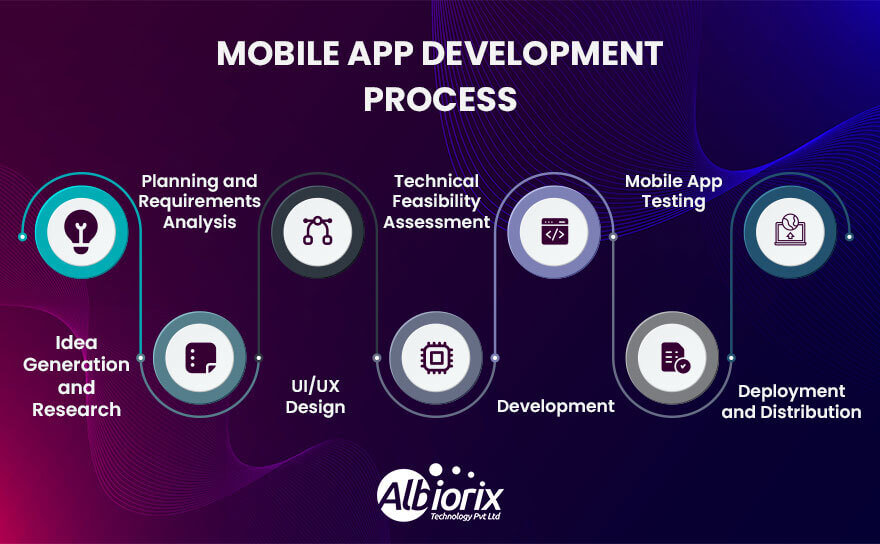
Mobile app development is a complex process that involves several stages, from conceptualization to deployment. Here’s a detailed explanation of the mobile app development process:
1. Idea Generation and Research
The idea generation and research stage of mobile app development is a crucial phase where mobile app developers and stakeholders explore and refine their ideas for a new mobile application.
This stage involves brainstorming, researching the market, and gathering information to lay a solid foundation for the mobile app development process. Here are the key steps involved in this stage:
- Identify the Problem:The first step is to identify the problem or need that the mobile app aims to address. This could be a gap in the market, a user pain point, or an opportunity to improve an existing process or service.
- Brainstorming and Ideation: Once the problem is identified, it’s time to generate ideas. This involves brainstorming sessions with stakeholders, mobile app developers, designers, and potential users. The goal is to generate a wide range of ideas that could potentially solve the identified problem.
- Feasibility Analysis: After brainstorming, it’s important to evaluate the feasibility of each idea. This analysis considers factors such as technical feasibility, market potential, target audience, development resources, and potential competition. The aim is to shortlist the most viable and promising ideas for further research.
- Market Research: Research the target market to understand user preferences, behavior, and existing solutions. This involves studying competitors’ apps, analyzing user reviews, conducting surveys or interviews, and gathering data on market’s mobile app development trends and demands. The insights gained from market research help refine the app idea and make it more relevant and competitive.
- User Persona Development: Create user personas or profiles that represent the target audience. User personas help in understanding users’ needs, preferences, and behaviors, which influence the mobile app design process and app’s functionality. This step ensures that the app caters to the specific needs of the intended users.
- User Journey Mapping: Visualize the user’s journey within the app by creating user journey maps. This involves outlining the steps users will take, their interactions with the app, and their goals at each stage. User’s app development journey mapping helps identify pain points, opportunities for improvement, and areas where the app can provide value to users.
- Feature Definition: Based on the research and analysis conducted, define the core features and functionalities of the mobile app. Prioritize the features that align with the app’s purpose, user needs, and market demands. This step helps create a clear roadmap for the development process.
- Proof of Concept: Develop a proof of concept (POC) or a minimum viable product (MVP) to validate the feasibility and viability of the mobile app idea. The POC/MVP focuses on implementing the essential features to showcase the concept to potential investors, stakeholders, or early mobile users for feedback and validation.
- Documentation: Document all the findings, research outcomes, user personas, feature definitions, and other relevant information. This documentation serves as a reference point for the hybrid app development team and helps maintain a clear understanding of the app’s goals and requirements throughout the development process.
The idea generation and research stage is essential for laying a strong foundation for the mobile app development process.
It helps define the purpose, target audience, and core features of the app, ensuring that the development effort is focused, relevant, and aligned with user needs and market demands.
2. Planning and Requirements Analysis
The Planning and Requirements Analysis phase is a crucial step in the mobile app development process.
During this phase, the development team works closely with stakeholders, such as clients, users, and business analysts, to gather and analyze the necessary information to understand the app’s purpose, objectives, and target audience.
Here’s a breakdown of the key activities involved in this phase:
- Goal Identification: The development team collaborates with the client to determine the project’s goals and objectives. They define what the app aims to achieve, such as increasing sales, improving user experience, or enhancing productivity.
- Stakeholder Analysis: The team identifies and analyzes the stakeholders who will be involved in or impacted by the app development. This includes end-users, administrators, managers, and any other individuals or groups relevant to the app’s success.
- Market Research: The team conducts a thorough analysis of the target market to identify user needs, preferences, and competitors. This research helps in understanding the competitive landscape, industry trends, and potential opportunities for the app.
- User Requirements Gathering: The team collects detailed requirements from end-users by conducting interviews, surveys, or focus groups. They aim to understand user expectations, pain points, and the specific features and functionalities desired in the app.
- Functional and Non-functional Requirements Definition: Based on the gathered information, the team defines both functional requirements (what the app should do) and non-functional requirements (performance, security, scalability, etc.). Functional requirements include specific features, workflows, user interactions, and integration with external systems. Non-functional requirements focus on quality attributes and constraints.
- Use Case Development: Use cases are created to describe the interactions between users and the app. These use cases help visualize the app’s flow and functionalities from the user’s perspective, providing a clear understanding of how users will interact with the app.
- User Experience (UX) Design: UX designers create wireframes, mockups, or prototypes to visualize the app’s user interface (UI) and interactions. This helps stakeholders and developers to have a tangible representation of the app’s look and feel, facilitating feedback and iteration.
- Technical Feasibility Assessment: The development team evaluates the technical feasibility of the app by assessing factors such as the chosen platform (iOS, Android, cross-platform), required integrations, performance expectations, and potential risks or constraints.
- Project Scope and Constraints: Based on the gathered requirements and technical assessment, the team establishes the project’s scope, outlining the features and functionalities that will be included in the initial version of the app. They also define any mobile app development project constraints, such as budget, timeline, or resource limitations.
- Documentation: Throughout the Planning and Requirements Analysis phase, all the gathered information, including user requirements, use cases, wireframes, and technical assessments, is documented in detail to serve as a reference for the development team and to ensure everyone involved has a shared understanding of the app’s requirements.
By the end of the Planning and Requirements Analysis phase, the development team should have a comprehensive understanding of the app’s purpose, user requirements, technical feasibility, and project scope.
This knowledge serves as the foundation for the subsequent phases of mobile app development, such as design, development, testing, and deployment.
Create a Robust and Responsive Mobile App With Us
Albiorix is a one-stop solution for mobile app development as we have a team of mobile app development experts to provide you with cost-effective solutions.
3. UI/UX Design
The UI/UX design process for mobile app development involves creating an intuitive and visually appealing interface that enhances the overall user experience.
It focuses on understanding user behavior, preferences, and needs to design a mobile app that is easy to use, visually appealing, and engaging.
Here are the key steps involved in the UI/UX design process for mobile app development:
Research and Analysis
- User Research: Conduct research to understand the target audience, their demographics, preferences, and behaviors. This includes analyzing user personas, conducting surveys, interviews, and usability testing.
- Competitive Analysis: Study and analyze similar mobile apps in the market to identify strengths, weaknesses, and opportunities for differentiation.
- Market Research: Gain insights into the market trends, user expectations, and emerging design patterns.
User Flows and Information Architecture
- Create user flows: Define the various paths users can take within the app to accomplish their tasks or goals.
- Information Architecture: Organize and structure the app’s content and features in a logical and intuitive manner. This involves creating wireframes or prototypes to visualize the app’s structure and navigation.
Wireframing and Prototyping
- Wireframing: Develop low-fidelity wireframes that outline the app’s layout, content placement, and basic interactions. These wireframes serve as a blueprint for the app’s design.
- Prototyping: Create interactive prototypes using tools like Sketch, Figma, or Adobe XD to simulate user interactions and test the app’s functionality. This helps in validating the design and gathering user feedback.
Visual Design
- UI Design: Develop the visual elements of the app, including the color scheme, typography, iconography, and overall visual style. Maintain consistency across different screens and ensure that the design aligns with the app’s branding and target audience.
- Visual Assets: Create high-fidelity designs for each screen of the app, including detailed visual elements and graphics.
Usability Testing
- Testing With Representative Sample: Conduct usability testing sessions with a representative sample of the target audience. Observe and analyze how users interact with the app, identify pain points, and gather feedback on the design and user experience.
- Design Based Iterate and refine the design based on the insights gathered from usability testing.
Development Handoff
- Prepare design specifications and guidelines for developers, including style guides, asset libraries, and any interactive prototype.
- Ensure clear communication and collaboration between designers and developers to ensure a smooth implementation of the design.
Post-Launch Evaluation
- Monitor user feedback and app analytics after the app is launched to identify areas for improvement and gather insights for future updates.
- Continuously iterate and enhance the UI/UX design based on user feedback, market trends, and evolving user needs.
It’s important to note that the UI/UX design process may vary depending on the project scope, team structure, and development methodology.
However, these steps provide a general overview of the typical UI/UX design process for mobile app development.
4. Technical Feasibility Assessment
Technical Feasibility Assessment is an evaluation of the viability and practicality of developing a mobile app from a technical perspective.
It involves analyzing various factors to determine whether the proposed app can be successfully developed, implemented, and maintained within the available resources and constraints.
Here are the key aspects typically considered in a technical feasibility assessment for mobile app development:
- Platform Compatibility: Determine the target platforms for the app (e.g., iOS, Android) and assess the compatibility of the proposed app concept with those platforms. Consider platform-specific requirements, such as operating system versions, hardware capabilities, and software development frameworks.
- App Functionality: Evaluate the technical feasibility of implementing the desired features and functionalities within the app. Consider the complexity of the app’s requirements, including user interfaces, data processing, integration with external systems, and any specialized functionalities.
- Technical Expertise: Assess the availability of the necessary technical skills and expertise within the development team or the entire mobile app development agency. Consider the required programming languages, frameworks, libraries, and tools for building the app, as well as any specialized knowledge needed for specific functionalities or integrations.
- Data Management and Security: Evaluate the feasibility of handling and managing data within the app. Consider aspects such as data storage, retrieval, synchronization, and security. Identify potential risks and compliance requirements related to data privacy and security, and determine whether the necessary measures can be implemented effectively.
- Performance and Scalability: Analyze the app’s performance requirements and assess whether the proposed solution can meet those requirements. Consider factors such as response times, resource utilization, network connectivity, and potential bottlenecks. Evaluate the scalability of the app to accommodate growing user bases and increasing data loads.
- Integration and APIs: Assess the feasibility of integrating the app with external systems, services, or APIs. Determine whether the required integrations are technically feasible and if the necessary documentation, support, or access is available from the third-party providers.
- Development Tools and Infrastructure: Evaluate the availability and suitability of development tools, software frameworks, testing frameworks, and infrastructure required for the app development process. Consider factors such as development environments, version control systems, continuous integration/delivery systems, and testing devices or emulators.
- Maintenance and Updates: Consider the long-term sustainability of the app. Assess the feasibility of maintaining and updating the app over time, including bug fixes, compatibility with future platform updates, and the availability of resources for ongoing support and enhancements.
5. Development
The development phase of mobile app development is the stage where the actual coding and implementation of the app takes place. It involves transforming the app concept and design into a fully functional mobile application.
Here are the key steps involved in the development phase:
- Requirement Analysis: The development phase begins with a thorough analysis of the app requirements gathered during the earlier stages. The development team reviews the functional and non-functional requirements, user stories, wireframes, and design specifications to gain a clear understanding of what needs to be built.
- Technical Design and Architecture: Based on the app requirements, the development team creates a technical design and architecture for the mobile app. This involves selecting the appropriate programming languages, frameworks, and tools, and defining the overall structure of the application, including the database, UI components, and backend systems.
- Front-end Development: In this step, the user interface (UI) and user experience (UX) design elements are implemented. The development team focuses on creating the app screens, layouts, navigation flows, and interactive elements using programming languages like Swift (for iOS) or Java/Kotlin (for Android). They also integrate any required third-party libraries or frameworks for UI components or functionality.
- Back-end Development: If the mobile app requires server-side functionality, the back-end development takes place. This involves building the server-side infrastructure, APIs, and databases necessary for the app’s functionality. The development team may use programming languages like Node.js, Python, Ruby, or others, along with frameworks such as Express, Django, or Ruby on Rails.
- Integration and Testing: Once the front-end and back-end components are developed, they need to be integrated and tested. This involves connecting the app’s UI with the server-side components and ensuring proper data exchange and functionality. Various testing techniques, such as unit testing, integration testing, and user acceptance testing, are performed to identify and fix any bugs or issues.
- Performance Optimization: During this phase, the app’s performance is optimized to ensure smooth and efficient operation. This includes optimizing code, minimizing network requests, reducing loading times, and optimizing resource usage to enhance the overall user experience. Performance testing and profiling tools may be used to identify and address bottlenecks or performance issues.
- Quality Assurance and Bug Fixing: The development team conducts comprehensive testing to identify and fix any bugs or usability issues in the app. This includes functional testing, usability testing, compatibility testing across devices and operating systems, security testing, and performance testing. Bugs and issues are logged, prioritized, and addressed through iterative bug fixing and code improvements.
- Deployment and Distribution: Once the app has undergone thorough testing and all major issues are resolved, it is prepared for deployment. The app is packaged into the appropriate format (APK for Android, IPA for iOS) and submitted to the respective app stores (Google Play Store, Apple App Store) for distribution. The development team ensures compliance with app store guidelines and handles any necessary app signing or certification processes.
- Maintenance and Updates: After the initial release, the development team continues to provide maintenance and support for the app. This includes addressing user feedback, fixing bugs, releasing updates with new features or enhancements, and ensuring compatibility with new device or platform updates.
Create a Robust and Responsive Mobile App With Us
Albiorix is a one-stop solution for mobile app development as we have a team of mobile app development experts to provide you with cost-effective solutions.
6. Mobile App Testing
The testing stage is an essential part of the mobile app development process. It involves evaluating the app’s functionality, performance, and user experience to identify and fix any issues or bugs before the app is released to the users.
The primary goal of testing is to ensure that the app meets the requirements, works as expected, and provides a seamless and satisfactory user experience.
Here are the key steps typically involved in the testing stage of mobile app development:
- Test Planning: The testing process begins with creating a detailed test plan that outlines the objectives, scope, and strategies for testing. It includes defining the test scenarios, test cases, and test data required for various app features.
- Test Environment Setup: The testing team sets up the necessary test environment, including selecting devices (emulators/simulators or physical devices) and configuring the required software and network settings to mimic real-world usage conditions.
- Functional Testing: This testing phase focuses on verifying the app’s functionality and ensuring that all features and components work as intended. Testers perform a range of tests, including input validation, user interface testing, navigation testing, and feature-specific tests to validate each aspect of the app.
- Performance Testing: Performance testing evaluates the app’s speed, responsiveness, scalability, and resource usage under different conditions. It includes tests like load testing (measuring app behavior under high user loads), stress testing (pushing the app to its limits), and benchmarking (comparing performance metrics with industry standards).
- Compatibility Testing: Since mobile devices vary in terms of hardware, operating systems, screen sizes, and other specifications, compatibility testing ensures that the app functions correctly across different devices and platforms. Testers check for any issues related to device-specific features, screen resolutions, network connectivity, and software versions.
- Usability Testing: Usability testing focuses on assessing the app’s user experience (UX) and user interface (UI). Testers evaluate how easily users can navigate through the app, perform tasks, and accomplish their goals. Feedback on the app’s design, layout, intuitiveness, and overall user satisfaction is collected and used to make necessary improvements.
- Security Testing: Security testing helps identify vulnerabilities and ensures that user data and sensitive information are protected. Testers assess the app for potential security risks such as data leakage, unauthorized access, authentication flaws, and encryption weaknesses.
- Regression Testing: As new features or bug fixes are implemented during the development process, regression testing is performed to ensure that existing functionalities haven’t been affected. Testers retest previously tested scenarios to verify that the changes have not introduced any new issues.
- User Acceptance Testing (UAT): UAT involves involving a group of end-users or beta testers to evaluate the app in a real-world environment. These users provide feedback on the app’s usability, functionality, and overall satisfaction. This feedback helps developers identify any remaining issues or areas for improvement.
- Bug Tracking and Fixing: Throughout the testing phase, testers identify and document any issues, defects, or bugs using a bug tracking system. Developers then prioritize and fix these issues, and the cycle continues until all critical bugs are resolved.
- Retesting and Sign-off: Once the reported issues are fixed, the app undergoes a retesting phase to ensure that the fixes have been successful and haven’t introduced new problems. When all the test cases pass and the app meets the predefined criteria, it is ready for final sign-off from the stakeholders, indicating that it is ready for release.
7. Deployment and Distribution
The deployment and distribution phase of mobile app development refers to the process of making the app available to users for installation and use on their mobile devices.
This phase typically follows the completion of app development and involves preparing the app for release, submitting it to the respective app stores, and ensuring its distribution to the target audience.
Here’s an overview of the key steps involved:
- App Store Guidelines: Before deploying your app, it’s important to review the guidelines provided by the app stores you intend to distribute your app through. Different app stores, such as Apple’s App Store and Google Play Store, have specific requirements and policies that your app must comply with.
- Testing and Quality Assurance: Prior to distribution, thoroughly test your app to ensure it functions properly on various devices and operating systems. This includes checking for bugs, usability issues, and compatibility across different screen sizes and resolutions.
- App Store Developer Account: To distribute your app through official app stores, you need to create a developer account. This involves providing the necessary information and, in some cases, paying a registration fee. Each platform has its own developer program, such as the Apple Developer Program and the Google Play Console.
- App Submission: Once your app is ready for release, you submit it to the respective app stores for review. Prepare the necessary assets, such as app icons, screenshots, descriptions, and promotional materials, as required by the app store guidelines. Submitting your app initiates a review process, during which the app store assesses its compliance with their policies and checks for any potential issues.
- App Store Review Process: The review process varies across platforms but typically involves reviewing the app’s functionality, content, and adherence to the store’s guidelines. This process can take several days to a few weeks. In case any issues or violations are identified, you may receive feedback from the app store, and you’ll need to address these concerns and resubmit your app for review.
- Release and Distribution: Once your app passes the review process, it can be released to the app store. You can specify the release date, and the app store will make it available for download and installation to users. App updates can also follow a similar submission and review process.
- Mobile App Promotion and Marketing: After the app is available in the app store, it’s important to promote and market it to increase visibility and attract users. Utilize various marketing channels, such as social media, online advertisements, press releases, and app review websites, to reach your target audience and encourage downloads.
- User Feedback and Updates: Monitor user feedback and reviews after the app’s release. Address any reported issues, listen to user suggestions, and continuously improve your app through updates and feature enhancements. Regular updates help retain users and maintain the app’s relevance in a competitive market.
It’s worth noting that besides official app stores, there are alternative distribution methods, such as enterprise app stores, sideloading (direct installation of apps without an app store), and beta testing platforms, which cater to specific needs and audiences.
Throughout the entire mobile app development process, it’s crucial to maintain effective communication and collaboration among the development team, stakeholders, and mobile app users to ensure a successful and high-quality app.
How to Outsource Mobile App Development?
Outsourcing mobile app development can be a strategic decision to leverage external expertise, reduce costs, and accelerate the development process. Here’s a step-by-step guide on how to outsource mobile app development:
- Define your project requirements: Begin by clearly defining your project requirements, including the app’s purpose, features, target audience, platforms, and desired timeline. This will help you communicate your expectations effectively to potential outsourcing partners.
- Research and shortlist outsourcing partners: Conduct thorough research to identify potential outsourcing partners. Look for companies or freelancers with a strong portfolio, relevant experience in mobile app development, positive client reviews, and a good reputation. Shortlist the most promising candidates.
- Evaluate and interview potential partners: Contact the shortlisted outsourcing partners to discuss your project in detail. Evaluate their expertise, technological capabilities, communication skills, and work processes. Ask for references and examples of their previous work. Schedule interviews or video conferences to get a better understanding of their capabilities and culture.
- Define the project scope and timeline: Work closely with the selected outsourcing partner to clearly define the project scope, timeline, milestones, and deliverables. Ensure that both parties have a mutual understanding of the project requirements and expectations.
- Establish clear communication channels: Effective communication is crucial for successful outsourcing. Establish clear communication channels and determine the frequency and mode of communication. Utilize project management tools, instant messaging platforms, and video conferencing to facilitate collaboration and transparency.
- Create a detailed contract: Prepare a detailed contract that outlines the project scope, timeline, milestones, deliverables, payment terms, confidentiality agreements, and intellectual property rights. It’s recommended to involve legal professionals to ensure all aspects are covered adequately.
- Monitor progress and maintain transparency: Regularly monitor the progress of the mobile app development. Request updates and demo versions at agreed-upon milestones. Maintain transparency by having access to the project’s code repository, design files, and project management tools.
- Provide timely feedback: Provide timely and constructive feedback throughout the development process. This helps the outsourcing partner make necessary adjustments and ensures alignment with your expectations.
- Test and quality assurance: Once the development phase is complete, collaborate with the outsourcing partner to conduct thorough testing and quality assurance processes. Test the app on different devices, platforms, and network conditions to ensure optimal performance.
- Deployment and ongoing support: Work with the outsourcing partner to deploy the app to the relevant app stores or platforms. Discuss post-launch support, bug fixing, updates, and maintenance responsibilities. Establish a plan for ongoing support and maintenance.
Remember, successful outsourcing relies on clear communication, mutual trust, and effective collaboration. Regularly assess the progress and ensure that the outsourcing partner meets your expectations throughout the development process.
What Are The Best Mobile App Development Platforms?
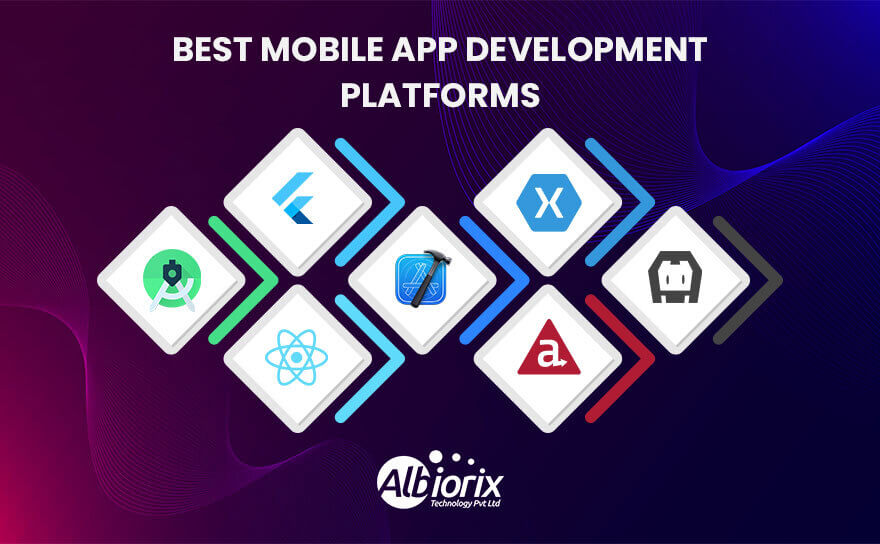
There are several excellent mobile app development platforms available today that offer a range of features and capabilities.
The best platform for you will depend on your specific requirements, such as your target platform (iOS, Android, or both), your technical expertise, the complexity of your app, and your budget.
Here are some popular mobile app development platforms:
- Android Studio: Android Studio is the official integrated development environment (IDE) for Android app development. It provides a comprehensive set of tools and features for building Android apps using the Java, Kotlin, or C++ programming languages.
- Xcode: Xcode is the official IDE for iOS app development. It offers a powerful set of tools and an intuitive interface for creating iOS apps specifically for Apple devices. Xcode uses the Swift or Objective-C programming languages.
- React Native: React Native is an open-source framework developed by Facebook. It allows you to build cross-platform mobile apps using JavaScript and the React framework. With React Native, you can write code once and deploy it on both iOS apps and Android platforms, saving development time.
- Flutter: Flutter is another popular open-source framework, developed by Google. It enables you to build high-performance, visually appealing apps for both iOS and Android using a single codebase. Flutter uses the Dart programming language and provides a rich set of pre-built UI components.
- Xamarin: Xamarin, owned by Microsoft, allows you to build native apps for iOS, Android, and Windows using a shared C# codebase. It provides a wide range of tools, libraries, and APIs, making it easier to create cross-platform apps while still leveraging the native performance and capabilities of each platform.
- Appcelerator Titanium: Appcelerator Titanium is a JavaScript-based platform that enables the development of native apps for iOS, Android, and Windows using a single codebase. It provides a comprehensive set of features and allows access to native device functionality through its APIs.
- PhoneGap (Apache Cordova): PhoneGap, also known as Apache Cordova, is an open-source mobile app development framework. It allows developers to use web technologies such as HTML5, CSS, and JavaScript to build cross-platform apps that can run on various mobile platforms.
These are just a few examples of the best mobile app development platforms available. It’s important to evaluate each platform based on your specific requirements and preferences to choose the one that best suits your needs.
How Much Does it Cost to Build an App From Scratch?
The cost to make an app from scratch can vary significantly based on various factors, including the complexity of the app, the platform(s) you’re targeting (iOS, Android, or both), the features and functionalities required, the design complexity, the development approach (native or cross-platform), and the region or development company you choose to work with.
Factors That Affect the Cost of Mobile App Development
How much does it cost to build an app usually depends on few essential things:
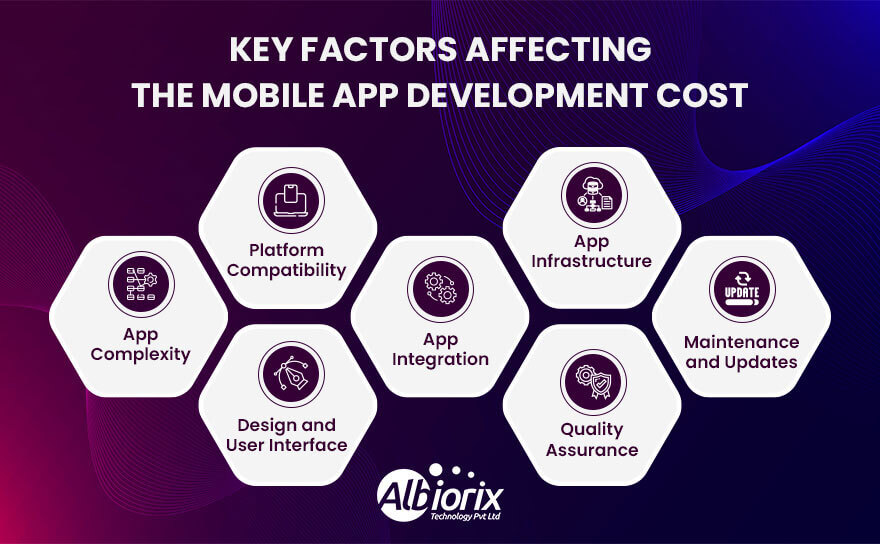
Several factors can affect the cost of mobile application development. Here are some of the key elements: Let’s explore every parameter in detail to make your application more robust.
1. App complexity: The app’s complexity is one of the main factors influencing development costs. Apps with more app’s features, mobile app’s functionaliy , and integration require more time.
2. App Platform compatibility: Developing a mobile app for multiple platforms (such as iOS, Android, and web) and mobile devices will typically increase costs compared to developing a single platform.
3. Design and User Interface (UI): The complexity of the mobile app’s design and user interface can impact the app’s cost. Mobile apps with intricate designs, custom animations, and high-quality visuals may require more design work and development time, thus increasing the cost.
4. Integration: If the mobile application needs to integrate with other systems or third-party APIs (such as payment gateways, social networking platforms, or mapping services), the application development cost can increase.
5. Backend development and App infrastructure: The complexity of the app’s backend infrastructure, including app server setup, databases, app store optimization and API development, can influence the app’s cost.
6. Testing and QA: Thorough mobile app testing and quality assurance processes are crucial for new app reliability and user satisfaction. The more comprehensive the testing requirements, including compatibility on all mobile device, performance, and security, the higher the development cost.
7. App Updates and Maintenance: Ongoing maintenance to keep the app compatible with new operating system versions on app store, security updates, and user feedback can contribute to the overall cost.
Conclusion
In conclusion, mobile app development is a complex but rewarding endeavour to get rid from this you should contact app development company.
Albiorix have worked on several complex and innovative mobile app to help businesses create mobile apps that help in business.
By following the guidelines and best practices outlined in this guide, developers can create successful mobile applications that delight users, achieve business goals, and make a lasting impact in the dynamic and ever-evolving mobile app market.
Remember that mobile app development is a continuous journey. Embrace feedback and user reviews to continuously improve and enhance your app’s features and functionalities.
By staying dedicated, adaptable, and focused on providing value to your users you have the potential to create remarkable and successful mobile applications. For more information, feel free to consult Albiorix for the best mobile app development.
Connect with Our Experts!
FAQ
Frequently Asked Questions
Building a mobile app involves several steps, from conceptualizing the idea to designing, developing, and deploying the app. Here’s a general overview of the process:
- Define your app’s purpose and target audience
- Plan the features and functionality
- Wireframing and prototyping
- Backend development
- Frontend development
- Testing
- Deployment
- Maintenance and updates
- E-commerce and m-commerce apps
- Health and fitness apps
- On-demand service apps
- Social networking apps
- Education and e-learning apps
- Financial and banking apps
- Travel and tourism apps
- Productivity and utility apps
Published Blogs
Latest Blogs : Insights and Innovations from Our Blog
Stay Ahead in Tech: Dive into our Blogs for the Latest in Software, Web, and Mobile App Development. Explore cutting-edge technologies, industry trends, and insightful updates that keep you at the forefront of the digital landscape



Our Clients

Client Showcase: Trusted by Industry Leaders
Explore the illustrious collaborations that define us. Our client showcase highlights the trusted partnerships we've forged with leading brands. Through innovation and dedication, we've empowered our clients to reach new heights. Discover the success stories that shape our journey and envision how we can elevate your business too.










We’re here to help you


