



Why Payment Gateway Integration Is The Successful For Digital Products

While shopping online, did you ever click on the “Buy Now” button, and drop the plan of buying a product because the payment took a lot of time, failed unexpectedly, or asked for too many details? You are not alone.

Many businesses revisit their checkout flow during Product Development to eliminate delays, simplify steps, and ensure a smooth user experience. Most online shoppers would have done that because no one likes a slow or below-average shopping experience.

Moreover, people also abandon shopping if they feel the payment gateway is insecure or confusing.

That’s exactly where payment gateway integration becomes the backbone of successful digital product development. It’s not just a technical add-on; it’s the critical link that decides whether a user completes a transaction or disappears forever.

In today’s digital-first world, users expect seamless, frictionless experiences from the moment they land on your app to the final payment confirmation.

A smooth payment flow enhances trust, boosts conversions, and ultimately determines how your digital product performs in the real market.

In this blog, we will discuss payment gateway integration, why it is considered the backbone of a successful digital product, types of payment gateways, and much more. So, stay tuned with us!

What Is Payment Gateway Integration?

Think of a payment gateway as the digital “cashier” of your app or website. Payment gateway integration simply means connecting your product to this cashier so users can pay you securely using cards, UPI, wallets, or net banking—without any manual effort from your end.

The entire payment process might look simple from the front, but there are a lot of things going on in the backend. Behind the scenes, when a user enters the payment details, these payment details are encrypted by the payment gateways.

These encrypted details are then sent to the bank for approval and verification. Once the details are confirmed and verification is approved by the bank, the success/failure message returns accordingly. All these back-end processes happen in a matter of seconds.

But the question arises, why is the payment gateway so important? The answer is simple. Every new digital product today, a mobile application, SaaS product, ecommerce Store, or an online marketplace, totally depends on smooth payment to flourish.

A secure and reliable payment gateway means fewer abandoned carts, more successful transactions, safer user experiences, and ultimately more ROI for your business.

This is why payment gateway integration is extremely important for the success of new digital products in 2026 and beyond!

Not sure which payment gateway is best for your digital product?

Get expert advice for free and make the right choice with confidence. We are the best product development company in India.


Contact Us!

Why Payment Gateway Integration Matters During Digital Product Development

When you are building a digital product like a mobile app, a SaaS platform, an ecommerce website, or a marketplace, a payment gateway is not just another feature.

It is a crucial part of your digital product, and you must think about it from the very first day. A right payment gateway shapes the entire user experience, trust, and conversion journey.

A well-integrated payment gateway ensures users can complete transactions quickly, safely, and without friction. This smooth experience directly influences them and leaves a positive impact on your product and business.

Smooth payments build confidence, whereas complicated or slow checkouts create instant drop-offs.

For companies investing in digital product development services, planning payment gateway integration early makes everything easier.

Your digital product development agency can design the right flows, choose the best APIs, and ensure security and compliance from day one—saving time, cost, and major rework later.

In short, early and seamless payment integration is a core ingredient of a high-performing digital product—not an afterthought.

Choosing the Right Payment Gateway for Your Product

Just like no two businesses are the same, not all payment gateways are built the same. There are many different types of payment gateways offered in the market; therefore, you must choose the right one for your digital product.

If you do not have a proper understanding of the payment gateways, then it is better to discuss it with your product development company. They are the right ones to suggest to you the best option based on your product type and targeted audiences.

The right selection of payment gateways at the time of new product development can make a huge difference in how users interact with your product.

The ideal gateway must be secure, support global currencies, extremely transparent with platform fees, fast in processing the payments, and have developer-friendly APIs to make integration easy and convenient.

When building a digital product, you can choose from options such as Stripe, Razorpay, Cashfree, PayU, and Square.

All these options are the best, but you must select the payment gateway based on aspects such as your audience, geography, business model, type of your digital product, and scalability needs.

To help you understand better, let’s say Stripe payment gateway is the best for global SaaS platforms, whereas Razorpay is excellent for India-first apps. The world-famous payment gateway, PayPal, is ideal if your users prefer wallet-based payments.

If you are confused about the available options, then take the help of your digital product development agency. They can help you pick the best option considering all the important criteria.

An experienced team understands the nuances of each gateway, evaluates technical requirements, ensures compliance, and helps you pick the option that aligns perfectly with your product’s architecture and growth plans.

Instead of trial-and-error, you get expert guidance that saves both time and money.

How an End-to-End Product Development Team Handles Payment Gateway Integration
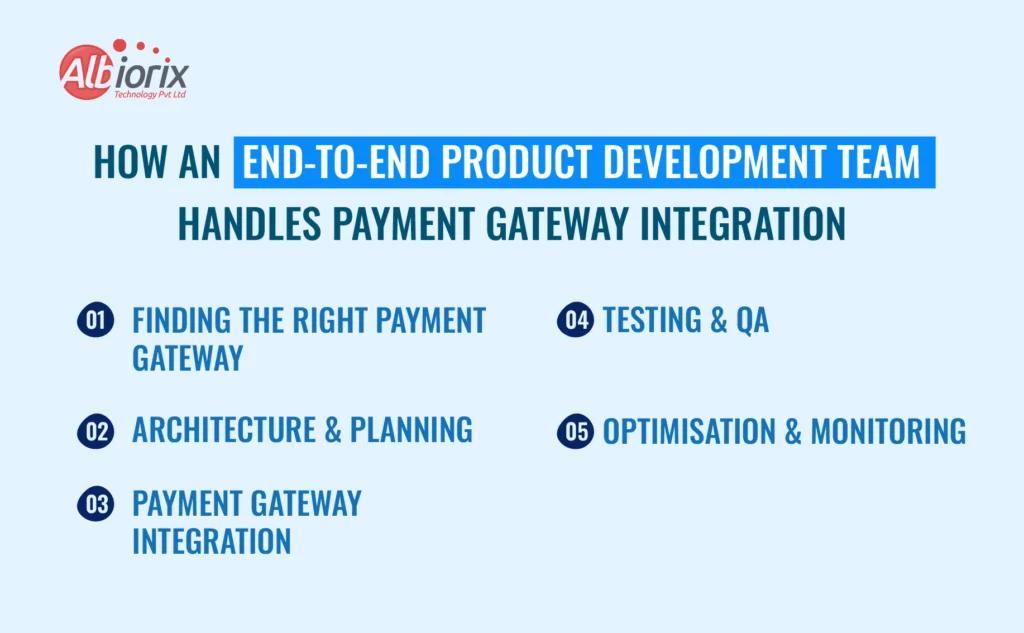
How an End-to-End Product Development Team Handles Payment Gateway Integration

When you work with an end-to-end product development team, payment gateway integration becomes smooth. It becomes a well-organized process instead of a last-minute technical headache.

Since everything from strategy to design, back-end, and QA is handled under one roof by the team of experts, the entire flow stays aligned and efficient.

A typical payment gateway integration flow looks like this:

  1. Finding the Right Payment Gateway: As a first step, the end-to-end product development team understands your business model, audiences, geography, and the type of payment you want to accept.

    This analysis provides them with in-depth insight and makes it easy for them to choose the right payment gateway for their digital product.

  2. Architecture & Planning: As a second step, the team of developers and solution architects map out how the payment system fits into your product infrastructure.

    Both these teams work together to plan APIs, security layers, database structures, and user flows to ensure scalability and compliance.
      
  3. Payment Gateway Integration: The team of back-end developers integrate the selected payment gateway into your digital product using secure APIs. The team of designers ensures that the checkout UI feels seamless and consistent.

  4. Testing & QA: Once the team of back-end developers integrates the payment gateway with the digital product, it’s time to test it.

    The QA team runs end-to-end tests to check successful payments, failures, refunds, retries, speed, device compatibility, OS compatibility, and more. This set of tests ensures everything works flawlessly before launching.

  5. Optimisation & Monitoring: Once your digital product is developed and launched, it’s time to track the real-time user behaviour, monitor issues, and optimise the payment experience.

    Continuous analysis and optimisation will maximise conversions and reduce drop-offs.

The biggest advantage of partnering with a digital product development agency is that you get all the work done under one roof.

They have a team of back-end developers, front-end developers, DevOps, and QA specialists for custom new product development and payment integration. They ensure a smooth development process and payment integration.

Why Hiring a Product Development Company in India Offers Strong Value

Partnering with a product development company in India brings a unique mix of cost efficiency, technical depth, and real-world fintech experience. It can turn out to be a smart choice for businesses developing payment-heavy digital products.

Digital product development agencies in India are known for delivering high-quality solutions at lower costs. It allows startups and enterprises to stretch their product budgets without compromising performance or security.

This becomes especially important when you are developing payment systems that need precision, scalability, and compliance.

Moreover, the companies offering digital product development services have extensive experience in integrating multiple gateways like Stripe, Razorpay, Cashfree, PayU, PayPal, and global platforms.

They are able to gain this experience by working with businesses from different industries and verticals.

Thus, hiring a product development company in India for payment gateway integration is the right decision.

In short, working with an Indian product development company means you get the perfect balance of affordability, expertise, and speed—especially for products where payments play a mission-critical role.

Common Integration Mistakes and How a Good Team Avoids Them
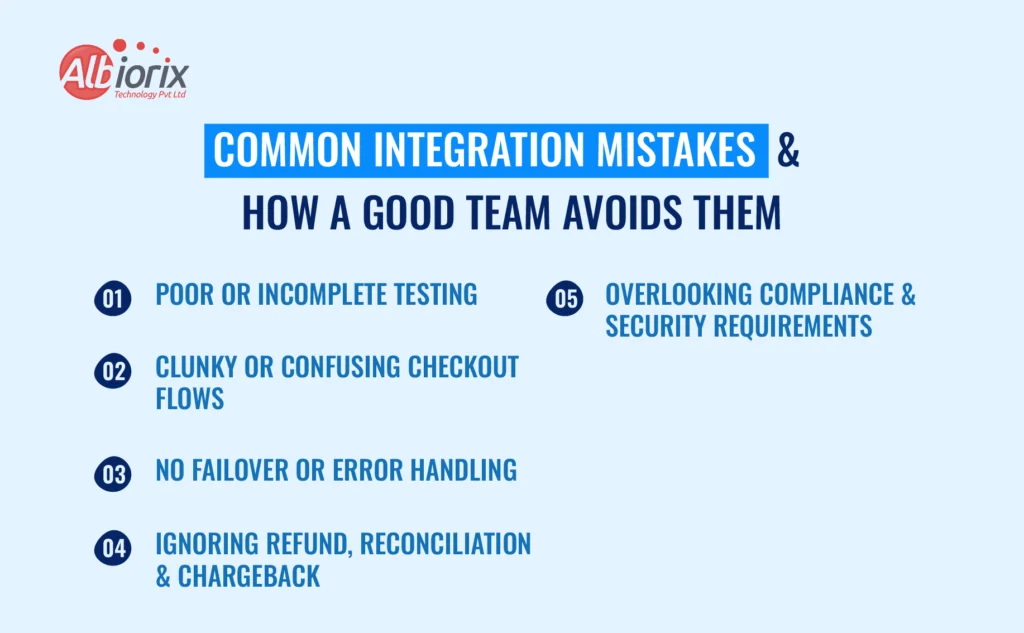
Common Integration Mistakes and How a Good Team Avoids Them

At the time of custom digital product development, payment gateway integration may look simple, and an easy-going task, but it is complicated. There are a lot of things that can go wrong at the time of integration if not handled carefully.

Many digital products struggle with issues that could have been avoided with the right digital product development agency and planning.

Common Integration Mistakes to Avoid:

  1. Poor or Incomplete Testing: One of the most common mistakes we come across is that companies test only successful payment scenarios. Whereas the real issues are failed payments, timeouts, network drops, and device limitations.

    An experienced product development company runs end-to-end, edge cases, and stress testing to check every possible scenario before the launch of a new product.

  2. Clunky or Confusing Checkout Flows: Long forms, too many steps, or inconsistent UI can instantly increase drop-offs.

    An expert digital product development agency can streamline the flow, reduce friction, and ensure the checkout matches the product’s overall UX standards.

  3. No Failover or Error Handling: There are many digital products that are not programmed to handle failovers or fallbacks. While using such a digital product, when payment fails, users hit a dead end.

    A team of developers implement smart retries, clear error messages, and alternate payment options to stop users from abandoning the process.

  4. Ignoring Refund, Reconciliation & Chargeback: Without proper backend workflows, refunds become manual, chargebacks go unnoticed, and accounting becomes a mess.

    Thus, in the case of failed transactions, an automated refund system must be activated with an admin tool to track the full lifecycle of a transaction.

  5. Overlooking Compliance & Security Requirements: From PCI-DSS to tokenization and encryption, payments require strict standards.

    Experienced digital product development company ensures secure integration, updated SDKs, and compliant data flows from the start.

In short, professional digital product development services not only integrate a payment gateway but they also ensure it works seamlessly, safely, and reliably in the real world.

Conclusion

In the digital world, payments aren’t just a feature. They are the moment of truth for your product.

Professional and proper payment gateway integration shapes user trust, smoothness the purchase experience, and directly impacts your conversions and revenue. When done right, it becomes a strategic advantage instead of a technical hurdle.

If you’re building or scaling a digital product, having the right development expertise can make all the difference.

An experienced digital product development company ensures your payment flows are secure, intuitive, and optimized from day one—so you can focus on growth, not technical headaches.

Ready to build a product with seamless payments at its core? Want to learn more about our digital product development services? Contact us, today!

Let’s create something amazing together.
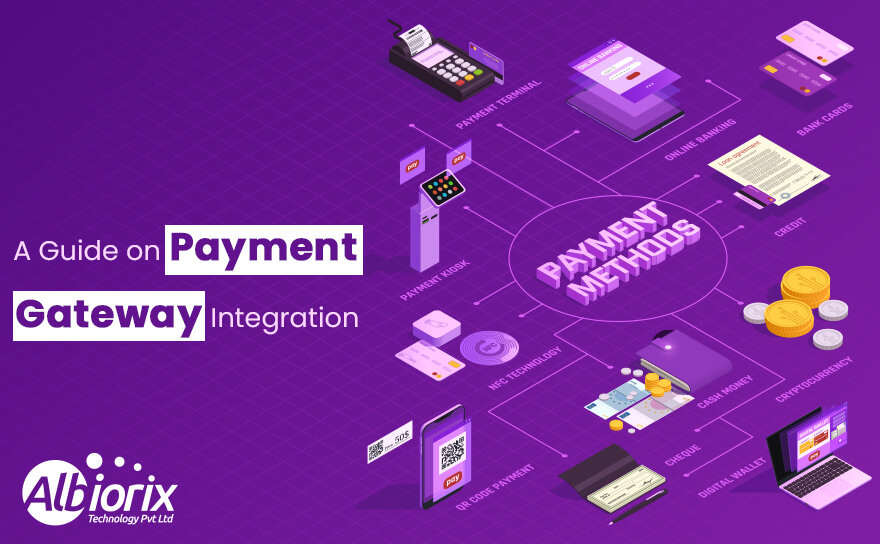
How To Integrate Payment Gateway Into Website & Apps

If you’re an eCommerce business owner or developer looking to enhance your online store payment processing capabilities, you’re in the right place.

In today’s digital world, a seamless and secure payment gateway integration is essential for the success of any online business.

In this blog, we will explore the ins and outs of payment gateway integration, focusing on the benefits, challenges, and best practices to ensure a smooth and secure payment processing experience for your customers.

Whether you’re a small business owner just starting out or an established enterprise looking to optimize your payment processes, you’ll get valuable insights and practical tips to help you navigate the complex world of payment gateway integration.

So, let’s dive in and unlock the power of seamless payment processing for your eCommerce store!

Key Takeaways

  • We will cover everything you need to know about payment gateway integration, from understanding what it is and why it’s important, to exploring different payment gateway options and best practices for seamless integration.
  • You’ll come across the different payment gateway integration methods that will help you select the best one for your business needs.
  • The working of payment gateway is included in the article, which makes it easy to understand the entire payment flow.

What is Payment Gateway?

A payment gateway is a secure technology that processes online transactions between customers and merchants. It acts as a bridge between a website or app and the bank that completes the payment.

When a customer makes a purchase, the payment gateway encrypts sensitive data—like credit or debit card details—and sends it to the bank for authorisation.

Once processed, the gateway shares the result with both the merchant and the customer, confirming if the payment was successful or declined.

Payment gateways are essential for safe and efficient eCommerce. They help protect customer information, prevent fraud, and ensure smooth payment processing. Most providers charge a small fee per transaction or a percentage of the sale.

Using a trusted payment gateway is key for businesses that want to offer secure and seamless checkout experiences.

Payment gateway integration is the process of connecting a payment gateway to an e-commerce website or mobile app. This allows businesses to securely accept online payments from customers.

When a customer completes a purchase, the integrated payment gateway captures and encrypts payment details, such as credit or debit card information.

It then communicates with both the merchant’s and customer’s banks to process the transaction and confirm the payment status.

This integration is done by setting up software connections, often using APIs, that enable the website or app to communicate directly with the payment gateway. It ensures that payments are processed smoothly, securely, and in real time.

For any e-commerce or digital business, integrating a payment gateway is essential to provide customers with a safe, hassle-free online payment experience.

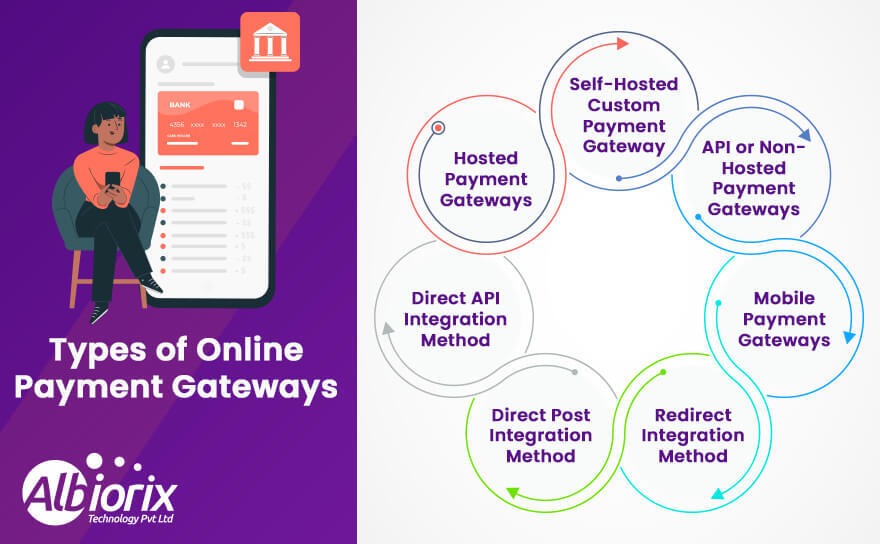
What are the Different Types of Online Payment Gateways?

Types of Online Payment Gateways

There are several types of online payment gateways available that businesses can choose from depending on their requirements. Here are some of the
most popular ones:

1. Hosted Payment Gateways

These are third-party payment gateways that redirect customers to a secure payment page hosted by the payment gateway provider.

A hosted payment gateway is a type of payment gateway that redirects customers to a payment page hosted by a third-party payment gateway processor during the checkout process.

This payment page is typically branded to match the merchant account website, but is actually hosted on the processor’s server.

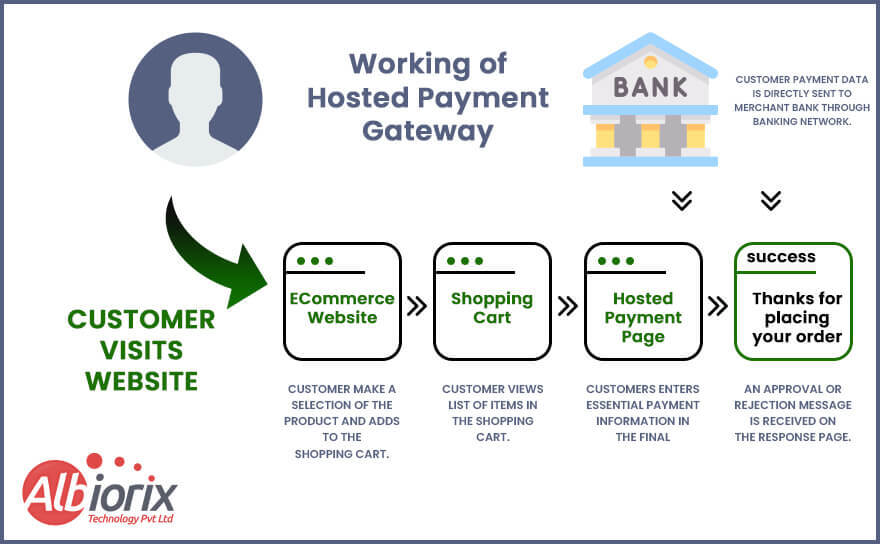
Let’s see how hosted payment gateway actually works?

How Hosted Payment Gateway Work

When a customer is ready to pay for their purchase, they are redirected to the payment page where they are asked to enter their payment information.

This information is then securely transmitted to the payment processor for authorization request and processing.

Hosted payment gateway are popular among merchants who want to offer a streamlined checkout process without having to worry about the technical details of payment processing flow.

The payment gateway providers also offer increased security since the payment data is transmitted directly to the payment processor and not stored on the merchant’s server.

Examples include: PayPal, Stripe, and 2Checkout.

2. Self-Hosted Custom Payment Gateway

This online payment gateway require businesses to host the payment page on their own merchant account servers. They offer greater control over the checkout process, but require more technical expertise.

Creating a self-hosted custom payment gateway can be a complex and challenging task.

This custom gateway of payment processing involves developing a secure platform for processing payments, integrating with various financial institutions, and adhering to industry standards for security and PCI compliance.

Here are some general steps to consider when creating a self-hosted custom payment gateway:

  • Determine the payment methods: Decide for an appropriate payment method from list of multiple payment methods your custom gateway will support, such as credit/debit cards, PayPal, bank transfers, or digital payments like wallets.
  • Develop the payment processing platform: Design and develop a secure payment processing platform that can accept payments from various sources and process them efficiently.
  • Create a merchant account: Allow merchants to create accounts and configure their payment gateway settings. This will require storing and retrieving sensitive information such as bank account details, credit card data, and transaction histories.
  • Integrate with financial institutions: Establish relationships with banks and other financial institutes that will process customer payments through your platform. This may require integrating with multiple payment processors or dealing with robust integrated payment gateways.
  • Ensure security and PCI DSS compliance: Implement robust security measures to protect sensitive data such as credit card numbers and comply with industry regulations such as PCI DSS compliance (Payment Card Industry Data Security Standard).
  • Test and launch: Thoroughly test the payment gateway in a staging environment before launching it to the public. Monitor the system for issues and make adjustments as needed.
  • Provide customer support: Offer customer support to merchants who use your online payment gateway. This may involve addressing technical issues, responding to inquiries, or resolving disputes.

Keep in mind that creating a self-hosted custom payment gateway determines a significant undertaking that requires a high level of technical expertise and financial resources.

It may be more practical for small businesses to use existing payment gateways that are already established and have a proven track record of security and reliability.

Examples include: Authorize.Net and Braintree.

3. API or Non-Hosted Payment Gateways

These gateways offer businesses the ability to integrate payment processing directly into their website or mobile app using an API. This allows for a seamless checkout experience.

This is the most customizable and online payment gateway integration method, as it enables the merchant to control the payment experience on their website.

With API integration, the customer enters payment data on the merchant’s website, and the payment is processed in the background of payment processing system. API integration requires technical expertise and development resources to implement.

In the context of payment gateways, an API provides a way for merchants to integrate payment processing into their mobile or web application development services.

The API defines a standard set of commands that can be used to authorise and process recurring payments, retrieve transaction data, and perform other related tasks.

The working process of API payment gateway is fairly simple.

  1. When a customer makes a payment through an API payment gateway, the merchant’s website or application sends a request to the payment gateway API.
  2. The API then communicates with the payment providers to complete the payment transaction status.
  3. The payment gateway API returns a response to the merchant’s website or application indicating whether the payment was successful or not.

API payment gateways offer several advantages over traditional payment processing methods. They are faster, more secure, and more flexible.

Because the payment processing is handled off-site, merchants do not need to store sensitive payment information on their own servers, reducing their liability and improving security to the payment solution.

Additionally, because APIs are designed to be flexible and customizable, merchants or any credit card company can easily integrate payment processing into their existing systems and workflows.

Many popular payment gateways, such as Stripe, PayPal, and Braintree, offer API payment gateways for merchants to use. Merchants can choose the payment gateway that best suits their needs and integrate it using the API.

Examples include: Square, Dwolla, and Adyen.

4. Mobile Payment Gateways

These gateways are designed for mobile commerce and allow customers to pay using their mobile devices.

Mobile payment gateways are digital payment systems that allow consumers to make payments through their mobile devices.

They typically involve the use of mobile apps or websites, and allow users to securely and conveniently make recurring payments for goods and services from their mobile devices.

Some popular mobile payment gateways include:

  • PayPal: This is one of the most popular mobile payment gateways, with millions of users worldwide. PayPal express checkout allows users to make payments, receive payments, and transfer funds between accounts.
  • Apple Pay: This is a mobile payment and digital wallet service developed by Apple Inc. It allows users to make payments from their Apple devices, such as iPhone, iPad, and Apple Watch.
  • Google Pay: This is a mobile payment and digital wallet service developed by Google. It allows users to make digital payments from their Android devices and supports digital payments, in-app purchases, and peer-to-peer transactions.
  • Samsung Pay: This is a mobile payment and digital wallet service developed by Samsung Electronics. It allows users to make payments from their Samsung devices, including payments, in-app purchases, and peer-to-peer transaction details.
  • Venmo: This is a mobile payment service that allows users to send and receive payments from their mobile devices. It is primarily used for peer-to-peer transactions, but can also be used for business transactions.
  • Square: This is a mobile payment system that allows businesses to accept money from customers through their mobile devices. It supports contactless payments, chip and PIN payments, and magstripe payments.

5. Redirect Integration Method

In this integration method, when a customer is ready to checkout, they are redirected to the payment gateway’s secure payment page to complete the transaction flow.

After the payment is processed, the customer is redirected back to the merchant accounts website. The merchant does not handle any sensitive payment data, making this method more secure.

The disadvantage of this method is that it can disrupt the user experience.

Integrate Payment Gateways To Your Website Now!

Our talented developers are always ready to help you out in integrating the best payment gateways to your business websites.

Consult Us Now

6. Direct Post Integration Method

Direct Post Integration is a payment gateway integration method where customers enter their payment details directly on the merchant’s website.

The payment data is then securely sent to the payment gateway’s server or the merchant’s own server for processing.

This method offers a seamless user experience since customers complete payments without being redirected to another page.

However, the merchant is responsible for managing and securing sensitive payment information, requiring strict data security standards like PCI compliance.

Direct Post Integration is commonly used in e-commerce websites seeking full control over the payment experience while ensuring a smooth checkout process.

The Direct Post Integration method involves the following steps:

  1. The user initiates a payment transaction on the e-commerce website or application.
  2. The website or application collects the necessary payment information, such as the user’s credit card details, billing information, and also charges transaction fees like setup fees.
  3. The website or application then securely sends the payment information to the payment gateway for processing.
  4. The payment gateway processes the payment and returns a response to the website or application, indicating whether the transaction was successful or not.
  5. The website or application then displays a confirmation message to the user, indicating the status of the transaction like transaction processed data.

Direct Post Integration is a popular integration method for payment gateways because it allows for a seamless user experience, with the user remaining on the website during the payment process.

It is also considered more secure than other integration methods because the payment information is transmitted directly to the payment gateway, without being stored on the website or application.

7. Direct API Integration Method

This is similar to the API integration method, but instead of processing payments in the background, payment data is directly sent to the payment gateway’s server for processing.

This method requires technical expertise and development resources to implement but provides a more seamless checkout experience.

So, Payment gateway integration is essential for any e-commerce business, and choosing the right integration method is crucial. The best integration method depends on the merchant’s technical expertise, budget, and security requirements.

The above-discussed methods are the most commonly used payment gateway integration methods, and merchants should carefully evaluate each method before selecting the most suitable one for their business needs.

Working of Payment Gateway

A payment gateway is a technology that enables online transactions by acting as an intermediary between an e-commerce website and a financial institution that processes the payment.

The payment gateway allows customers to securely and conveniently pay for goods and services online using various available and new payment methods, such as credit cards, debit cards, and e-wallets.

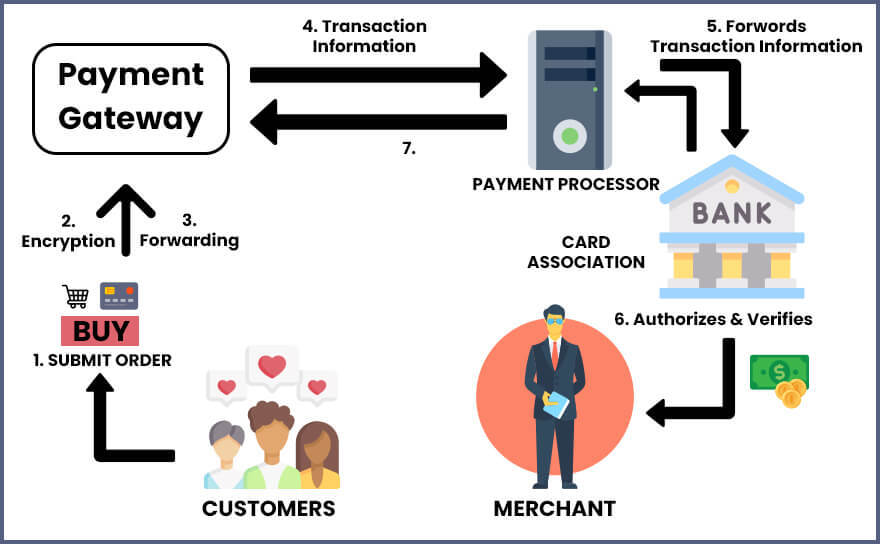
Here is a simplified overview of how a payment gateway works:

How a Payment Gateway Works
  1. The customer initiates a payment by selecting their payment method and entering their payment details on the checkout page of the e-commerce website.
  2. The payment gateway encrypts the payment data to protect it from unauthorized access and sends it securely to the payment processor. It is made possible by using SSL certificate.
  3. The payment processor receives the payment sensitive data and verifies the customer’s payment details, such as the card number and expiry date.
  4. The payment processor then contacts the customer’s bank to verify that the funds are available and reserves them for the transaction. And yes the verification process take some monthly fee.
  5. The payment processor sends a response back to the payment gateway, indicating whether the payment was successful or not.
  6. If the payment was successful, the payment gateway sends a confirmation to the e-commerce website and releases the payment to the merchant’s account.
  7. If the payment was unsuccessful, the payment gateway sends an error message to the e-commerce website, and the customer is prompted to try again or choose another payment method.

Payment gateways help facilitate safe and secure online transactions, data protection practices for both the customer and the merchant from fraudulent activities.

What is Payment Gateway Integration?

Payment gateway integration is the process of connecting a payment gateway to an e-commerce website or mobile app. This allows businesses to securely accept online payments from customers.

When a customer completes a purchase, the integrated payment gateway captures and encrypts payment details, such as credit or debit card information.

It then communicates with both the merchant’s and customer’s banks to process the transaction and confirm the payment status.

This integration is done by setting up software connections, often using APIs, that enable the website or app to communicate directly with the payment gateway. It ensures that payments are processed smoothly, securely, and in real time.

For any e-commerce or digital business, integrating a payment gateway is essential to provide customers with a safe, hassle-free online payment experience.

How To Integrate Payment Gateways To Your Web and Mobile Apps?

Integrating payment gateways to your web and mobile apps can be a complex process, but the following steps can help guide you through the process:

  • Choose a payment gateway: There are many payment gateways available, each with different features and pricing models. Choose a payment gateway that meets your specific needs and budget.

  • Obtain API credentials: Depending on the payment gateway, you may need to register for an account and obtain API credentials, such as an API key or secret. These credentials are necessary for connecting to the payment gateway’s API.

  • Choose an integration method: Payment gateways offer different integration methods, such as Direct Post Integration, Direct API Integration, or Hosted Payment Pages. Choose an integration method that meets your requirements in terms of user experience, customisation, and security.

  • Develop the integration: Depending on the integration method you choose, you will need to develop code to integrate a payment gateway and handle the payment flow. This may involve building forms, creating API requests, and handling responses.

  • Test the integration: Test the payment gateway integration thoroughly to ensure that it works as expected. This may involve testing various payment scenarios, such as successful payments, failed payments, and refunds.

  • Deploy the integration: Once you have tested the payment gateway integration, deploy it to your production environment. Make sure that your website or mobile app is ready to accept money from users.

  • Monitor and maintain the integration: Keep track of payment transactions and monitor the payment gateway for any issues or errors that you receive from payment service providers.

    Stay up-to-date with the payment gateway’s documentation and make any necessary updates to your integration over time.

It’s important to ensure that your payment gateway integration is secure, compliant with regulations, and provides a good user experience for your customers.

Consider working with a payment gateway provider or a hire app developers with experience in payment gateway integrations to ensure that your integration meets these requirements.

Conclusion

Integrating a payment gateway into your business is a crucial step to enable secure, seamless, and efficient online transactions, providing your customers with a convenient and trustworthy payment experience while safeguarding your business from potential fraud and data breaches.

Choose a payment gateway that aligns with your business requirements, and follow best practices for integration to ensure a successful implementation and smooth operation of your online payment processing system.

With the right payment gateway integration, you can enhance customer satisfaction, streamline your payment processes, and drive business growth in today’s digital economy.

So, don’t delay – take the necessary steps to integrate a payment gateway into your business and unlock the full potential of online payments with our payment gateway development services, Let’s Connect!