Hardik Thakker is a Co-Founder & CEO at Albiorix Technology. Having more than 12+ years of experience in handling the development team at a pace, he is totally involved in managing the overall aspects of the full-stack development processes. He possess strong expertise in writing the technical articles and completely believes in following Agile methodology.
If you’re building an Android app in 2026 and still wondering whether Kotlin is worth the switch or the learning curve — the short answer is yes. Kotlin is not just another programming language; it’s Google’s preferred language for Android app development, and for good reason.
As an Android developer with years of experience transitioning from Java to Kotlin, I can confidently say: Kotlin has made app development faster, safer, and more enjoyable.
What Is Kotlin?
Kotlin is a modern, statically typed programming language developed by JetBrains, the same company behind IntelliJ IDEA (which powers Android Studio).
It was first ideated in 2011 and officially released in 2016 as an open-source language. Its primary goal? To offer a smarter, more productive alternative to Java—without abandoning Java’s vast ecosystem.
Kotlin is fully interoperable with Java, meaning you can call Java code from Kotlin and vice versa. This compatibility makes it easy for developers to gradually migrate Java codebases or even mix both languages within the same project.
In 2017, Google announced official support for Kotlin on Android, and in 2019, Kotlin was elevated to the status of preferred language for Android app development.
Since then, Kotlin has become the default choice for most modern Android projects and is widely adopted across industries.
Kotlin at a Glance:
1. Created by JetBrains 2. Open-source and backed by a strong community 3. Official Android support since 2017 4. Preferred Android language as of 2019 5. Designed for clarity, safety, and productivity
Key Features of Kotlin Include:
Kotlin is designed to improve productivity, reduce boilerplate code, and make your Android apps more reliable and maintainable.
Its modern language features help developers write clean, concise, and expressive code—without sacrificing performance or compatibility with existing Java libraries.
Here are 10 standout features of Kotlin that make it a preferred choice for Android development:
1. Null Safety: Kotlin’s built-in null safety eliminates the dreaded null pointer exceptions (NPEs) by making nullability explicit in the type system.
2. Interoperability with Java: Kotlin is 100% interoperable with Java, allowing developers to use existing Java libraries and frameworks seamlessly.
3. Concise Syntax: With fewer lines of code and cleaner structure, Kotlin boosts readability and reduces boilerplate, especially in Android development.
4. Extension Functions: Kotlin lets you extend existing classes with new functionality without modifying their source code—making your codebase more flexible.
5. Coroutines for Asynchronous Programming: Kotlin Coroutines simplify asynchronous tasks like network calls or database operations, leading to more efficient and readable code.
6. Smart Casts: Kotlin automatically handles type casting when it’s safe to do so, reducing the need for manual checks or conversions.
7. Data Classes: Writing classes for data storage becomes quick and effortless with data class, which auto-generates common functions like equals(), hashCode(), and toString().
8. Lambda Expressions and Functional Programming: Kotlin supports first-class functions and lambdas, encouraging a functional programming style where appropriate.
9. Default and Named Arguments: Functions become more flexible and easier to call with default parameter values and named arguments, reducing the need for overloads.
10. Tooling and IDE Support: Backed by JetBrains, Kotlin comes with excellent support in Android Studio, including code completion, refactoring, debugging, and linting tools.
Popular Projects Built with Kotlin
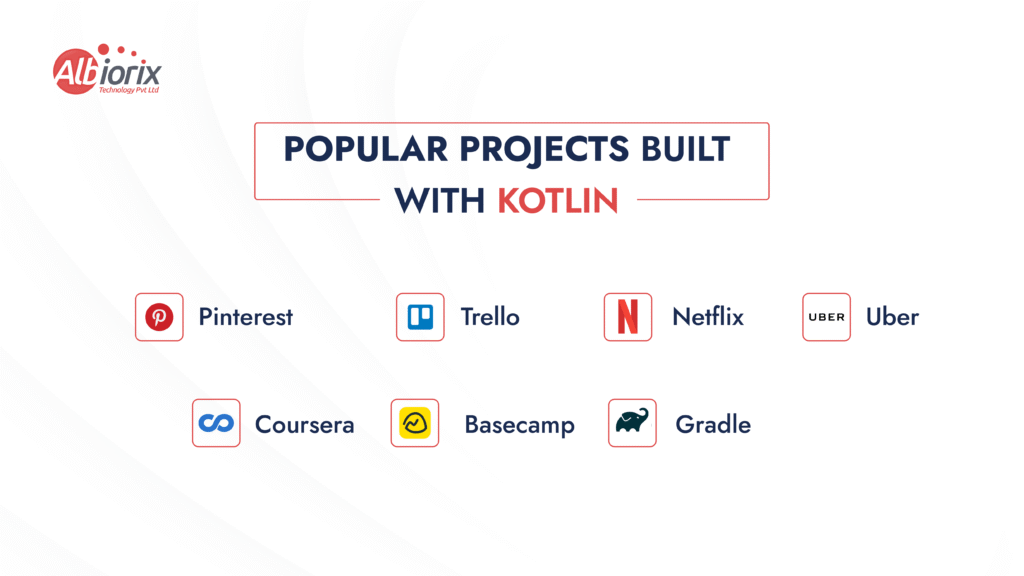
Kotlin isn’t just for hobby apps. It powers some of the most popular applications and platforms around the world, including:
These companies chose Kotlin for its clean syntax, reduced bugs, and faster development cycles. Whether you’re building mobile apps or server-side applications, Kotlin is proving to be a robust and scalable option.
Why Developers Choose Kotlin for Android App Development?
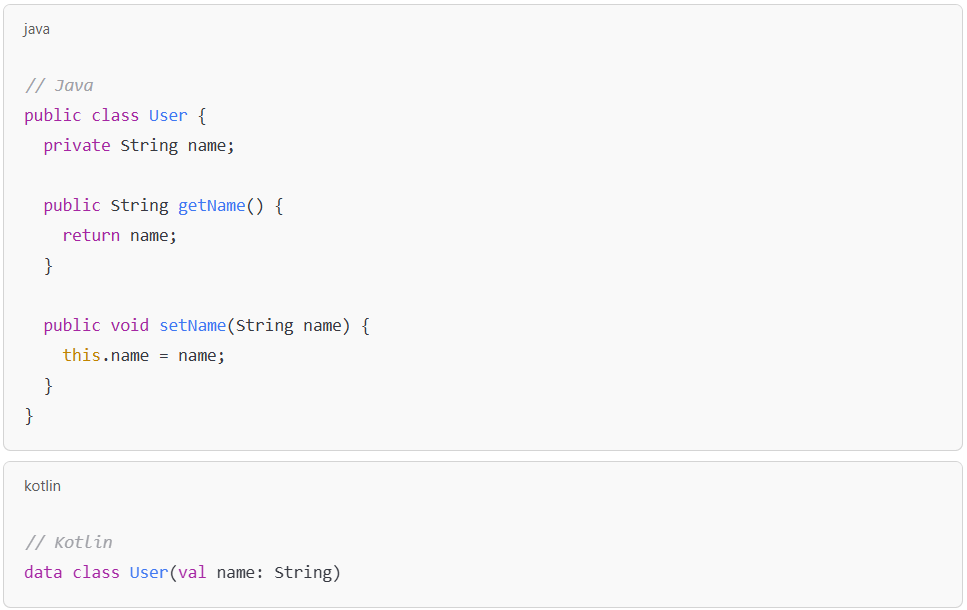
Cleaner, More Concise Code: With Kotlin, you write less boilerplate, which means cleaner code that’s easier to read and maintain. Example:
That’s it. One line instead of six.
Null Safety Built-In: Kotlin drastically reduces the risk of the dreaded “NullPointerException”, one of the most common issues in Android development.
Kotlin enforces null safety at compile time — a big win for stability and reliability.
Interoperability with Java: Already have a legacy Java Android codebase? No worries. Kotlin plays perfectly with Java. You can incrementally migrate your project to Kotlin without breaking things.
Coroutines for Better Async Programming: Multithreading and background tasks can be tricky in Android. Kotlin simplifies this with coroutines, which allow you to write asynchronous code that looks and behaves like synchronous code.
No more messy callbacks or nested hell.
Strong Community and Google Support: From Jetpack libraries to Android Studio integration, Google is investing heavily in Kotlin. The ecosystem is well-supported and growing rapidly.
Ready to Explore Kotlin Further?
If you have questions or need expert guidance, feel free to schedule a free consultation with our experienced team.
Real-World Experience: Why Kotlin Made Our Team Faster
As someone leading Android app development teams, switching to Kotlin saved us countless hours.
Onboarding time decreased because developers could grasp syntax quickly.
Bugs related to nullability dropped by over 40%.
Code reviews were easier, thanks to Kotlin’s expressiveness and readability.
We even benchmarked app builds before and after the Kotlin migration — performance either improved or stayed the same, but developer productivity soared.
Who Should Use Kotlin?
1. Beginner Android developers: It’s easier to start with Kotlin now than learn Java first. 2. Experienced Java developers: Kotlin offers a smoother, more powerful way to build apps. 3. Teams maintaining legacy apps: Kotlin can be adopted incrementally.
Conclusion
In 2026 and beyond, if you’re developing Android apps, Kotlin should be your default choice. It’s trusted by companies like Pinterest, Netflix, and Google itself. It improves your code quality, makes your life easier, and enhances app stability.
Whether you’re a solo developer or managing a mobile dev team, investing time in learning Kotlin is one of the smartest decisions you can make for long-term Android success.
Pro Tip for Android Teams
Start small. Convert just one feature or class to Kotlin and experience the difference. You’ll likely never want to go back to Java.
Ready to Embrace Kotlin?
Looking to build or modernize your Android app with Kotlin? Make sure your team (or your Android development partner) has solid experience in both Kotlin and legacy code migration. The right expertise can make all the difference.
Need Help Getting Started with Kotlin?
If you’re curious about Kotlin, exploring how to build a robust Android app using it, or simply need some clarity on Kotlin’s capabilities — you’re not alone.
Whether you’re a beginner trying to understand the basics or a developer transitioning from Java, having a conversation with someone experienced can make all the difference. At Albiorix Technology, we’re always open to sharing our knowledge.
Feel free to schedule a free consultation call — no strings attached. We’re happy to guide you through Kotlin concepts, architecture best practices, or answer any questions you might have about using Kotlin in real-world Android projects.
Finding the top software development company in Melbourne is essential for any business that wants to leverage technology for growth.
Whether you’re building a custom software solution, a mobile app, or an enterprise platform, the right software development partner can help turn your vision into reality. But with so many companies to choose from, how do you find the best one for your specific needs?
In this blog, I’ll help you navigate the process of choosing the best software development company in Melbourne.
I’ll discuss the qualities you should look for, provide a list of the top 7 software development companies in Melbourne, and give insights into pricing and services.
Whether you’re a seasoned tech professional or a business owner without much technical knowledge, this guide is designed to help you make an informed decision.
What is a Software Development Company and Why Do You Need One?
A software development company specializes in creating, designing, and maintaining software solutions tailored to your business needs. Their services may include:
Custom Software Development: Tailored applications to solve specific business problems.
Mobile App Development: Building apps for iOS and Android platforms.
Web Development: Creating websites or web applications to enhance your online presence.
Enterprise Solutions: Large-scale systems for managing business processes, customer relations, and operations.
Consulting Services: Expert advice on choosing the right technology for your business.
UI/UX Design: Making sure the software is easy to use and visually appealing.
Discover How a Software Development Company Can Accelerate Your Business Growth!
Curious about how the right software solutions can drive efficiency, innovation, and scalability? Speak with our experts to explore how a top-tier software development company can fuel your business success.
Melbourne is fast becoming one of Australia’s most important tech hubs. It boasts a growing number of software development companies, talented professionals, and a thriving startup ecosystem.
Here are a few reasons why you should consider Melbourne for your software development needs:
Skilled Workforce: Melbourne is home to some of Australia’s best universities, which produce highly skilled software developers.
Innovative Ecosystem: With a growing startup scene, Melbourne attracts entrepreneurs who bring fresh and innovative ideas to the table.
Business-Friendly Environment: The city offers strong legal protections, funding opportunities, and government support for tech businesses.
What Should You Look for in a Top Software Development Company?
When searching for a top software development company in Melbourne, there are a few key factors to consider:
1. Experience in Your Industry
Different industries have different software needs. Whether you’re in retail, healthcare, finance, or manufacturing, choose a company with experience in your specific sector. They’ll have a better understanding of your pain points and business objectives.
2. Technical Expertise
Make sure the company has the technical expertise needed for your project. Whether it’s building a mobile app, a web platform, or a cloud-based solution, you need a team that is skilled in the latest technologies, programming languages, and frameworks.
3. Proven Track Record
Look for a company with a proven track record of delivering successful projects. Case studies, testimonials, and client reviews are great ways to gauge their performance and quality.
4. Clear Communication
A reliable development company should communicate clearly and regularly. They should be transparent about the timeline, deliverables, and costs, and be able to explain technical concepts in simple terms.
5. Post-Launch Support
Software development doesn’t stop after the launch. Make sure the company offers ongoing maintenance, updates, and troubleshooting.
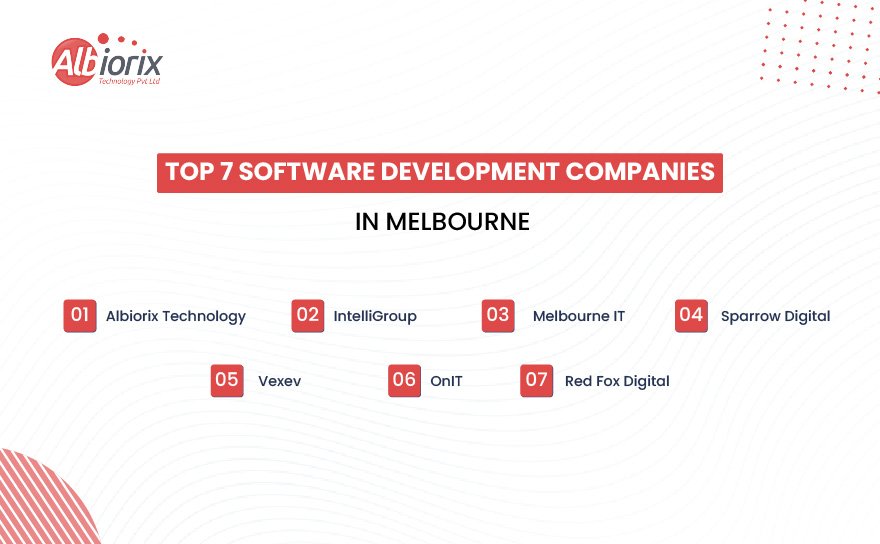
Top 7 Software Development Companies in Melbourne
Here are the top 7 software development companies in Melbourne that are recognised for their expertise, experience, and ability to deliver high-quality solutions:
1. Albiorix Technology
Albiorix Technology is a trusted name in the software development company, known for delivering end-to-end software solutions for businesses of all sizes.
With a strong focus on custom software, mobile app development, and cloud solutions, Albiorix helps businesses optimize their operations through technology.
Key Strengths:
Expertise in developing scalable applications
Strong focus on quality assurance and continuous improvement
IntelliGroup is an established software development company in Melbourne, specializing in web development and cloud-based solutions. They work with companies across various industries, including retail, finance, and healthcare.
Key Strengths:
Agile methodology for faster project delivery
Expertise in developing cloud applications and SaaS solutions
Sparrow Digital is a software development firm that combines cutting-edge technology with creativity. They specialize in mobile app development, eCommerce platforms, and digital marketing solutions.
Key Strengths:
Focus on user-friendly mobile applications
Expertise in building responsive eCommerce websites
Melbourne IT is a well-known IT solutions provider with a long history of delivering web development, software applications, and enterprise solutions. They have a reputation for excellent customer service and tech support.
OnIT is a Melbourne-based software development company that excels in custom software and mobile app development. They have a reputation for creating highly functional and user-friendly applications.
Key Strengths:
Focus on creating intuitive mobile apps
Expertise in cross-platform app development
Key Services:
Custom Software Solutions
Mobile App Development
6. IT Consulting
Red Fox Digital is a creative digital agency that specializes in building bespoke software solutions and digital marketing services. Their team uses the latest technologies to create scalable, innovative apps and websites.
Key Strengths:
Expertise in designing intuitive user interfaces (UI) and experiences (UX)
Focus on innovative digital solutions
Key Services:
Web and Mobile Development
UI/UX Design
Digital Marketing
7. Vexev
Vexev is a software development company that focuses on delivering next-gen software solutions for businesses. With a strong focus on cloud-based applications, Vexev helps companies innovate and scale through technology.
Key Strengths:
Strong expertise in cloud computing and SaaS
Highly skilled in enterprise-level software solutions
Key Services:
Cloud Software Solutions
Enterprise Software Development
Business Intelligence Solutions
Software Development Pricing: What to Expect
Understanding the pricing structure is crucial when selecting a software development partner. Pricing can vary depending on the complexity of the project, the company’s reputation, and the technologies used.
Here’s a rough breakdown of pricing:
Service Type
Price Range (AUD)
Custom Software Development
$50,000 – $200,000+
Mobile App Development (iOS/Android)
$20,000 – $150,000+
Web Development (Basic)
$5,000 – $50,000
Enterprise Solutions
$100,000 – $500,000+
Maintenance & Support (Annual)
$10,000 – $50,000+
Note: These are just estimates. Prices can vary based on project size, complexity, and the development company’s rates.
Want to know the Cost of Software Development in Melbourne?!
Every project is unique — and so is its price. If you’re wondering how much your software idea might cost to bring to life, get in touch with us.
Choosing the top software development company in Melbourne is a critical decision that can have a lasting impact on your business’s success.
Whether you’re creating a custom application, building a mobile app, or developing an enterprise-level solution, it’s important to partner with a company that understands your needs, communicates well, and offers solid expertise in your industry.
Remember to focus on key factors like experience, technical expertise, communication, and post-launch support. Each of the companies listed above is highly regarded and offers different strengths to suit a variety of projects and budgets.
We all are breathing in a world that is powered by technology, and one of the most dominating and useful innovations that changed the lives of every individual is the smartphone.
The innovation of smartphones (iOS and Android) changed how we live and perform our day-to-day tasks and how we do our business. Every industry has been revolutionized, and everything seems to be available at the tip of the finger.
The evolution of smartphones is backed by powerful and robust mobile applications (both iOS application development and Android App Development).
Custom software development and mobile apps are not only changing the way we communicate and engage with each other but have also uplifted the way we shop and explore.
There are billions of mobile apps on the App Store, and thousands of new apps are registered every day.
This creates a lucrative opportunity for businesses and entrepreneurs to dive into the world of mobile app development and increase the reach of their businesses globally.
According to the statistics available over the web, it is expected that consumers will download more than 143 billion mobile applications from the Google Play Store and roughly 38 billion applications from the Apple App Store in 2026.
Moreover, the revenue generated by these apps is expected to reach $781.70 billion by the end of 2029 – which is a great sign for businesses.
When it comes to custom mobile application development, iOS and Android are the two most dominating operating systems.
Both of these OSs have their own fan base, but one thing common between both of them is that their users expect a powerful app with a great user experience.
In this blog, we will discuss iOS app development and what features you must have in your business iOS application in the coming years. So, let’s get started!
What is iOS App Development?
iOS is a mobile operating system by Apple Inc., and it runs on devices like iPhones, iPads, and iPod Touch.
The process of developing applications that dedicatedly run on iOS-powered hardware is called iOS app development.
Many modern tools and technologies are used to create iOS applications.
Why Choose iOS to Develop a Mobile App for Your Business?
According to the data available on the web, iOS is the second most popular and used mobile operating system. The market share of iOS-powered handheld devices ranges from 19% to 28% globally.
Even though iOS stands as the second most consumed mobile operating system, it remains the most successful and competitive OS in the market.
In terms of revenue, the Apple App Store generates more revenue than the Google Play Store. In 2024, Apple App Store generated a revenue of $103.4 billion, whereas Google Play was restricted to $46.7 billion – that’s the vast difference in terms of revenue.
And this is one of the reasons why businesses are constantly looking for professional iPhone app development services.
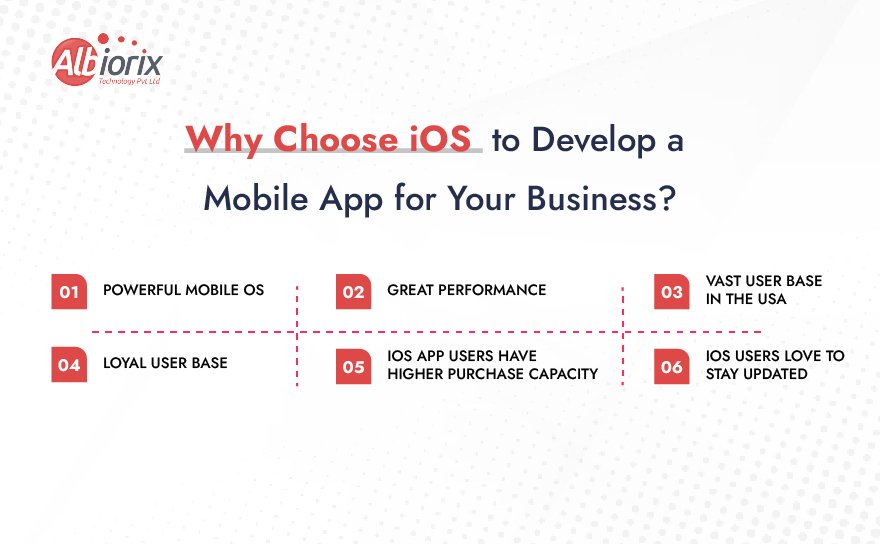
Here are some of the most common reasons why you should choose iOS to develop a mobile app for your business:
Powerful Mobile OS: iOS is a powerful and flexible mobile operating system by Apple. It is designed and developed to build user-friendly, robust, and scalable applications for iPhone, iPad, and iPod touch. This operating system offers a great user experience. The mobile applications developed for iOS work in perfect sync for all the devices, showing no compatibility issues.
Great Performance: Along with the great user experience and compatibility, one more thing that is really impressive about iOS is its performance. iOS applications for businesses are very smooth and fast and never lag in performance. This feature makes iOS application development a perfect choice for small to large businesses looking for premium digital iOS solutions. You can have a great-performing iOS application with minimal investment.
Vast User Base in the USA: There is a massive demand for iOS application development services in the USA because of the vast user base. As per the data available over the web, iOS OS covers 50% of the market in North America, and out of 300 million users (2021) in the USA, more than 113 million people use the iPhone. This is the reason why iOS app development is preferred in the USA, compared to Android apps.
Loyal User Base: The IOS operating system not only has a vast user base in the United States of America, but it also has the most loyal user base in the USA and across the world. Due to the positive impact on the market, most adult users across the globe prefer to buy iPhones.
iOS App Users Have Higher Purchase Capacity: Compared to Android users, iPhone and iPad users have shown a higher purchase capacity. iOS users spend more on technology and in-app purchases compared to Android users. As per the data available, iOS apps generated $103.4 billion in revenue, whereas Android generated $46.7 billion in revenue. 68% of iOS users spend money on in-app purchases for better experience and services, whereas only 32% of Android users prefer spending money in-app purchases.
iOS Users Love to Stay Updated: Most iOS users (iPhone and iPad) love to stay updated with the latest hardware and software. It makes it easy for iOS app developers to build an upgraded version of the app through rapid application development.
Different Types of iOS Apps for Businesses
There are mainly two different types of iOS apps for business – Native and Hybrid. Below is the main difference between both:
1. Native iOS Apps:
Native iOS apps are dedicatedly built for the iOS operating system. Developers of Native iOS applications use tools and technologies such as Swift, Objective-C, and Xcode.
The major difference is that native apps don’t run on other mobile operating systems like Android and Windows.
2. Hybrid iOS Apps:
This iOS application combines native and web solutions. This iOS app is developed using languages such as CSS, JavaScript, and HTML.
The most amazing feature of this type of app is that it can be used on multiple platforms like Android and Windows. It saves time, money, and effort.
Ready to build a standout iOS app? Let’s bring your idea to life with Albiorix Technology.
At Albiorix Technology, we combine deep iOS expertise, user-focused design, and agile development to craft high-performing apps that thrive in the Apple ecosystem!
Transform Your Vision into Reality
Ready to take your business to the next level with cutting-edge digital products? Partner with us to develop innovative solutions that drive growth, efficiency, and customer satisfaction. Contact us today to get started!
What Features You Must Have in Your iOS Business App?
Businesses can add amazing features to their iOS business app to offer something unique to their clients. However, some features are inevitable and must be included in your business application.
If you look at the current iOS application development trends, here are the top features you should have in your business iOS app:
1. Intuitive and Engaging User Interface:
A successful iPhone application will always have an intuitive and engaging interface that provides seamless navigation.
Your app’s interface comes first before anything else; therefore, it has to be engaging, attractive, and user-friendly.
Your business iOS application must have dark mode compatibility, customizable theme options, responsiveness as per the screen size, and gesture navigation.
2. AI-Driven Personalization:
AI (Artificial Intelligence) and ML (Machine Learning) are used and integrated in all industries. It is drastically changing the user experience of mobile applications.
AI chatbots, predictive analytics, and AI recommendations are helping businesses understand user behavior.
As a result, it allows businesses to offer personalized experiences to users, which further helps them increase engagement and maximize conversions.
For AI-powered iOS application development, you can partner with a mobile app development company with an in-depth understanding of AI and your industry.
3. Next-Level Security and Data Protection:
iOS apps are considered to be the safest apps. With the rising threats of cyber-attacks and security breaches, it is important that your iPhone and iPad app is highly secure.
To make sure your app is secure, you can add multi-factor authentication, end-to-end encryption, Face ID, Touch ID, Secure API communications, and ADPR and CCPA compliance.
By incorporating these security measures, you can have a secure iOS app for your business.
4. Cloud Integration:
Cloud integration is the call of the time; therefore, for a successful mobile application and to maximize accessibility and scalability, cloud integration is a must.
The Cloud integration allows users to access their data while on the go.
You must consider cloud integration to improve your app’s performance, real-time data synchronization, and cost-effective infrastructure.
5. Offline Functionality:
It is one of the most common features of most business apps nowadays. This feature offers identical user experience and productivity even when the device is not connected to the internet.
In your iOS business application, you can add data synchronization upon reconnection, vital features that are available without Wi-Fi, and cached content for offline viewing.
This feature is a game changer especially for eLearning iOS apps and eCommerce iOS apps.
6. IoT and Wearables Connectivity:
Providing IoT and wearable connectivity is necessary for businesses aiming for long-term success.
By IoT and wearable connectivity, we mean that your business app must easily integrate with Apple Watches, AirPods, and other smart devices that consumers commonly use.
7. Voice Search and Smart Assistants:
Voice assistants like Siri are gaining popularity. Business applications can accommodate this feature to provide enhanced convenience to their users.
The voice search and smart assistants will help your user with hands-free navigation, voice commands, and voice searches.
By integrating the voice search, you can maximize the accessibility and efficiency of your iOS application.
8. Secure Payment Integration:
If your business app requires financial transactions, then you must integrate the most secure and seamless payment gateway.
In such cases, you can consider some popular names such as PayPal, Stripe, Apple Pay, and Cryptocurrency. All of them are secure and widely used in iOS application development.
9. Interactive Push Notifications:
Push notifications play a crucial role in the success of your business app. It helps you drive user engagement.
You can integrate the feature of push notifications with reminders for discount offers, personalised messages, real-time updates, and much more. Push notifications will keep your brand alive in the senses of your consumers.
How Albiorix Technology Can Help You With iOS App Development?
If you are looking for an iOS development company that can build scalable, secure, and high-performing business apps for you, then Albiorix Technology is the right technology partner.
Our team of iOS developers holds expertise in rapid application development. Being a top-rated software development company, we specialize in custom iOS app development services tailored to meet your business goals.
In the last 10 years, we have helped countless startups and established brands with powerful iOS apps for their business.
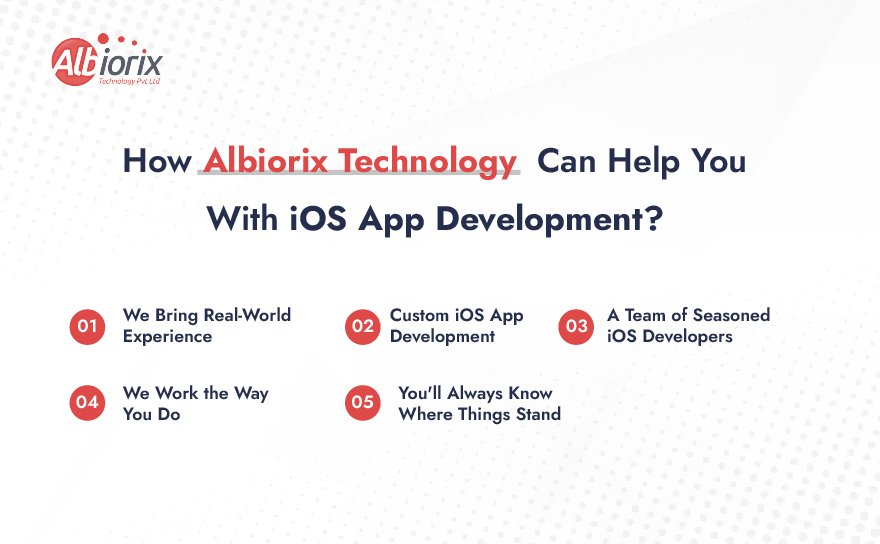
1. We Bring Real-World Experience:
We have an in-house team of iPhone app developers with real-world experience. Our team has worked on plenty of projects across multiple domains, such as healthcare, fintech, education, and entertainment, to name a few.
We are highly familiar with the latest iOS development tools and technologies such as Swift, Objective C, Xcode, and more.
2. Custom iOS App Development:
Our custom iOS app development services are designed to meet the real-life problems of businesses.
We spend time understanding your business problems and objectives and then deliver an app that is just right for you. We build apps that are required by your businesses and end users.
Our apps are optimized for performance, follow Apple Store guidelines, and have an engaging user interface.
3. A Team of Seasoned iOS Developers:
When you partner with Albiorix Technology for iOS application development services, you are hiring a seasoned team of developers with years of experience.
You hire UX designers, QA engineers, App developers, and Project Managers with domain expertise. Our team guides you through every process of iOS application development – from wireframing to app store deployment.
4. We Work the Way You Do:
Whether you’re building something from the ground up or just need a few extra hands on your internal team, we’re happy to step in.
Some clients bring us on board for full-cycle development, while others prefer to work with our iOS developers on a project-by-project basis.
We’re flexible with our collaboration style — agile sprints, set milestones, or a mix of both — because we know every project has its own rhythm.
5. You’ll Always Know Where Things Stand:
We’ve learned over the years that great partnerships are built on trust and communication. That’s why we keep things transparent from day one — with regular check-ins, honest updates, and clear timelines.
And once your app is live, we don’t just disappear. We stick around for performance monitoring, quick fixes, and any updates you might need. Because for us, success isn’t just about launch — it’s about long-term stability and growth.
If you’ve been searching for a trusted iOS app development company that understands your vision, look no further than Albiorix Technology. Let’s build something that not only works — but wows.
eCommerce software development helps build online stores tailored to your business needs. Whether you’re a small retailer or just starting out online, custom development gives you the tools to stand out, even in a market dominated by big brands.
With expert-built software, you get features that match your goals—better user experience, easier inventory control, and room to grow. It also builds trust with your customers through smooth navigation and secure payments.
If you’re wondering about costs or where to begin, know that custom solutions can be scaled to fit your budget and vision. In 2026, development costs will vary based on features, but investing in a solution that supports long-term success is always worth it.
So, let’s begin by understanding what eCommerce software development is
E-commerce software development is all about building powerful and flexible eCommerce applications that help online stores run smoothly and efficiently.
From setting up a stunning web storefront to handling payments, managing inventory, processing orders, and providing top-notch customer service, everything is streamlined under one system.
But here’s the game-changer: staying ahead of tech trends is crucial in the fast-moving eCommerce world. Integrating the latest tech trends keeps your business in the mainstream and alive in the senses of your targeted audiences.
Cutting-edge features like AI-powered product recommendations, AR/VR shopping experiences, mobile-friendly interfaces, automated chatbots, headless commerce solutions, and blockchain security can take your online store to the next level.
These innovations enhance user experience and give your business the competitive edge it needs to thrive. These reasons collectively contribute to the rising need for custom eCommerce software development in 2026 and ahead.
However, when it comes to eCommerce software solutions, there’s no one-size-fits-all—different types of businesses need software solutions according to their size and needs.
Also, different platforms cater to different business needs—whether it’s setting up a digital storefront, processing payments, listing products, or handling other essential functions.
Understanding these software models is key to choosing the right eCommerce software solutions for your business and unlocking its full potential in the digital marketplace.
Build Your Custom eCommerce Software with Experts!
Ready to revolutionize retail with a powerful eCommerce solution? Our experienced team specializes in eCommerce Software Solution and AI-powered applications.
How will eCommerce Software Solutions benefit your business?
To stay ahead in the fast-paced digital marketplace, having the right eCommerce software solution isn’t just an option—it’s a necessity.
A well-built eCommerce platform doesn’t just help you sell products; it transforms your entire business by enhancing efficiency, improving customer experience, and boosting revenue. Here’s how investing in custom eCommerce software development can help your business grow:
Seamless Shopping Experience – A user-friendly interface with smooth navigation keeps customers engaged, reduces cart abandonment, and boosts sales. Your audiences would love to visit your online store for shopping again and again.
Scalability for Growth – As your business expands, your eCommerce software can adapt—whether it’s handling more traffic, adding new products, or integrating new sales channels. This feature is extremely useful during the weekends and festivals when more people prefer online shopping instead of visiting the physical store. A scalable eCommerce software solution ensures a smooth shopping experience
AI-Driven Personalization – Leverage AI-powered recommendations, smart search, and personalized marketing to enhance customer engagement and increase conversions. AI-powered software can help you streamline your operations and automate many manual tasks.
Automation for Efficiency – Automate inventory management, order processing, and customer support with AI chatbots to save time and reduce operational costs. You can do much more withAI-powered eCommerce software solutions to enhance efficiency and productivity.
Multi-Platform & Mobile Optimization – Ensure a flawless shopping experience across web, mobile, and even smart devices to capture a wider audience. Mobile-optimized software solutions automatically adjust to the size and dimension of the screen, offering a seamless shopping experience across any size and type.
Advanced Security & Fraud Prevention – Protect customer data and transactions with robust security features, including encryption, two-factor authentication, and blockchain technology.
With the right eCommerce software, your business will not only survive but thrive in today’s competitive market.
Custom ECommerce Software Solutions
Custom eCommerce software solutions are designed to fit your business’s unique needs, unlike off-the-shelf platforms.
These tailored systems help create a smooth shopping experience, improve how your team manages orders, and support growth as your store expands.
By focusing on what your customers truly need, you can boost satisfaction and increase repeat visits.
A custom solution also strengthens your brand identity, giving you full control over features and design key to building long-term trust and standing out in today’s competitive market.
Here are the must-have core features that can take your eCommerce business to the next level:
User-Friendly Interface & Navigation – A clean, intuitive design ensures customers can easily find what they’re looking for, leading to higher engagement and sales.
AI-Powered Search & Recommendations – Smart search with filters and AI-driven product recommendations personalize the shopping experience and boost conversions.
Secure & Flexible Payment Options – Support multiple payment gateways, including digital wallets, BNPL (Buy Now, Pay Later), and cryptocurrency for frictionless transactions.
Mobile-First & Multi-Platform Optimization – Ensure a flawless experience across mobile devices, tablets, and desktops to capture a broader audience.
Advanced Inventory & Order Management – Real-time stock tracking, automated restocking alerts, and seamless order fulfillment help streamline operations.
AI Chatbots & 24/7 Customer Support – Instant AI-powered customer support reduces response time, enhances user satisfaction, and boosts retention.
Robust Security & Fraud Protection – Features like end-to-end encryption, two-factor authentication, and fraud detection keep customer data and transactions safe.
A well-crafted eCommerce software solution is not just about selling—it’s about building a brand, driving customer loyalty, and staying ahead of the competition.
Is DIY ECommerce Software Development Possible?
Yes, DIY eCommerce software development is possible—but it depends on your skill level and goals. If you’re comfortable with coding, understand basic web development, and have time to learn, you can build a store that fits your business.
Start small with essential features like product listings, a cart, and checkout. Use open-source tools or frameworks to guide you.
While DIY saves costs, keep in mind that maintaining and scaling the site may require expert help later as your business grows:
Choose the Right Tech Stack – Select programming languages, frameworks, and databases that align with your business goals. Popular choices include React, Angular, Python, Node.js, and MySQL. It might be confusing for you to decide the most suitable technology for your eCommerce software development, but if you get the help of Google or a software development company, Every year, plenty of new technologies are poured into the market; thus, you have to choose a one that is ageless, scalable, and has strong community support.
Set Up Hosting & Domain – Purchase a domain and choose a reliable hosting provider to ensure fast loading times and minimal downtime. The prices of domain and hosting services may vary. To check the price of your domain, you can visitGoDaddy.
Design a User-Friendly Interface – Use design tools like Figma or Adobe XD to create a clean, intuitive, and mobile-friendly shopping experience. Well, this could be one more tough step for you in the path of custom eCommerce software development.
Develop Core Features – Build essential features like product listings, shopping carts, secure payment gateways, and an order management system. If you are not sure what features should be included, then you can review and examine the features of some of the top online players like Amazon.
Integrate Security Measures – Implement SSL encryption, two-factor authentication, and fraud detection to safeguard customer data and transactions.
Optimize for SEO & Performance – Ensure your store ranks well on search engines by optimizing site speed, metadata, and structured data. Well, you cannot overlook the importance of SEO elements. Your online store must be SEO-friendly to be listed in search engines and found by the targeted audiences.
Test & Deploy – Conduct rigorous testing for bugs, responsiveness, and performance before launching your platform. Before going live with your online store, thoroughly test all the features – from login to checkout, everything must be working smoothly and seamlessly.
But Here’s the Catch… DIY eCommerce software development isn’t easy if you’re not technically proficient. From writing complex code to ensuring security and scalability, one mistake can cost you customers and revenue.
Why is it a good idea to contact an eCommerce software development Company?
Building an eCommerce platform isn’t just about setting up a website—it’s about creating a scalable, secure, and high-performing digital storefront that stands out in a competitive market.
While DIY solutions may seem tempting, they often lead to technical issues, security risks, and scalability challenges.
That’s where partnering with an experienced eCommerce software development company makes all the difference. Here’s why working with a top-rated eCommerce development team is a smart move:
Custom-Tailored Solutions – Get a fully customized eCommerce platform built to match your business needs, branding, and customer preferences. Everything will be as per you and your store’s requirements, from design to features and functionalities.
Seamless User Experience – Expert eCommerce developers ensure fast-loading pages, intuitive navigation, and a mobile-first approach to keep customers engaged and boost conversions. Your audiences will get mesmerized with the experience they get and come back for more.
Robust Security & Compliance – Advanced security features like SSL encryption, fraud detection, and PCI compliance protect customer data and transactions. It means your clients’ data and financial details are highly safe and secure.
Scalability & Performance Optimization – Future-proof your store with cloud solutions, optimized databases, and high-speed performance enhancements that handle growth effortlessly. This feature is extremely helpful during the weekend and festival seasons. Your store’s performance is not affected by heavy web traffic and transactions – it offers the same shopping experience on the web and in the app.
Advanced Tech Integrations – From AI-powered recommendations to AR/VR shopping experiences, developers help you integrate cutting-edge features that give you a competitive edge. It adds a wow effect to your online store and leaves a thumping impression on your customers.
Ongoing Support & Maintenance – A professional team ensures regular updates, bug fixes, and security patches so your store runs smoothly 24/7. The team of experts also ensures your website is never down or experiencing performance issues.
With expert guidance, you don’t just get an eCommerce platform—you get a robust, revenue-driven online store that’s built for long-term success.
Moreover, you will also have the support of a strong team of eCommerce professionals to help you at any point in time.
What are the characteristics of the best eCommerce software development company?
Also, with so many eCommerce software development companies out there, how do you choose the right one? If you want a high-performing, secure, and scalable eCommerce platform, you need to partner with the right development team.
But how do you know which company is the best fit for your business?
The best companies don’t just build online stores—they create high-performing, scalable, and customer-centric eCommerce solutions that drive business growth. Here’s what sets a top-rated eCommerce software development company apart:
Proven Expertise & Experience – A strong portfolio of successful eCommerce projects shows they know how to build platforms that drive sales and engagement. They have a dedicated team of software developers to build solutions of your choice using the most suitable technology.
Cutting-Edge Technology Stack – From AI-driven personalization to headless commerce, the best companies leverage the latest technologies to future-proof your online store. AI-powered online stores are the call of the time, and these eCommerce software development companies ensure you get the most modern software solutions to stay ahead.
Customization & Scalability – They don’t offer one-size-fits-all solutions. Instead, they build tailored, scalable platforms that grow with your business. You can easily customize your store as per your requirements. Moreover, scalable eCommerce software solutions ensure a flawless shopping experience during peak season.
Strong Focus on Security & Compliance – Features like PCI compliance, SSL encryption, and fraud detection ensure your platform is safe and trustworthy. It offers great peace of mind, as you don’t have to worry about your online store getting hacked or spammed.
Seamless UI/UX Design – The best eCommerce software developers create intuitive, user-friendly experiences that engage customers and drive conversions. Your audiences will be enchanted with the look and feel of the website.
Reliable Support & Maintenance – From troubleshooting to regular updates, a top-tier company provides ongoing support to keep your store running smoothly. Post-development support and maintenance services are extremely important, as they ensure 100% website uptime.
There are hundreds of eCommerce software development companies over the web.
Still, a great eCommerce software development company isn’t just a service provider—it’s a long-term partner dedicated to helping your business thrive in the competitive digital marketplace.
Ready to work with the best? Contact us.
Partner with the Best eCommerce Software Development Company!
Your eCommerce success starts with the right technology partner—and that’s where Albiorix Technology comes in! With 10+ years of experience and a team of 100+ seasoned professionals, we build custom eCommerce software solutions that help businesses stand out in today’s competitive digital landscape.
Whether you need a feature-rich online store, AI-powered recommendations, seamless mobile shopping, headless commerce solutions, or blockchain security, we’ve got you covered.
Our solutions are affordable, scalable, and tailored to your unique business needs—because we don’t believe in one-size-fits-all development.
Want to know the cost and timeline for your project? Let’s talk! Our eCommerce software development experts offer a free consultation and a no-obligation quote—so you can take the first step toward building a high-performing eCommerce platform without any risk.
Are you looking for a robust, scalable, and highly customizable ERP solution? Odoo Consultancy Services can help you implement and tailor Odoo to fit your business needs perfectly.
Whether you need seamless integration, customized modules, or expert guidance, Odoo consultants ensure that your ERP system works efficiently, streamlining operations and maximizing business growth.
With expert consultants guiding the process, businesses can leverage Odoo’s capabilities to enhance productivity, reduce costs, and gain a competitive edge.
What is Odoo?
Odoo is an open-source business software that helps companies manage daily operations in one place. It includes apps for tasks like accounting, sales, HR, inventory, and project management. Each app works together, so you don’t need separate tools.
Odoo is easy to use and lets businesses choose only the features they need. Since it’s open-source, companies can customize it to fit their goals. It’s a flexible and affordable solution for growing businesses that want to stay organized and efficient.
Odoo is trusted worldwide by businesses of all sizes for its simplicity and adaptability.
Why Choose Odoo for Your Business?
Odoo’s versatility and scalability make it an ideal ERP solution for businesses of all sizes. Compared to other ERP solutions such as NetSuit and SAP, Odoo has upper hands in many aspects. Here’s why Odoo stands out:
Modular and Scalable: Start with what you need and expand as your business grows. Easily add new applications without disrupting existing operations.
Cost-Effective: Open-source and flexible pricing make it affordable for businesses of all sizes. No licensing fees mean lower total cost of ownership.
Seamless Integration: Connect with third-party applications and existing systems effortlessly. Ensure smooth data synchronization and workflow automation.
User-Friendly Interface: Easy navigation and minimal learning curve enhance productivity. Employees can quickly adapt, reducing training time and improving efficiency.
Continuous Upgrades: Regular updates ensure security, efficiency, and new features. Businesses always have access to the latest tools and functionalities.
What is Odoo Consultancy Services?
Odoo Customization Services help businesses get the most out of their Odoo ERP system. Consultants work closely with companies to understand their goals and suggest the best ways to set up and use Odoo.
They guide businesses through installation, customization, and training to make sure the software fits their day-to-day needs.
With the help of an experienced Odoo consultant, businesses can avoid common setup mistakes and improve how smoothly the system runs.
These services are especially helpful for growing companies that want to use Odoo more effectively and ensure it supports long-term success.
The Role of Odoo Consultancy Services
Implementing an ERP system like Odoo requires more than just installation. It demands strategic planning, customization, and continuous optimization. Here’s how Odoo Consultancy Services can benefit your business:
Odoo Implementation & Strategy Development: A successful Odoo implementation starts with a well-defined strategy. Odoo consultants assess your business requirements, identify process inefficiencies, and create a customized implementation plan to ensure a seamless transition.
Odoo Customization Services: Every business has unique operational needs, and out-of-the-box Odoo features may not always fit perfectly. Our Odoo Customization Services ensure that your ERP solution is tailored to your specific business processes. From modifying existing modules to developing custom applications, an experienced Odoo Customization Company can make Odoo work precisely the way your business requires.
Odoo Integration: Integrating Odoo with third-party applications such as eCommerce platforms, payment gateways, or legacy systems is crucial for smooth operations. Expert consultants ensure seamless API integrations, enabling real-time data flow and automation across different departments.
Odoo Migration & Upgrades: If you’re using an older version of Odoo, migrating to the latest release is essential to leverage new features and security enhancements. Our Odoo Consultancy Services include hassle-free migration while ensuring minimal downtime and data integrity.
Odoo Training & Support: An ERP system is only as effective as its users. We provide comprehensive training sessions to ensure your team understands and utilizes Odoo efficiently. Additionally, our consultants offer ongoing support to address any technical issues or system enhancements as your business evolves.
Industries That Can Benefit from Odoo Consultancy Services
Odoo ERP is highly adaptable, making it an excellent choice for businesses across various industries. Here are some industries that can benefit the most:
Retail & eCommerce: Manage inventory, sales, and customer data efficiently.
Manufacturing: Optimize production planning, inventory control, and supply chain management.
Healthcare: Streamline patient records, billing, and compliance management.
Real Estate: Manage property listings, leads, and customer relationships seamlessly.
Education: Automate student records, attendance tracking, and administrative tasks.
Finance & Accounting: Simplify invoicing, payroll, and financial reporting.
Our team has extensive experience in working with businesses across Australia, the US, the UK, and Europe, delivering tailored Odoo solutions that drive growth and efficiency.
Key Benefits of Working with an Odoo Consultant:
Industry Expertise: Our consultants bring in-depth industry knowledge to design ERP solutions aligned with your business goals.
Cost-Effective Solutions: Avoid unnecessary expenses with customized Odoo implementations that fit your budget.
Scalability & Flexibility: Odoo grows with your business. Our customization ensures you get the features you need, when you need them.
Continuous Optimization: With dedicated support, you can continuously improve your Odoo system to meet changing business needs.
Faster Deployment & Minimal Downtime: Our team ensures a seamless implementation with minimal business disruptions.
Why Albiorix is the Best Odoo Customization Company
Albiorix stands out as a trusted partner for Odoo customization because of its focus on delivering solutions that fit each business’s unique needs.
With years of hands-on experience, the Albiorix team knows how to make Odoo work smoothly across different industries.
They take the time to understand your workflows, customize features that matter most, and ensure a reliable setup from start to finish. Their support doesn’t end after launch—they stay involved to keep everything running well.
Albiorix is known for practical, dependable service that helps businesses get real value from Odoo.
Expert Team of Odoo Consultants: Our team consists of certified Odoo experts with in-depth industry knowledge and extensive experience in ERP customization.
Tailored Odoo Solutions: We understand that every business is unique, so we create highly customized Odoo solutions that align with your specific operational needs.
Seamless Third-Party Integrations: Albiorix specializes in integrating Odoo with various third-party applications, ensuring smooth data flow across all business functions.
Scalability & Future-Ready Solutions: Our Odoo implementations are designed to scale with your business, ensuring long-term sustainability and flexibility.
Continuous Support & Maintenance: We provide ongoing technical support, updates, and performance optimizations to keep your Odoo system running smoothly.
Proven Success Across Multiple Industries: Albiorix has successfully delivered Odoo solutions for clients in diverse industries, including healthcare, finance, retail, and logistics.
Conclusion
If you’re looking to implement, customize, or optimize your p, our expert Odoo Consultancy Services can help.
Whether you need Odoo Customization Services for a tailor-made solution or require seamless ERP integration, we have the expertise to enhance your business processes effectively.
Contact Albiorix Technology today to unlock the full potential of Odoo for your business. You can share your contact details using the contact us form or talk to our experts by calling us at (+91) 991-308-8360. You can also DM us on LinkedIn.
The global mHealth market is projected to surpass $300 billion by 2026, and healthcare organisations worldwide are racing to meet patients where they already are — on their phones.
Whether you are a hospital administrator, a healthtech startup founder, or a product manager, understanding healthcare app development is no longer optional. It is the difference between leading your market and watching competitors do it first.
But building a healthcare app is not like launching a standard mobile application. Compliance requirements, clinical workflows, sensitive patient data, and integration with legacy hospital systems make it significantly more complex — and significantly more consequential.
In this guide, we cover everything you need to know: the types of healthcare apps, must-have features, the full development process, HIPAA and global compliance, cost breakdowns, how AI is reshaping the space, and how to choose the right development partner.
Healthcare app development is the process of designing and building mobile or web applications that support clinical, administrative, or patient-facing healthcare functions — from appointment booking and telemedicine to EHR management and AI-powered diagnostics.
Unlike standard app development, healthcare app development operates under strict regulatory frameworks, requires integration with complex hospital systems, and must prioritise patient safety at every decision point.
The applications built in this space touch real lives — a missed alert, an insecure data field, or a poorly designed interface can have consequences that go well beyond a bad review.
Modern healthcare apps serve three distinct groups: patients seeking convenient access to care, clinicians managing workflows and patient data, and administrators running the operational side of healthcare organisations. The best apps serve all three well.
Types of Healthcare Apps
Healthcare applications span a wide range of functions and user groups. Understanding the category your product falls into shapes every decision that follows — from features and tech stack to compliance requirements and cost.
Healthcare App Types Comparison
App Type
Who It’s For
Key Features
Complexity
Telemedicine app
Patients + doctors
Video consult, secure messaging, e-prescriptions
High
Patient portal
Patients
Records access, appointment booking, lab results
Medium
EHR / EMR system
Healthcare providers
Clinical notes, patient history, billing
Very high
Remote patient monitoring
Chronic care patients
Wearable integration, vitals tracking, AI alerts
High
Mental health app
Patients
Mood tracking, CBT modules, therapist chat
Medium
Hospital management system
Admin staff
Scheduling, billing, insurance, staff management
Very high
Telemedicine apps have seen the most explosive growth since 2020, with telemedicine usage increasing by over 3,800% during the pandemic and remaining elevated.
They require real-time video infrastructure, end-to-end encrypted messaging, and seamless payment processing.
Patient portals are often the entry point for healthcare organisations digitising their patient experience. They are medium complexity but must integrate tightly with existing EHR systems to be genuinely useful rather than just another login screen.
EHR and EMR systems are the most complex builds. They are the backbone of clinical operations and require deep integration with existing hospital infrastructure, role-based access control for clinical staff, and absolute reliability.
Remote patient monitoring (RPM) apps connect wearable devices — glucometers, pulse oximeters, cardiac monitors — to a clinical dashboard.
They require IoT integration, real-time data pipelines, and intelligent alert systems that notify clinicians only when thresholds are breached.
Mental health apps are medium complexity in terms of backend architecture but demand exceptional UX design. Users are often in vulnerable states; every interaction must feel safe, private, and non-judgemental.
Hospital management systems address the operational layer — bed management, staff scheduling, insurance claims, and patient flow. These are typically large enterprise builds with significant integration requirements.
Must-Have Features for Healthcare Apps
The features required in a healthcare app depend entirely on who is using it. Grouping them by user type avoids the common mistake of building a bloated feature list that serves no one particularly well.
Patient-Facing Features
User authentication with MFA — patients expect simple login (biometrics, OTP) but security must be uncompromising
Appointment booking and reminders — real-time scheduling with automated SMS/email reminders reduces no-shows significantly
Telehealth / video consultation — HIPAA-compliant video with file sharing and post-session notes
Prescription management — digital prescriptions, refill reminders, pharmacy integration
Symptom checker — AI-assisted triage that directs patients to the appropriate level of care
Secure in-app messaging — encrypted chat between patients and care teams
Health records access — read-only access to lab results, visit summaries, and diagnoses
Provider and Clinician Features
EHR integration — pull and push patient data to existing Epic, Cerner, or Allscripts systems via FHIR APIs
Clinical notes and documentation — voice-to-text or structured note templates that reduce administrative burden
Real-time patient data — live vitals from connected devices displayed in a clinical dashboard
Prescription writing — controlled substance prescribing with DEA compliance where required
Patient history timeline — chronological view of diagnoses, medications, procedures, and encounters
Admin and Back-End Features
Billing and revenue cycle management — automated claim submission and insurance eligibility verification
Staff and role management — granular permissions that ensure clinical staff see only what they need
Analytics and reporting — operational dashboards for leadership on patient volume, wait times, and outcomes
This segmentation matters. Many healthcare app projects fail because features for all three groups are mixed into a single interface without clear user journeys. Define your primary user group first, then layer in secondary functionality.
Healthcare App Development Process
Building a healthcare app follows a structured seven-step process. Each phase has specific healthcare-specific considerations that would not exist in a standard mobile project.
Step 1: Discovery and requirement analysis Define the primary user group, clinical workflows the app must support, integration requirements (which EHR systems, which devices, which payment processors), and the regulatory framework your market requires. This step should involve actual clinicians or administrators — not just product managers and developers.
Step 2: Compliance and regulatory planning Map out every data point the app will collect, store, or transmit and determine which regulations apply. In the US, this means HIPAA. In Europe, GDPR. In India, the Digital Personal Data Protection Act.
Compliance is not a phase at the end — it is a framework built into every subsequent step. Sign Business Associate Agreements (BAAs) with every third-party vendor who will handle patient data.
Step 3: UX/UI design Healthcare app design must balance clinical utility with accessibility. Users include elderly patients, clinical staff under time pressure, and administrators managing high volumes.
Design for the least technically confident user in your target group. Accessibility standards (WCAG 2.1 AA minimum) are not optional in regulated healthcare markets.
Step 4: Technology stack selection Common stacks include React Native or Flutter for cross-platform mobile, Node.js or Python (Django/FastAPI) for the backend, PostgreSQL or MongoDB for structured and unstructured health data, and AWS or Azure HIPAA-eligible cloud environments for infrastructure.
HL7 and FHIR standards govern EHR integration. For iOS app development in healthcare specifically, native Swift development often produces better performance for real-time monitoring use cases.
Step 5: Development and integration Build in iterative sprints with clinical review checkpoints. EHR integration via FHIR APIs is typically the longest and most unpredictable phase — hospital IT departments have variable responsiveness and legacy systems can be brittle. Budget time and contingency here.
Step 6: Testing — clinical, security, and performance Healthcare apps require three distinct testing streams running in parallel: functional testing against clinical workflows, security penetration testing and vulnerability assessment, and performance testing under realistic load.
A telemedicine app that drops video calls at peak clinical hours is not just a bad experience — it is a patient safety issue.
Step 7: Launch and ongoing maintenance Regulated apps require documentation packages for audit purposes. Post-launch, maintain a 15–25% annual maintenance budget for security patches, OS updates, regulatory changes, and feature iteration. Healthcare regulations change — your app must adapt with them.
HIPAA, GDPR, and Global Compliance
Compliance is the single factor that most differentiates healthcare app development from every other category of software build. Getting it wrong is not a recoverable mistake — penalties are severe, and reputational damage in healthcare is lasting.
Consent management, data portability, right to erasure, DPO appointment
India DPDP Act
India
Apps collecting personal data of Indian users
Consent, purpose limitation, data localisation, grievance officer
PIPEDA
Canada
Private sector health apps
Consent, accuracy, safeguards, accountability
HIPAA (Health Insurance Portability and Accountability Act) applies to any application that handles Protected Health Information (PHI) — which includes patient names, appointment records, diagnoses, prescriptions, and health history.
Non-compliance penalties can exceed $2.1 million per violation category in 2026, according to the U.S. Department of Health & Human Services. General wellness apps that do not collect PHI may fall outside HIPAA scope, but should still implement strong data security as a baseline.
Core HIPAA technical requirements:
End-to-end encryption for all data in transit (TLS 1.2+) and at rest (AES-256)
Audit logs recording who accessed what data and when
Role-based access controls limiting data visibility by job function
Automatic session timeouts on inactive sessions
Breach notification procedures with specific response timelines
GDPR adds consent management and data subject rights (the right to access, correct, and erase personal data) on top of security requirements. If your app serves users in any EU country, GDPR applies regardless of where your company is based.
India’s Digital Personal Data Protection (DPDP) Act, enacted in 2023 and enforceable from 2025, introduces consent-first data collection, purpose limitation, and significant data localisation requirements for sensitive health data.
For healthcare apps targeting the Indian market, this is now a primary compliance consideration alongside international standards.
Compliance planning should begin at Step 2 of your development process and involve a qualified healthcare compliance consultant or legal counsel familiar with your target market.
Healthcare App Development Cost Breakdown
Healthcare app development costs range from $20,000 for a simple wellness MVP to over $500,000 for enterprise-grade clinical platforms. The wide range reflects genuine variation in complexity, compliance requirements, and integration scope — not arbitrary pricing.
Cost and Timeline Breakdown by App Type
App Type
Complexity
Cost Range (USD)
Timeline
Basic wellness / reminder app
Low
$20,000 – $40,000
2–4 months
Patient portal (MVP)
Medium
$40,000 – $80,000
4–6 months
Telemedicine platform
High
$80,000 – $300,000
6–12 months
EHR / EMR system
Very high
$150,000 – $450,000
9–18 months
AI-powered diagnostics app
Very high
$150,000 – $500,000+
12–18 months
Enterprise hospital platform
Enterprise
$300,000 – $500,000+
12–24 months
Costs reflect offshore India-based development rates. US/UK agency rates are typically 40–60% higher for equivalent scope and quality.
Key Cost Drivers
Regulatory compliance adds 10–15% to total development cost. HIPAA compliance work — architecture reviews, security audits, BAA documentation, and penetration testing — is non-negotiable overhead that cannot be eliminated.
EHR integration is often the biggest budget variable. The complexity depends on which EHR systems you are integrating (Epic and Cerner have mature FHIR APIs; legacy systems may require custom connectors), how accessible the hospital IT team is, and how much data mapping is required.
AI and ML features add $50,000–$150,000+ depending on whether you are using pre-trained models via APIs (faster, lower cost) or building custom models on proprietary clinical data (slower, higher cost, but defensible IP).
Ongoing maintenance runs 15–25% of the initial build cost annually. This covers security patches, OS version updates, regulatory changes, and feature iteration based on user feedback. Do not omit this from your business case.
If you are planning a healthcare app build and want a custom estimate based on your specific requirements, our team can help — see our healthcare app development services for details on how we approach scoping and pricing.
How AI is Transforming Healthcare Apps
Artificial intelligence is no longer a future consideration in healthcare app development — it is a present-tense differentiator. The healthcare apps gaining traction in 2026 are those that use AI to do what neither patients nor clinicians have time to do manually.
AI-powered symptom checkers and triage use natural language processing to interpret patient-reported symptoms and route users to the appropriate level of care — reducing unnecessary emergency visits and improving patient satisfaction.
Predictive analytics for risk scoring analyses patient history, vitals trends, and demographic data to flag patients at elevated risk of deterioration, readmission, or non-adherence. Clinicians receive alerts before problems escalate rather than responding after the fact.
NLP for clinical documentation converts voice recordings of clinical encounters into structured notes, dramatically reducing the documentation burden that contributes to clinician burnout.
The best implementations integrate directly with EHR systems, auto-populating relevant fields.
Intelligent remote monitoring alerts apply machine learning to wearable device data streams, distinguishing clinically significant changes from normal variation and suppressing alert fatigue — one of the primary reasons RPM programmes fail.
AI chatbots for patient engagement handle appointment scheduling, prescription refill requests, post-discharge follow-ups, and FAQ responses, freeing clinical staff to focus on complex care interactions.
AI integration in healthcare apps requires careful clinical validation, transparent model documentation for regulatory purposes, and ongoing monitoring to catch model drift.
Albiorix offers dedicated AI development services that can be integrated into healthcare applications — from pre-built API integration to custom model development for specific clinical use cases.
How to Choose a Healthcare App Development Company
The healthcare app development market is crowded, and not every software agency is equipped to operate in a regulated clinical environment. Here are seven criteria to evaluate before signing a contract.
1. Healthcare domain expertise Have they built HIPAA-compliant apps before? Can they show you relevant case studies — not just “we built a mobile app for a healthcare client” but specific experience with your app category (telemedicine, EHR integration, RPM)?
2. Compliance track record Ask specifically: have their apps passed HIPAA audits? Do they sign BAAs? Do they have documented security policies? Vague answers here are a significant red flag.
3. EHR integration experience EHR integration is where many healthcare app projects stall. Ask which EHR systems they have integrated with, how they handle FHIR API authentication and rate limits, and whether they have existing connector libraries.
4. Security certifications and practices Look for SOC 2 Type II certification or ISO 27001 as baseline signals of mature security practice. Ask about their penetration testing process, how vulnerabilities are tracked and resolved, and their incident response procedures.
5. Post-launch support Healthcare apps cannot be launched and abandoned. Ask about their maintenance and support model — response SLAs, dedicated support channels, and how they handle emergency security patches.
6. Transparent pricing and scoping Healthcare app projects have a reputation for scope creep and budget overruns, often because initial scoping was inadequate. A credible partner will invest time in discovery before committing to a number, not produce a quote within 24 hours of a brief call.
7. Portfolio of comparable builds Request references from healthcare clients specifically, not just technology clients. Speaking directly with a CTO or product lead who has shipped with the team is more valuable than any case study.
Ready to Build Your Healthcare App?
Healthcare app development is complex — but with the right team, it is one of the most impactful investments a healthcare business can make. Done well, it improves patient outcomes, reduces clinician burden, and builds a digital capability that compounds in value over time.
At Albiorix, our team of healthcare app specialists has built solutions across telemedicine, patient portals, hospital management, and clinical workflow automation — with full HIPAA compliance, EHR integration, and post-launch support handled in-house.
The global sports betting industry is growing at an unprecedented rate, driven by technological advancements, regulatory changes, and increasing user demand.
The rise of sports betting software development, betting mobile apps, AI-powered predictions, and blockchain transactions has transformed traditional betting into an interactive and highly profitable business.
The sports betting industry is growing so vast that by 2033, it will only witness a CAGR of 40% in the United States. It is massive and provides ample opportunity for everyone who wants to benefit.
If you’re looking for sports betting app development, this comprehensive guide covers everything you need — from key features and tech stack to cost, security, compliance, and future trends.
In this comprehensive guide on sports betting software development, we will try to cover every vital aspect so that you don’t have to search more web pages and get started with betting app development.
By the end of this guide, you’ll have a clear roadmap to building a secure, scalable, and profitable sports betting platform.
What is a Sports Betting Software?
In easy-to-understand words, sports betting software is an application designed to support betting on different sporting events worldwide. These applications assist registered users in placing wagers on sports such as basketball, cricket, tennis, soccer, rugby, horse racing, and many others.
These sports betting software and apps are designed and developed carefully so users can easily place bets through mobile phones, tablets, or other handheld devices.
These betting apps use AI algorithms to let users carry out different betting actions and processes, guess match results, and place bets on the match results.
These sports betting apps are built to handle massive traffic easily, make millions of transactions simultaneously, and support millions of bets every second.
The most famous sports betting apps worldwide are FanDuel Sportsbook, Hard Rock Bet, BetMGM, Sky Bet, etc.
Future-Proof Your Sports Betting Business
The sports betting industry is booming! We can help you build an AI-powered sports betting software at affordable rates.
The sports betting industry is one of the fastest-growing markets globally, projected to exceed $167 billion by 2029.
Every year, millions of new users participate in legal sports betting to try their luck and change their fortune. Several factors contribute to this growth:
Legalization & Market Expansion: The U.S. Supreme Court lifted the federal ban on sports betting in 2018, allowing states to regulate their markets. Since then, over 35 states have legalized online and retail sports betting. Europe, Asia, and Africa are also seeing increased legalization, opening new revenue opportunities.
Mobile & Online Betting Boom: With over 70% of bets placed via betting mobile apps, online platforms dominate the market. Users demand fast, secure, and user-friendly apps that provide real-time data, secure payments, and interactive features.
Rise of Live/In-Play Betting: In-play betting allows users to place bets during live matches with dynamically changing odds. It has significantly increased engagement and betting volume, making it an essential feature for modern platforms.
Cryptocurrency & Blockchain Integration: Many betting platforms now accept Bitcoin, Ethereum, and other cryptocurrencies, offering faster transactions, anonymity, and lower fees. Blockchain technology also enables transparent and tamper-proof betting transactions.
The above listed are some of the most common reasons for the growth of the sports betting industry and the rise of professional sports betting software development.
Why Do You Need the Best Sports Betting Software?
The sports betting industry is expected to grow in billions by 2030. If you want a lucrative business Using the best sports betting software is essential if you want a reliable, secure, and user-friendly experience—whether you’re running a platform or placing bets.
Quality software helps manage real-time odds, secure transactions, and fast updates, which are crucial for both users and operators. It also ensures compliance with regulations, protects user data, and enhances overall trust in the platform.
With the right software, businesses can offer smooth performance, detailed analytics, and custom features that improve user engagement. In short, the best sports betting software builds a foundation of trust, efficiency, and long-term success.
User Engagement: Sports betting software and apps are designed to keep users engaged and addicted by allowing them to place bets on their favourite sports in interactive ways.
Track Betting Trends: These apps and software have functionalities that enable businesses to track real-time trends, monitor performance, and place odds by adjusting the bets accordingly.
Legal and Ethical Betting: Sports betting apps and software are developed with local and international laws in mind; thus, they offer complete peace of mind.
Uninterrupted Betting: These betting apps and software are built to easily handle the massive traffic during the peak season or major sporting events. They offer the same smooth experience to users during peak hours.
Key Features of a Successful Sports Betting Platform
For a successful sports betting software development, you will need an advanced set of features that enhance user engagement, security, and profitability.
You can review some of the top sports betting software to understand why they are successful and what they are missing from users’ perspectives.
You can be inspired by these apps and develop sports betting software that fills the gap. To assist you in scalable sports betting app development, we have pointed out some of the must-have features of any modern betting platform.
User-Friendly Interface & Experience: A well-designed UI/UX ensures that users can easily navigate the platform, place bets, and track their winnings.
Responsive Design – The platform should work seamlessly across desktop, mobile, and tablet devices.
Personalized Dashboards – Users should have custom dashboards displaying betting history, favorite teams, and upcoming matches.
Dark Mode & Theme Customization – Users love personalization; allowing them to customize the interface improves engagement.
Secure & Fast Payment Processing: Seamless and secure payment processing is critical for a trustworthy betting platform.
Multi-Payment Options – Integrate credit cards, e-wallets (PayPal, Skrill), bank transfers, and cryptocurrency payments.
Fast Withdrawals – Users expect quick and hassle-free withdrawals; integrating instant payouts can boost retention.
KYC & AML Compliance – Identity verification ensures fraud prevention and regulatory compliance.
Real-Time Odds & Live Betting: Live betting is one of the most profitable betting formats, allowing users to place bets during ongoing matches.
AI-Powered Dynamic Odds – The system must adjust odds in real-time based on game progress, injuries, and betting trends.
Instant Bet Settlement – Winning bets should be processed and paid out instantly.
Live Match Streaming – Offering live streams directly within the platform increases engagement and retention.
AI-Based Betting Predictions: AI-powered analytics enhance the betting experience by providing data-driven predictions and risk assessments.
Predictive Analytics – AI algorithms analyze historical data, player performance, weather conditions, and betting patterns.
Personalized Betting Suggestions – AI can recommend bets tailored to each user’s betting history and preferences.
Risk Analysis & Smart Alerts – The system can warn users about high-risk bets or irregular betting patterns.
Blockchain & Smart Contracts: Blockchain technology enhances transparency and trust in sports betting platforms.
Decentralized Betting – Using blockchain, users can place bets without intermediaries, ensuring fair play.
Smart Contracts for Automated Payouts – No need for manual processing, reducing fraud and disputes.
Crypto Transactions – Fast and secure deposits & withdrawals using Bitcoin, Ethereum, and stablecoins.
Best Technologies for Sports Betting Software Development in 2026
Hundreds of options are available in the market, but choosing the right technology is crucial for performance, scalability, and security.
If you are confused about which technology is the best for sports betting app development, then you can do some research on your own or ask a sports betting software development company to recommend a few.
However, below is the ideal tech stack for modern sports betting software development in 2026.
Backed by the AI revolution, the sports betting industry is evolving faster than ever. There are many ways you can use AI models and custom gen-AI solutions to empower your existing sports betting application and software.
Here is how AI agents transform your sports betting platform:
Personalized Betting Experience: An AI agent can easily analyze a user’s betting history, their preferences, and their betting behavior, and based on that, it can deliver personalized recommendations and promotions for higher engagement.
Real-Time Odds Optimization: AI agents can process live game data, player statistics, and market movements, and based on this information, they can adjust odds with millisecond precision. It keeps the platform more competitive.
Immediate Fraud Detection: AI agents can easily keep an eye on every transaction and monitor every financial activity carefully. It can immediately flag a suspicious transaction or activity before it can lead to any huge financial damage.
24/7 Customer Support: AI agents can handle thousands of calls and chats at the same time. Intelligent AI-powered voice agents or chatbots can handle user queries such as bet settlements, withdrawal queries, and more — without human intervention.
Promote Responsible Gambling: AI agents strictly follow the gambling compliance and standards; thus, when they detect an unusual gambling behavior, they trigger an automated intervention workflow to keep your platform compliant with regulatory requirements.
Cost of Sports Betting App Development
What is the cost of sports betting software development? It is one of the most common, simple, yet complex questions.
The sports betting app development cost depends on many factors; however, it requires significant investment, depending on features, technology, and compliance.
Feature
Cost
Basic MVP (Web Only)
$30,000 – $50,000
Advanced Sports-book with Live Betting
$80,000 – $150,000
AI-Driven & Blockchain-Based Platform
$150,000+
White-Label vs. Custom Development—White-Label solutions ($10,000 – $30,000) are cheaper but lack uniqueness, while custom platforms ($80,000+) provide full control and scalability.
Please note: The above-mentioned cost is provided to give you a rough idea. The actual cost of sports betting software development may vary based on features, technologies, and other decisive factors.
For an exact quote and timeline, contact a sports betting software development company like Albiorix Technology.
Legal Compliance & Security Measures
Legal compliance is vital in the sports betting industry because every region has its own rules. Without proper licenses, platforms risk legal penalties or even permanent bans.
To run a trustworthy and secure betting site, it’s important to follow local gambling regulations closely. This not only helps prevent fraud and financial risks but also builds trust with users.
Strong security measures, such as encrypted transactions and identity verification, are equally important.
When platforms prioritize both legal compliance and data protection, users feel more confident and protected making it easier to grow sustainably in a competitive market.
USA – The U.S. has a state-by-state regulatory approach. Operators must obtain licenses from state gaming commissions, such as the New Jersey Division of Gaming Enforcement (DGE) or Nevada Gaming Control Board (NGCB).
UK & Europe – The UK Gambling Commission (UKGC) and the Malta Gaming Authority (MGA) are the primary regulators in Europe. To operate legally, platforms must meet high standards of fairness, anti-money laundering (AML) compliance, and responsible gambling policies.
Asia – Regulations vary widely across these regions. Some countries, like China and India, have strict gambling bans, while others, like the Philippines, allow legal sports betting through PAGCOR (Philippine Amusement and Gaming Corporation).
Security Measures for Sports Betting Software
Implementing robust security measures is critical for protecting user data, financial transactions, and platform integrity.
Cyber threats, fraud, and regulatory violations can damage reputation and lead to legal consequences, making security a top priority.
SSL Encryption: SSL (Secure Sockets Layer) encryption ensures that all data exchanges between users and the platform are encrypted, preventing unauthorized access and hacking attempts.
Two-Factor Authentication (2FA): It adds an extra layer of security by requiring users to verify their identity using a one-time password (OTP), biometric authentication, or an authentication app.
Anti-Fraud AI Systems: AI-powered fraud detection systems continuously monitor user behavior, betting patterns, and transaction history to identify suspicious activities.
Moreover, Machine Learning algorithms can detect abnormal betting trends, such as match-fixing, arbitrage betting, and multiple accounts using the same IP address.
KYC Verification – Platforms must verify users’ identities by requiring official documents (passports, driver’s licenses, or utility bills) before allowing high-value transactions. This prevents fake accounts and fraudulent activities.
AML Compliance – AI-driven systems analyze transaction patterns to detect suspicious deposits, withdrawals, and money laundering attempts.
By implementing these security measures, sports betting platforms can safeguard user funds, prevent cyber threats, and maintain compliance with international gambling laws, ultimately building a trusted and reputable brand.
Future Trends in Sports Betting Software
Metaverse Betting – Virtual sports betting is emerging as a game-changer, allowing users to place bets inside immersive VR stadiums, interact with other bettors, and watch simulated sports events in real time. This trend enhances user engagement by blurring the lines between gaming and betting.
AI-Generated Betting Strategies – AI-driven models analyze player performance, historical data, and real-time game conditions to provide highly personalized betting recommendations. It helps bettors make data-driven decisions, reducing risks and increasing winning probabilities.
Decentralized Betting – Blockchain-based platforms use smart contracts to automate bet settlements, eliminate intermediaries, and ensure fair play. With transparent, tamper-proof transactions, users can bet securely and anonymously, gaining full trust in the system.
Conclusion
The sports betting industry is evolving rapidly, driven by technology, Artificial Intelligence, blockchain, and changing regulations.
A successful sports betting app development requires careful planning, compliance with legal frameworks, and an emphasis on user experience and security.
Businesses can stay competitive and maximize user engagement by integrating advanced features, real-time analytics, and AI-driven insights. A successful sports betting software requires:
Advanced technology & AI integration – AI-driven odds, predictive analytics, and blockchain for transparency.
User engagement & live betting features – Live streaming, real-time odds, and interactive betting experiences.
Sports betting software development company: The support of a top-rated sports betting software development company is very crucial. Their prior experience of developing such betting apps will help you develop a solution you need in less time and budget.
With the right approach, sports betting platforms can generate massive revenues while ensuring a seamless, secure, and immersive betting experience for users.
Looking to build a next-gen sports betting platform? Contact us today!
Whether you’re launching a sportsbook, exchange betting, or an AI-powered prediction platform, our team of expert developers and industry specialists can help bring your vision to life.
We offer cutting-edge technology, blockchain integration, real-time analytics, and secure payment solutions to ensure a seamless betting experience.
Let’s build a high-performance, fully compliant, and user-friendly betting platform that stands out in the market. Get in touch today and turn your idea into reality!
The eCommerce industry is thriving, with global online sales projected to surpass $80 trillion by 2030. And the credit for this exponential growth goes to the technological revolution we are experiencing in almost every industry and domain.
The arrival of new technologies in eCommerce software development has made it possible for you to virtually see, feel, review, and test the product while sitting in the comfort of your house.
For businesses aiming to capture this massive eCommerce market and want to be a part of this lucrative industry, having a robust, user-friendly online store isn’t just a luxury — it’s a necessity.
Get in touch with an angular development company and ask them to build future-proof eCommerce web development solutions that can make you sit at the industry’s apex.
Amid so many tools, technologies, and frameworks available in the market for custom eCommerce software development, we will discuss why you should choose Angular to develop your brand-new online store.
Introduction to Angular
Developed by Google, Angular is an open-source and robust front-end framework to create modern, powerful, scalable web solutions.
It is highly admired for its modular architecture that allows angular developers to build single-page applications with high performance and maintainability.
It leverages TypeScript, a statically typed superset of JavaScript, to enhance code quality and structure.
With features like two-way data binding, dependency injection, and a robust component-based structure, Angular simplifies development and ensures seamless user experiences.
Widely adopted in enterprise solutions, Angular continues to evolve, making it a preferred choice for modern web development.
Due to its amazing features, flexibility, community support, and ability to handle complex projects, angular is the best option for eCommerce software development.
Build Your Winning eCommerce Platform Now!
Ready to launch an online store that stands out? Connect with us and unlock eCommerce web development solutions tailored to your business.
Why Angular is a Game-Changer for eCommerce Software
Angular is a powerful framework that caters to the unique demands of eCommerce software development, offering the perfect blend of performance, scalability, and user experience.
Angular enables businesses to build fast, secure, and feature-rich eCommerce platforms that thrive in a competitive market.
That’s why Angular has become a go-to framework for building dynamic, high-performance eCommerce software solutions.
Its modular architecture and two-way data binding make it ideal for creating interactive online stores. But what sets it apart for businesses?
1. High Performance:
Angular’s efficient structure ensures quick load times and smooth data handling, even during high-traffic periods. It reduces bounce rates, keeps customers engaged, and enhances conversions.
2. Scalability:
The modular architecture simplifies feature additions and scaling, allowing eCommerce platforms to grow seamlessly as business demands evolve.
3. Enhanced Security:
Built-in security features like XSS protection and strict data handling safeguard sensitive customer information, fostering trust and reliability.
4. Seamless User Experience:
Two-way data binding enables real-time updates and smooth navigation, delivering a responsive and interactive shopping experience.
5. Offline Capability:
With Progressive Web App (PWA) support, Angular allows users to browse products even without an internet connection, improving accessibility and customer retention.
By leveraging Angular, businesses can create scalable, high-performing, and secure eCommerce web development solutions that stand out in today’s digital landscape.
Key Features of eCommerce Web Development Solutions Powered by Angular
Customers who visit an online store expect a smooth, intuitive experience — regardless of the device they’re using. eCommerce web development solutions built with Angular deliver precisely that. Here’s how:
1. Responsive Design for Mobile Shoppers:
With over 50% of eCommerce traffic coming from mobile devices, responsive design is non-negotiable. Angular’s flexibility allows developers to craft interfaces that adapt seamlessly to screens of all sizes.
Whether a customer is browsing on a phone or a desktop, the experience remains consistent and engaging.
Coupled with its single-page application (SPA) capabilities, it eliminates reloads, letting users move from product pages to checkout without friction. It keeps bounce rates low and satisfaction high.
3. Custom Features:
Need a dynamic product filter or a real-time shopping cart? Angular development services make it happen.
The framework’s component-based structure allows angular developers to build tailored features that match your brand’s unique needs, enhancing the shopping experience.
4. Real-Time Data Updates:
Angular’s two-way data binding ensures that changes—like stock levels or price adjustments—reflect instantly on the user’s screen.
It is a game-changer for flash sales or limited-stock items, keeping customers informed and engaged without manual refreshes.
5. Enhanced Security:
Security breaches can sink an eCommerce business. Angular’s built-in protections, like sanitization against cross-site scripting (XSS), safeguard user data.
Paired with secure APIs, it strengthens eCommerce web development solutions, giving customers confidence to shop with you.
These elements aren’t just technical perks—they translate to happier customers and higher sales. By partnering with an Angular development company, you can unlock these benefits and create a platform that stands out in a crowded market.
Simplifying Payment Gateway Integration with Angular
No eCommerce platform is complete without a secure, efficient payment system.
Payment gateway integration is a make-or-break factor for online stores — after all, 17% of cart abandonments happen due to complicated checkout processes.
Angular simplifies this critical step, ensuring customers can pay with confidence.
Angular’s robust ecosystem supports integration with popular payment gateways like PayPal, Stripe, and Square. Its ability to handle APIs efficiently means transactions are processed in real-time, reducing delays that frustrate shoppers.
For example, an Angular development company can implement a checkout flow where customers enter their card details, see instant validation, and complete their purchase — all without leaving the page.
Security is another priority. Angular’s built-in tools, like sanitization to prevent XSS attacks, pair well with encrypted payment APIs. It ensures sensitive data stays safe, building trust with your customers.
Whether you’re a small retailer or a global brand, payment gateway integration powered by Angular offers reliability and peace of mind — key ingredients for eCommerce success.
Choosing the Right Angular Development Partner
Building an eCommerce platform isn’t a solo job — it requires expertise. Selecting the right development partner can mean distinguishing between a basic site and a standout solution. Here’s how to choose wisely:
1. Look for eCommerce Experience:
An Angular development company with a track record in eCommerce web development solutions understands the nuances of online retail.
Ask for case studies or examples of past projects—have they tackled payment systems or scalable stores before?
2. Angular vs. AngularJS Expertise:
If your existing platform runs on AngularJS, an AngularJS development company can help modernize it. For new builds, prioritize firms specializing in the latest Angular versions to future-proof your site.
3. Focus on Payment Integration:
Since payment gateway integration is critical, confirm your partner has experience with secure, seamless implementations. Ask: “Which gateways have you integrated, and how do you ensure security?
4. Scalability and Support:
Your business will grow, and your software should, too. Choose a team that offers ongoing maintenance and can scale your platform as traffic increases.
A skilled partner doesn’t just code — they align technology with your business goals. By collaborating with experts in Angular development services, you’re investing in a platform that drives traffic, conversions, and long-term growth.
Take Your Online Store to the Next Level
Want a fast, secure, and custom eCommerce solution? We’ll craft eCommerce web development solutions that drive sales and delight customers.
In the fast-evolving world of eCommerce, standing still isn’t an option. Angular development services offer a powerful way to build eCommerce web development solutions that delight customers and boost your bottom line.
From lightning-fast load times to secure payment gateway integration, Angular equips your online store with the tools to compete.
Whether you’re partnering with an Angular development company or modernizing with an AngularJS development company, the result is the same: a platform that’s as dynamic as your business.
For those still using AngularJS (Angular’s predecessor), an AngularJS development company like Albiorix continues to support legacy systems, offering a bridge to modern solutions.
Whether you’re starting fresh with Angular or upgrading an older site, this framework delivers the tools to stay competitive. It’s no wonder businesses seeking eCommerce web development solutions are turning to Angular for an edge.
Ready to take your eCommerce game to the next level? The right software can turn casual browsers into loyal customers.
What’s your biggest challenge in building or scaling an online store? Drop your thoughts below! You can contact us or talk to our experts at (+91) 991-308-8360.
There’s a lot of buzz over the web related to digital product development. As a result, many businesses are looking for the best digital product development.
But what exactly is custom digital product development, why is it trending in the market, and what’s the reason behind the need for top-rated product development services for the success of your business?
In this blog on digital product development, we will uncover the facts related to custom software product development, why it is essential for your business in 2026, and at the end, we will let you know how you will find a leading digital product development company in a few steps.
Let’s begin by understanding what digital product development is.
What is digital product development?
Digital product development is the complete process of building a digital solution—from idea to launch.
This includes designing, developing, testing, and releasing mobile apps, web apps, software, and digital platforms. The process combines technology, user experience (UX) design, and business strategy to create tools that solve user problems and deliver real value.
Custom product development is especially important today. It helps businesses personalize services, improve internal processes, and stay ahead in a competitive market. These tailored products meet specific user needs instead of offering generic solutions.
Most digital products are created using agile development methods. This approach supports constant feedback, testing, and improvement.
The steps typically include market research, UI/UX design, software development, quality checks, deployment, and ongoing support.
In 2026, digital product development is more crucial than ever. It helps companies innovate, enhance user satisfaction, and adapt to a fast-changing digital world.
For a smooth and successful product launch, businesses often turn to a trusted digital product development company with experienced teams—product managers, designers, developers, and marketers who work together from start to finish.
Turn Your Digital Product Idea into Reality!
Ready to build a cutting-edge digital solution for your business? Our expert team is here to guide you through every step—from ideation to launch.
What is the need for new digital product development in 2026?
As technology rapidly evolves and consumer expectations shift, businesses must continuously innovate to stay relevant and competitive.
In 2026, digital product development will be not just an opportunity but a necessity for businesses aiming to thrive in a dynamic market.
By developing new products, companies can create new offerings and products that can help them gain new customers and cement their position in the market.
Companies that don’t invest in new product development fail to innovate. They also risk losing market share to competitors who are more agile and responsive to changing customer demands. Here’s why businesses need new product development in 2026:
Keeping Up with Changing Consumer Demands Customers expect more personalized, efficient, and innovative solutions, and this is where digital product development comes into play. It allows you to build new products with modern features to ensure your business can meet evolving expectations.
Staying Competitive in the Digital Economy Rapid advancements in AI, automation, and digital technologies require businesses to innovate to maintain a strong market presence. The market is flooding with AI-powered software and apps, and by joining this trend, you place yourself above the ordinary.
Enhancing Revenue and Growth Opportunities Launching new products opens up additional revenue streams, helping companies diversify their offerings and boost profitability. New product development enables you to win new customers, increasing your profit margin exponentially.
Addressing Market Gaps and Unmet Needs Identifying and solving customer pain points with innovative products can position a business as a market leader. With new product development, you can fill the gaps and deliver a product that is required by your end users.
Future Proving Against Industry Disruptions Companies that invest in continuous innovation can better adapt to economic shifts, regulatory changes, and technological disruptions. This shows that you are up to date, care for your customers, and love to stay on top of market trends.
How do you develop a new digital product?
New digital product development is a complex process. It demands a structured approach that blends innovation, technology, and user experience.
From ideation to launch, businesses must ensure they build a product that solves real problems, meets market demands, and delivers a seamless user experience.
Many trusted product development companies in Australia and India can help you bring your ideas to life. But if you want to DIY a new digital product for your business, then follow these tips:
Identify a Market Need: Conduct market research to understand customer pain points, industry trends, and gaps that your digital product can address. You must spend time understanding customer behavior and market trends.
Define Product Goals and Strategy: Outline the core objectives, target audience, key features, and business model for the product. This will help you develop a product that is required in the market and stay focused on the solution.
Create a prototype or MVP—develop a minimum viable product (MVP) with essential features to validate your idea and gather early user feedback. A prototype or MVP will let you test the features in real time with minimum investment.
Design and Develop the Product: Work on UI/UX design, front-end and back-end development, and integration of necessary technologies to bring the product to life.
Test and Improve: Conduct rigorous functional, performance, and usability testing to ensure the product meets quality standards. Testing your product will help you solve errors or enhance new features before the launch.
Launch and market the product: deploy the product, implement marketing strategies, and gather user feedback for continuous improvements.
Maintain and Upgrade: Regularly update the product with new features, security patches, and enhancements based on user feedback and technological advancements.
Developing a new digital product in 2025 demands a well-defined approach and strategy that blends innovation, technology, and user experience.
By following a structured approach, companies can minimize risks, improve efficiency, and maximize their chances of success.
Suppose a business lacks in-house expertise or resources to develop a new digital product. In that case, they can leverage digital product development services to streamline the process and ensure a successful launch.
Digital Product Development for Different Industries
As we all know, technological revolutions have stormed almost every industry around us.
Whether it’s healthcare, entertainment, travel, tourism, real estate, education, or anything else, innovative digital products are launched almost every day to streamline operations, offer better services, increase profit margins, and much more.
Thus, whatever your industry or business domain, you must join this revolution to stay ahead of the competition. In fact, with the arrival of AI and ML, a new set of digital products is lined up in 2025.
Healthcare: Custom digital product development for the healthcare industry can help doctors and institutes offer enhanced patient care anytime and anywhere.
FinTech: Custom digital products for FinTech can streamline financial services at all levels and promote enhanced security against online threats.
Education: Custom digital new products can make learning fun, engaging, and interactive for kids and students at all levels.
eCommerce: New digital products for eCommerce can help you design and develop more customer-centric mobile apps and web stores.
Restaurant: Top-quality custom digital restaurant products can make booking and management more effortless. It will help you delight your customers.
Social Media: Custom digital products for social media can help you attract the attention of the targeted youth. Add modern and innovative features.
Logistics: New digital product development for logistics can easily help you optimize operations, improve tracking, and manage fleets.
Video Gaming: Custom product development for video games can help you design and deliver next-gen video games and experiences.
Digital product development is necessary now more than ever. It helps you stay tuned with the latest trends and overcome the competition around your business.
If you are an experienced professional, you can create a new product for your business, contact the best product development company nearby, or seek professional digital product development services, whatever you find convenient.
What are digital product development services?
With the rise in the need for innovative new products in 2026, there’s a massive boost in the need for professional digital product development services.
The latter encompass end-to-end solutions that help businesses design, develop, and launch innovative digital products such as mobile apps, web applications, SaaS platforms, and enterprise software.
These services for businesses are designed to streamline the development process, reduce time-to-market, and ensure the final product meets both business objectives and user expectations.
There are many best digital product development companies across the world, but you have to carefully hire a company that holds expertise in designing and developing the product of your genre.
A company holding expertise in your domain will offer you a cutting edge over the competitors.
With advancements in AI, cloud computing, and automation, digital product development services in 2026 focus on delivering scalable, secure, and high-performance solutions tailored to modern business needs. Here are the key services offered:
Product Strategy & Consulting: Expert guidance on market research, product ideation, feasibility analysis, and roadmap planning.
UI/UX Design & Prototyping: Creating intuitive, user-friendly designs and interactive prototypes to enhance the user experience.
Custom Software & App Development: Building scalable mobile apps, web applications, SaaS platforms, and enterprise software.
AI & Automation Integration: Leveraging AI-powered features, automation, and machine learning to enhance digital products.
Cloud & DevOps Solutions: Ensuring seamless deployment, scalability, and performance optimization with cloud infrastructure and DevOps practices.
Testing & Quality Assurance: Conducting rigorous functional, security, and performance testing to ensure a bug-free and efficient product.
Maintenance & Continuous Improvement: Providing ongoing support, updates, and feature enhancements to keep the product competitive.
By leveraging digital product development services, businesses can accelerate innovation, optimize costs, and bring high-quality products to market efficiently.
Why Albiorix Technology is the Best Digital Product Development Company
Suppose you have made up your mind about digital productdevelopment for your business.
In that case, you need to find a company that is experienced, trusted, and known for delivering results within the defined time frame.
Well, Albiorix Technology is one such product development company. We have helped many businesses across various domains bring their ideas to life.
From healthcare to education and from energy to entertainment, we have worked with almost every industry, delivering digital solutions that matter the most for their business.
Here are a few reasons why Albiorix Technology is the most suitable digital product development services company for you.
100% Transparency & Integrity: We prioritize transparency and integrity by safeguarding your intellectual property through strict NDA agreements, ensuring your ideas remain protected.
On-Time Delivery: Our dedicated digital product developers adhere to a well-structured timeline, ensuring every milestone is delivered on schedule—giving you peace of mind.
Seasoned Developers: With years of hands-on experience in digital product development, our skilled developers craft cutting-edge solutions tailored to your business needs.
Rigorous QA & Testing: Our top-tier QA and testing services guarantee a bug-free, high-performing final product, ensuring a seamless launch.
24/7 Support: Have questions? Our experts are available round the clock via text, email, Skype, or call to provide instant assistance whenever you need it.
Conclusion
Whether you need expert guidance or a full-fledged development team of software developers, we’re here to help! Drop us a DM on LinkedIn, send us your contact details and queries via our Contact Us form, or give us a call at (+91) 991-308-8360.
Our team is always available to answer your questions.
Plus, we offer free quotes and consultations to get you started on the right track. Let’s build something amazing together!