




Best Python Libraries for AI and Building Chatbots in 2026

Summary: In 2026, the top Python libraries for AI in the USA focus on agentic workflows, LLMs, and high-performance data processing. PyTorch and TensorFlow dominate deep learning, while LangChain and Transformers (Hugging Face) lead in LLM orchestration. Essential, modern tools include Scikit-learn for machine learning, Polars for fast data handling, and ChromaDB for vector storage.

Let’s be real, if you’re a startup founder or a business owner trying to build something with AI, the sheer number of tools out there can feel overwhelming.

Everyone’s throwing around terms like “deep learning,” “generative AI solutions,” and “large language models,” and somewhere in that noise is the actual answer to your question: which Python library do I actually need? Which are the top Python libraries for AI in 2026?

Here’s the thing: Python didn’t become the world’s dominant AI language by accident. It happened because of its libraries.

While Python is the undisputed king of AI, choosing it for your infrastructure depends on your Python Development requirements.

If you’re still weighing your options for your server-side architecture, you might want to compare Node.js vs Python for backend development to see which fits your full-stack requirements.”

It has pre-built collections of code that let you build powerful custom AI solutions without reinventing the wheel.

Whether you want to automate document processing using a python library for pdf, scrape data with a python web scraping library, or build a full generative AI chatbot, there’s a Python library built exactly for that job.

In this guide, we’ve cut through the noise. We cover the top Python libraries in 2026 that real businesses are using. For each library, we explain what it does, who it’s for, when to use it, and what you can realistically build with it.

So, Let’s Find the Best Python Libraries for AI in 2026!

1. TensorFlow: By Google Brain – Best for Enterprise Scale AI

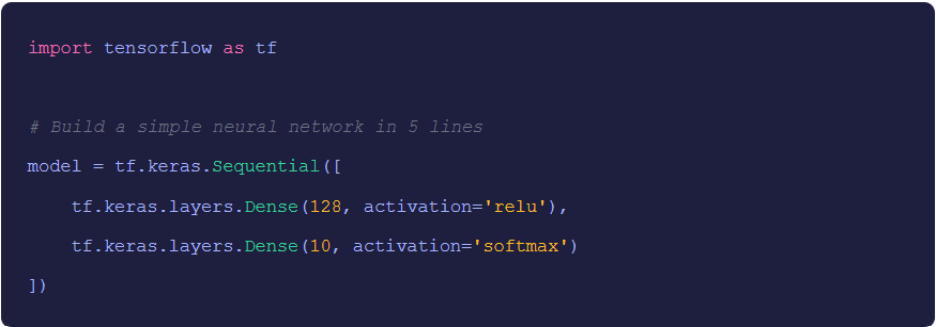
In our search for the top Python libraries for AI in the USA, the first name that comes to mind is TensorFlow. Built by Google, this powerful and scalable Python library is considered the heavy machinery of the AI world.

It was developed by Google to power its in-house products, such as Google Search, but it was later made available to the public. If you need a library that can scale with your business needs, then TensorFlow is the best Python library you have in 2026.

For large organizations, TensorFlow is a strong choice for those who want to deploy AI models in production.

TensorFlow’s flexibility is rare among AI tools, allowing it to run in browsers via TensorFlow.js.

However, if you are deciding which language to standardize your team on for both web and AI, checking out a detailed breakdown of Python vs JavaScript can help you decide where to invest your resources.”

Best for: Businesses building image recognition tools, recommendation engines, fraud detection systems, or anything that needs to handle millions of data points reliably.

TensorFlow

If you are using TensorFlow for AI development, then please remember that it has a steeper learning curve compared to other Python libraries on the list.

Therefore, it is advisable to contact a generative AI development company to build a custom AI solution for your business.

2. PyTorch: By Meta AI – Best for AI Research and Custom Model Development

So, the second on the list of the most popular and best Python Libraries for AI in 2026 is “PyTorch”. If TensorFlow is heavy machinery, then PyTorch is a custom, powerful sports car. It is highly flexible, amazingly fast, and offers complete control.

It is the perfect Python library for businesses that want precise control over how their AI model behaves. If we talk about the usage statistics, then in 2026, PyTorch has overtaken TensorFlow in adoption.

It has become the first choice of researchers and AI engineers alike, and for good reason.

PyTorch has one more standout feature. When you write code for PyTorch, it reads like regular Python, which allows your development team to build faster and debug errors more easily.

It uses a dynamic computational graph that lets you change how your AI model thinks on the fly.

“Best for: Startups building custom AI models, computer vision products (like defect detection or face recognition), and any team that wants cutting-edge AI capabilities without being locked into a rigid framework.”

Most of the popular generative AI solutions that we are using today, including LLMs and image generators, were either built on or fine-tuned using PyTorch.

If you’re working with an AI development partner in 2026, there’s a good chance PyTorch is their first choice.

3. Scikit-learn: Community-built – Best for Classical Machine Learning

Not every AI problem needs a neural network. Sometimes, you just need a reliable algorithm that can look at your historical sales data and predict next quarter’s numbers, or automatically sort your customer support tickets by topic. This is where Scikit-learn shines.

Scikit-learn is the go-to Python library for classical machine learning things like decision trees, random forests, regression analysis, and clustering.

It’s been around since 2007, has an enormous community behind it, and is remarkably easy to work with compared to deep learning frameworks.

“Best for: Businesses that need predictive analytics, customer segmentation, anomaly detection, or recommendation logic without the complexity of building neural networks.”

One of the biggest strengths of this library is its consistent, clean interface every algorithm works in basically the same way.

That means your team spends less time reading documentation and more time solving actual business problems. For many small business AI use cases, Scikit-learn is all you’ll ever need.

4. Hugging Face Transformers: By Hugging Face – Best for NLP and generative AI

You come across a lot of chatbots and many other AI tools in your day-to-day life. But have you ever wondered how these AI chatbots, document summarizers, and other AI tools are built and which technology is used?

Behind most of these tools, there’s only one name, and it’s Hugging Face Transformers. The latter gives you access to thousands of pre-trained AI models – all through a single, consistent interface.

Hugging Face Transformers is a Python library that has proved to be a game-changer for startups and small businesses.

If you’re looking to leverage these models for your business, our LLM Development Services can help you fine-tune Transformers for specific enterprise needs.

Instead of spending months and millions training an AI from scratch, you can download a pre-trained model and fine-tune it on your own data in a matter of days. That’s the magic of the Hugging Face ecosystem.
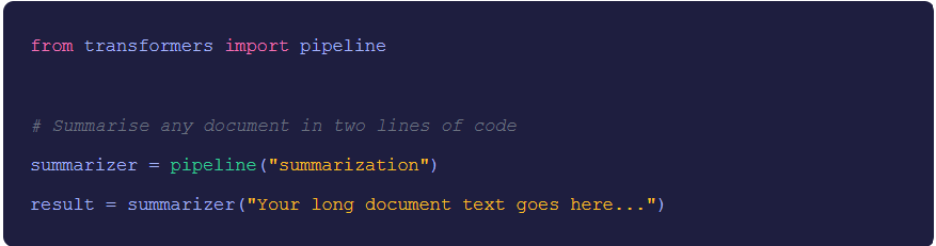
Hugging Face Transformers

Best for: Building custom AI chatbots, auto-summarization tools for documents, sentiment analysis, content creation assistants, and any product that involves understanding or generating text.

In 2026, Hugging Face has become the de facto home for generative AI solutions. Whether you’re building an AI-powered customer service bot in Sydney or a document intelligence tool for a US law firm, Transformers is likely to be a core part of your Python AI stack.

5. LangChain: By LangChain Inc Best for AI-powered Business Applications

LangChain is a Python Library that can turn a raw AI model into an actual business tool. It is designed and developed to help businesses connect their data sources with AI. It is normally used to connect documents, databases, websites, and APIs.

For Example, if you want to develop an AI assistant that can assist your customers and reply to questions related to your products and services using your internal data sources and documents.

In this case, ChatGPT won’t be a useful tool as it doesn’t know anything about your business. But LangChain can solve this problem through Retrieval Augmented Generation. It allows the AI to “look up” information from your own data in real time before answering.

“Best for: Building internal AI assistants, customer-facing chatbots, document Q&A systems, AI agents that can take actions (like booking appointments or processing orders), and any workflow that chains multiple AI tasks together.”

We specialize in using LangChain to build autonomous workflows, explore our AI Agent Development Services to see what’s possible.”

In 2026, LangChain became one of the most popular and fastest growing Python libraries for AI development. It bridges the gap between a raw language model and a production-ready generative AI solution that solves real business problems.

If your goal is to build a custom AI solution for your business in 2026, then LangChain is almost certainly going to be part of the conversation.

Which Python Libraries are Best for Making AI Chatbots?

If your goal in 2026 is specifically to build a chatbot, you don’t just pick one library you build a “stack.” While the libraries above are powerful, making an AI chatbot that doesn’t hallucinate requires a specific combination of tools.

For a production-ready chatbot, the “Power Trio” usually looks like this:

  • LangChain: This acts as the “brain” or the logic layer. It manages the conversation flow and connects the bot to your company’s private data.
  • Hugging Face Transformers: This provides the “language ability,” allowing your bot to understand and generate human-like text.
  • ChromaDB or FAISS: These are vector databases (often used alongside LangChain) that act as the bot’s “long-term memory,” allowing it to remember past customer interactions.

“Best for: Startups and enterprises building customer support bots, internal HR assistants, or RAG-based (Retrieval-Augmented Generation) knowledge bases.”

Pro Tip: Building a basic bot is easy, but making it secure and scalable for thousands of users is a different challenge. If you are planning a complex deployment, it’s worth consulting with an AI Chatbot Development expert to ensure your architecture is cost-efficient.

Build Your AI Solution with Albiorix

You don’t need to understand every library on this list that’s what we’re here for. Tell us what you’re trying to solve


AI Agent LLM Services

6. NumPy: Community-built – The Python Math Library Every AI Project Needs

NumPy is the Python math library that sits beneath almost every other library on this list. TensorFlow, PyTorch, Scikit-learn, Pandas they all rely on NumPy under the hood.

It’s the foundation of numerical computing in Python, and it’s been that way for two decades.

What NumPy actually does is give Python the ability to work with large arrays of numbers incredibly fast. Regular Python lists are slow when you’re trying to do mathematical operations on millions of data points.

NumPy solves that by handling these operations in highly optimized C code behind the scenes.

You don’t need to interact with NumPy directly most of the time it just works in the background.

But understanding the use of Python libraries like NumPy helps you grasp why Python is so fast and powerful for AI tasks that involve heavy math, matrix multiplications, and data transformations.

“Best for: Any AI project involving data which is all of them. Also useful directly for data processing pipelines, signal processing, and scientific computing applications.”

7. Pandas: Community-built – Your Data Cleaning and Preparation Tool

Before you can train any AI model, you need clean, well-organized data. And if you’ve ever stared at a messy spreadsheet full of inconsistent dates, missing values, and duplicate records, you’ll understand why Pandas exists.

It’s the most-used Python library among data scientists and for good reason.

Pandas gives Python something called a “DataFrame” essentially a supercharged spreadsheet that lives in code.

You can load a CSV file, filter rows, merge tables, handle missing data, and run calculations, all in just a few lines. It’s a core part of the python standard library ecosystem for data work.

“Best for: Any business that has data in spreadsheets, databases, or CSV files and needs to clean, transform, or analyse it before feeding it into an AI model. If you have data, you probably need Pandas.”

Think of Pandas as the prep cook in your AI kitchen. It doesn’t do the cooking (that’s PyTorch or TensorFlow), but without it, your ingredients would be a mess, and nothing would work properly.

8. BeautifulSoup and Scrapy: Community-built – The Python Web Scraping Library Pair

A lot of AI projects need data that simply doesn’t exist in a neat CSV file it’s scattered across websites, news articles, product pages, and public databases. This is where a good python web scraping library becomes essential.

BeautifulSoup is the most beginner-friendly option. It parses HTML (the code behind web pages) and lets you extract specific pieces of information like all the product names and prices on an e-commerce site, or all the headlines from a news portal.

It’s lightweight, easy to learn, and perfect for smaller scraping tasks.

Scrapy is its more powerful sibling a full framework for large-scale data collection. If you need to scrape thousands of pages regularly as part of an automated AI pipeline, Scrapy handles concurrency, retry logic, and data pipelines out of the box.

“Best for: Competitive price monitoring, market research data collection, training data gathering for AI models, news aggregation, and any use case where you need to pull structured data from the web at scale.”

Just a quick note: web scraping should always be done responsibly and in accordance with a website’s Terms of Service and robots.txt file. When done right, it’s a powerful tool for building AI solutions with rich, real-world data.

9. pdfplumber and PyMuPDF: Community-built – The Python Library for PDF Processing

A surprising number of businesses are sitting on enormous amounts of valuable data locked inside PDFs. Contracts, invoices, reports, manuals, application forms.

If any of this sounds familiar, then a good python library for pdf processing is going to be your best friend.

pdfplumber is the gold standard for extracting text and tables from PDFs. It handles complex layouts exceptionally well, including multi-column documents and tables with merged cells things that trip up most other tools.

PyMuPDF (fitz) is faster and handles more complex PDFs, including scanned documents (with OCR support). It’s also great for manipulating PDFs adding watermarks, extracting images, and merging documents.

“Best for: Automating invoice processing, building contract analysis tools, creating document Q&A systems, extracting data from regulatory filings, and any AI workflow that starts with information trapped in a PDF.”
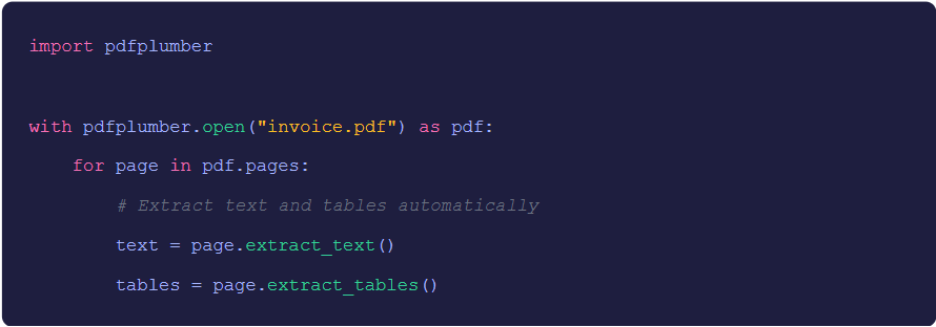
pdfplumber

10. Keras: By Google – Neural Networks for Non-Specialists

Keras sits on top of TensorFlow and makes it dramatically more approachable. If TensorFlow is a commercial kitchen, Keras is the intuitive home version all the power, but packaged in a way that doesn’t require a professional chef to operate.

In 2026, Keras has evolved into Keras 3 a major upgrade that makes it framework-agnostic. That means you can write a model in Keras and choose to run it on TensorFlow, PyTorch, or JAX, depending on what suits your project.

This kind of flexibility makes it one of the most future-proof choices among python libraries for AI today.

“Best for: Businesses that want to prototype and deploy neural networks quickly, teams with some Python experience but limited deep learning expertise, and any project where rapid iteration matters more than fine-grained control.”

The beauty of Keras is that it lets you go from idea to working model in minutes, not days. For small teams building AI-powered features into their products, that speed advantage is enormous.

Quick Comparison of Python Libraries: Which Library is Right for You?

Still not sure where to start? Here’s a straightforward breakdown of all ten libraries and what they’re best suited for.
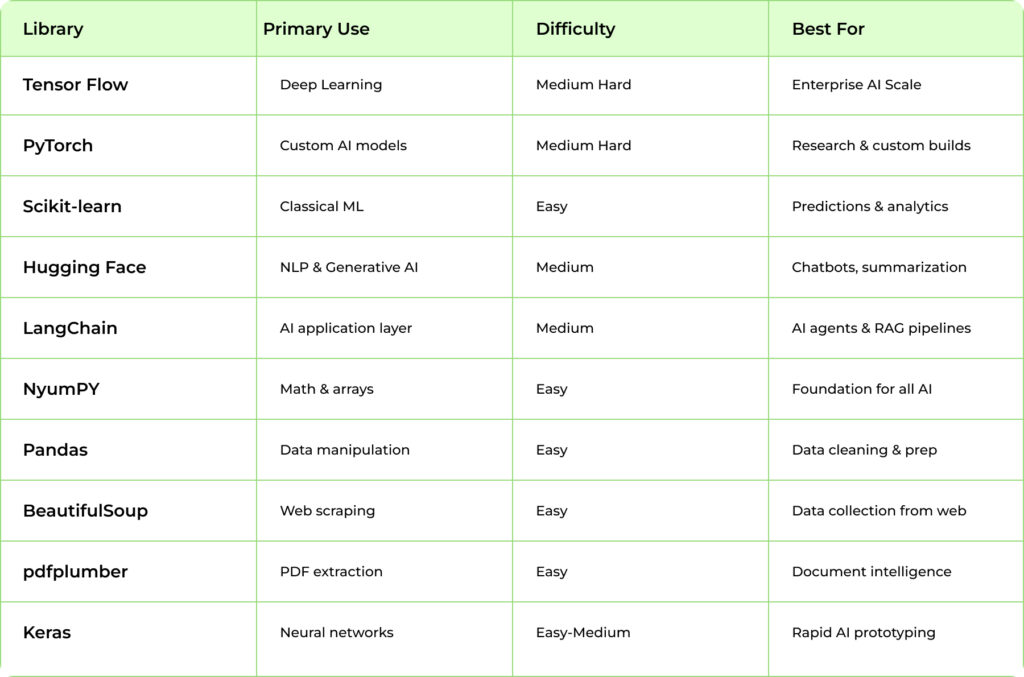
Python Libraries

A Quick Note on the Python OS Library and Python Standard Library

Beyond the AI-specific tools above, two foundational pieces of Python deserve a mention: the python os library and the broader python standard library. These come built-in with Python itself no installation required.

The python os library is what lets your AI scripts interact with your computer’s file system reading folders, moving files, checking if a path exists, and managing your operating environment.

It’s a small but essential part of almost every real-world AI pipeline.

The python standard library is the collection of all these built-in modules including os, math, json, datetime, re (regular expressions), and dozens more. They’re the quiet workhorses that keep your AI applications running smoothly in the background.

Understanding what’s already available in the standard library can save your development team hours of unnecessary work.

How to Choose the Right Python Libraries for Your AI Project
How to Choose the Right Python Libraries for Your AI Project

The most common mistake startups and small businesses make is trying to use everything at once. You don’t need all ten libraries in every project. Here’s a simple framework for deciding what you actually need:

  • Start with your data. Before anything else, figure out where your data lives. PDFs? Use pdfplumber. Websites? Use BeautifulSoup. Spreadsheets or databases? Start with Pandas.
  • Define your AI goal. Are you classifying things (spam/not spam)? Try Scikit-learn. Building a chatbot? Start with Hugging Face + LangChain. Need image recognition? Look at PyTorch or TensorFlow.
  • Consider your team’s skill level. Keras and Scikit-learn are the most beginner-friendly. PyTorch and TensorFlow reward experience. If your team is still learning, start simple.
  • Think about scale. For a prototype or MVP, almost anything works. For a product serving thousands of users daily, TensorFlow or PyTorch will serve you better in the long run.
  • Don’t reinvent the wheel. If a pre-trained model from Hugging Face does 80% of what you need, use it. The use of Python libraries is fundamentally about working smarter, not harder.

Conclusion

Across the USA and Australia, businesses of every size are actively exploring how to use AI to work smarter, serve customers better, and outpace competitors.

The good news is that the tools have never been more accessible. These python libraries for AI once the exclusive domain of tech giants with dedicated research labs are now available to any team with a clear problem to solve and the right development partner to help.

The real skill isn’t knowing every library inside out. It’s knowing which one solves your specific problem, and then using it effectively.

That’s where experienced AI developers earn their keep not in writing code from scratch, but in selecting the right building blocks and putting them together intelligently.

Whether you need a simple automation tool that extracts data from your PDFs, or a sophisticated generative AI solution that transforms how your team works, Python’s library ecosystem in 2026 has everything you need to build it.
Which One Is Better Choice For Back-end Framework: Node.JS vs Python

Node.js and Python are the leading backend technologies that make your web application more robust. But the big question arises: Do both Python and Node JS have any similarities?

Node.js and Python are modern technologies for web app development, but there is some difference in many aspects you must know. So, to make it easier for you, we’ve come up with an article that depicts the difference between Node.js vs Python.

Whatever technology you prefer for your business, make sure you consider selecting the best technology that matches your business requirements.

What is NodeJS?

Node.js is an open-source JS framework that builds both client and server-side network apps. It has a robust reputation for creating scalable and high-performance apps with its rich tech stack and robust ecosystem.

Node.js is a feature-rich backend technology that stamps out the dilemma between client-side and server-side development.

What is Python?

Created by Guido van Rossum, Python is an object-oriented, high-level programming language that offers an extensive set of libraries and packages to build dynamic web, mobile applications, and desktop apps.

Python is a leading backend technology that supports many programming standards and is very convenient.

As the creator said, the delight of Python as an object-oriented programming language is its short, readable, and concise classes that exhibit a lot of action.

Features of NodeJS vs Python

After having a look at the basics of Node.js vs Python, let’s highlight the top features of Python and Node.js in detail.

Top Features of Node.JS

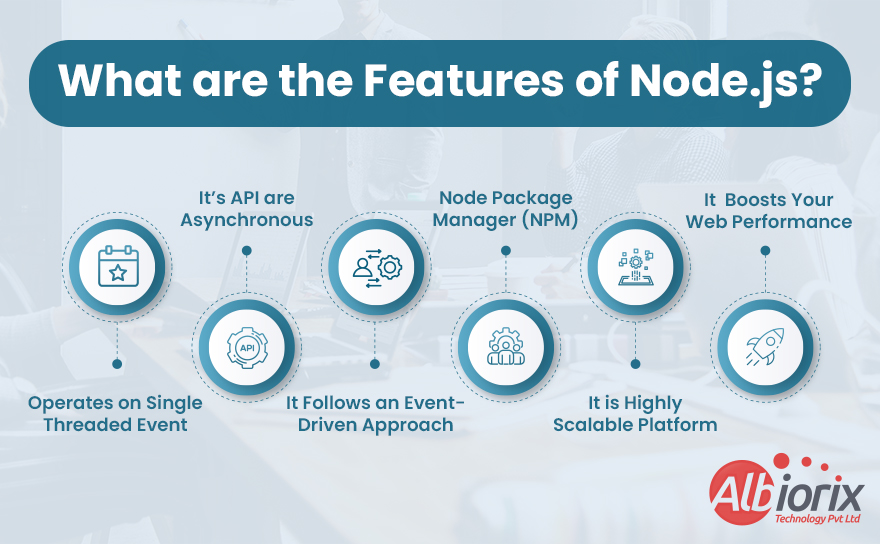
Features of nodejs
  • Single-threaded: Node.js is the technology that typically operates on Single Threaded Event Loop Model architecture.

    By enabling the Node.js server to work with all non-blocking operations seamlessly, the event loop mechanism contributes to the server’s increased scalability.

    In addition, unlike Apache HTTP servers, Node.js version 19.0 can handle multiple tasks, multiple client requests, and even supports the multithreading concept.

  • Asynchronous: Node.js API are asynchronous by design. Simply put, whenever a client requests a server, the request is dealt with by a single thread.

    If the request does not involve any interaction with the database, it will be processed, and you can quickly send the response.

  • Event-driven: The notification mechanism in Node.js is called “Events” and helps you receive and keep track of previous API requests from the server.

    This mechanism works the same as the callback mechanism found in asynchronous functionality.

    Once the Node.js application starts the server, you can efficiently declare its functions, begin setting its variables, and then wait for the event to occur.

  • NPM: The Node Package Manager is the most comprehensive online repository for the Node.js JavaScript runtime environment.

    You can efficiently develop, install, and publish node programs. The NPM registry possesses 1.3 million different packages and effectively allows your business to manage private web development.

  • Highly scalable: Node.js operates asynchronously and supports only one thread. It utilizes child processes to partition applications horizontally.

    It enables organizations to customize app versions following individual customers’ preferences more easily.

  • Performance: Node.js is built with the Google Chrome javascript engine V8 JavaScript Runtime environment model, contributing to more rapid code execution.

    With the assistance of C++, the JavaScript code used in Google’s app engine (V8) is compiled into machine code. Moreover, the code implementation is more streamlined and quicker with the help of Node.js.

Related Post: Web Application Architecture

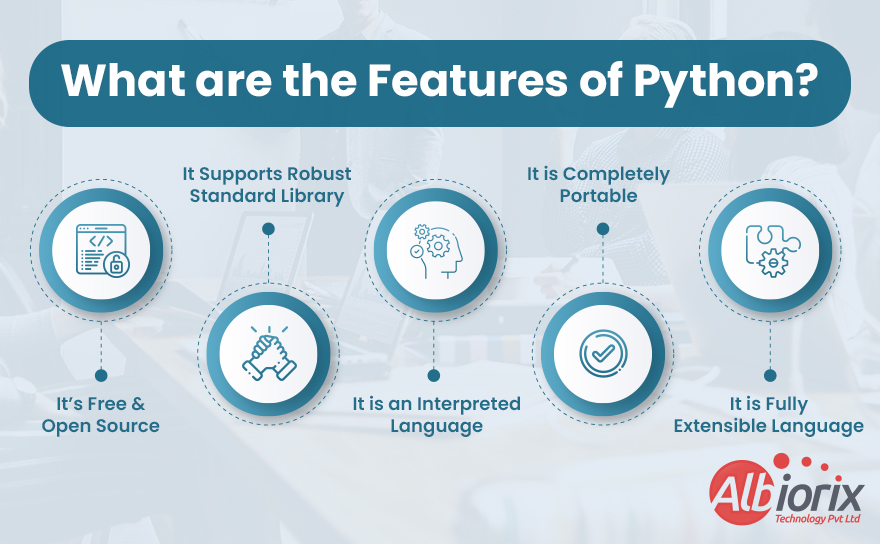
Top Features of Python

Features of Python
  • Free and Open-Source: Developed under an OSI-approved open source license, Python is free to use, even for commercial purposes.

    You can easily download Python from the official Python website. You can freely modified and re-distribute the code as per your business needs.

  • Powerful Standard Library: Python is an interpreted language that comes up with an extensive standard library, making it easy for you to develop application without writing too much code for every single thing.

    You’ll find different libraries for image manipulation, databases, unit-testing, expressions, and other functionalities.

  • Interpreted: When a programming language is interpreted, the source code is executed line by line and not all at once.

    Programming languages and compiled languages such as C++ or Java are not interpreted, so they must be compiled first to run them.

    You do not need to compile Python repeatedly, as it is processed at runtime by the Python interpreter.

  • Portable: You can efficiently run Python code that is the same on different machines, whether Windows, Linux or Mac.

    You do not need to make any specific changes to the code. Simply put, you do not need to write a program multiple times for several platforms.

  • Extensible: Python is a completely extensible language, as you can easily extend Python code to other languages.

    As compared to Node JS, Python code can also be written in languages like C++, making it a highly extensible language.

Related Post: Angular vs React

When To Use: Python vs NodeJS

When to Use NodeJS?

NodeJS helps you build scalable network applications like Machine Learning and Artificial Intelligence, as the platform is entirely built on Chrome’s JavaScript runtime environment.

Moreover, it is the best option for developing data-intensive real-time applications as it comes up with innovative features like event-driven architecture and even event-driven non-blocking I/O models.

If we compare NodeJS with Python performance, NodeJS plays well in terms of application performance and speed. NodeJS allows you to quickly develop messaging or chat applications.

So, if you’re planning to develop heavy-load applications, eCommerce platforms, enterprise applications, or Machine Learning apps, business websites, NodeJS is the one-stop solution for your business needs.

When To use Python?

Python is a robust platform that comes up with a list of libraries like open-source data analysis tools, web frameworks, and testing instruments. So, Python’s structured programming methods language ecosystem is more substantial in communities available globally.

With such a sizable community support, Python language comes up with multiple resources, making it a highly preferred option for you to deal with creating applications and performing data analytics smoothly.

By comparing Python vs Node.js, Python is essential in dealing with terminologies like features consistency, stability, and ease of use.

But, I must say that Python is the most highly preferred programming language for developing scientific applications, big data solutions, government projects, and other large projects.

Build High-Performance Web Applications Using Python

We help you build real-time, function-rich, scalable Web applications for all business verticals.

Contact Us

Detailed Comparison: NodeJS vs Python

1. Scalability: NodeJS vs Python

Scalability is an essential factor you need to consider while developing business web applications. It helps you decide on resource requirements and brings a major impact on creating MVP for your business.

If you’re creating a lightweight application, any specific language or coding environment will work fine.

But what happens when you need to include additional functionalities in your business application? You’ll need more resources to deal with such a situation, and that’s what makes a huge difference in selecting the best back-end tech stacks for your needs.

Node.js provides you with great flexibility, where you do not have to create a core, instead, you need to create multiple microservices and modules.

So, once your Node application is scaled well, microservices and multiple modules help you run their process dynamically.

Scaling your application horizontally becomes smoother by efficiently adding nodes to the existing ones and vertically by adding more and more resources to your business application.

But with Python, the scenario is entirely different. Python faces various challenges with threads. With its Global Interpreter Lock functionality, Python does not allow it to operate several threads simultaneously.

So, the best recommendation is that you are not allowed to run another process before the sequentially historical process is over.

Above all, Python is a dynamically typed language, making it a challenging factor for a larger development team to deal with code maintenance activities.

2. Application Performance & Speed: NodeJS vs Python

Once you scale an application, every bit of efficiency plays a vital role in minimizing operating costs. So, I can definitely say that in terms of node vs python, performance and speed are crucial factors, especially while assessing a programming language or environment.

Node.js strictly follows non-blocking architecture, so the execution process is simpler and faster.

Moreover, if we talk about Python vs Node JS performance, Node.js is solely responsible for executing the asynchronous code outside the web browser, making it a solid contender.

So, the Node applications that typically run on web browsers process at a faster speed and of course, perform well on efficiency.

Python’s application architecture usually forbids multithreading and is a major challenge in this aspect as well. This dynamically typed language is solely responsible for slowing down the processing speed as processes don’t run parallelly.

With the help of Python’s easy-to-learn syntax, it becomes difficult for your applications that frequently recall data from the web server. So, in terms of Node JS vs Python speed, we can say that Node js is the ultimate winner.

3. Syntax & Learning Curve: Node vs Python

‘Syntax’ typically performs a massive set of functions with as minimum code as possible, and that’s what plays an essential role in maintaining language efficiency. You can quickly achieve it by granting popular operations into specific inbuilt functions.

I must say that it’s an easy way to deal with assessment for the learning curve, mainly associated with the primary languages. In simple words, the easier the Javascript syntax, the more chances there are of flattening the learning curve.

If you are an expert in JavaScript technology, NodeJS’s learning curve is not steep.

However, many times, it happens that you find it challenging to install NodeJS using the documentation file, and it is just due to the event-driven programming concept. And that’s what make Node.js scalable and efficient.

With Python’s syntax, Python’s USP has greatly impacted the various industry-wide fact that the length of code is relatively smaller in Python program.

So, if I compare NodeJS with Python, writing and maintaining code using Python’s syntax is a straightforward process, especially when you’re dealing with other programming languages and a runtime environment.

4. App Architecture: NodeJS vs Python

Architecture means following best practices or principles to strictly adhere to the framework/environment or language.

To put it simply, Nodejs follows single-threaded architecture. It means that you can efficiently handle multiple requests with a single thread. And if I talk about Python, it usually follows “cpython” – a standard implementation utilising interchangeable code modules.

And as we know, Node.js deal with server-side asynchronous programming, making a huge impact on the input-output functionality that is not blocked because a certain process is still underway.

NodeJS is a robust and dynamic typing platform that typically adopts parallel processes, making the deployment process faster. With its event-driven architecture, Node.js allows you to perform actions as and when an event occurs.

Compared to Node.js, Python is not dependent on a multithreading process and doesn’t provide such functionalities.

As a result, it becomes your prime duty to initiate and finish one process before others, making Python development a little more stringent programming language.

You’ll come across various data analysis tools that help you create asynchronous apps using Python. Unfortunately, you would wind up using workarounds in your business applications and not actually get the desired asynchronicity.

5. Community: Node vs. Python

Programming community is a platform that helps you decide which language suits your backend web development services best.

Based on the information provided in the Node.js vs Python community, every community member and developer actively updates the existing tools, runs debugging operations, and even releases brand-new features.

As we are talking about Node JS vs Python, Node.js is not a traditional and multipurpose programming language like Python, but it is a universal programming language that possess an extensive community.

As a part of NodeJS vs Python backend terminology, Node.js is an open-source backend technology that always returns to the community for support.

For Node.js developers, finding peer support is made possible. But on the other hand, business owners need to always rely on hiring Node.js developers from a reputed organisation.

Python is a veteran language and has a larger community of experienced Python developers.

Since anyone can benefit from the supportive community, Python allows you to hire dedicated developers and boost your business by using it.

6. Extensibility: NodeJS vs Python

Extensibility is a feature that allows you to quickly add new features and functionalities to a language or framework. So, to make a robust functionality to your application, you can include more frameworks, data structures, and functions on to the base platform

Let’s see how Node JS vs Python deal with the extensibility support.

Node.js has achieved huge success by having maximum downloads in previous years, and this has given more business benefits. You’ll be surprised to know that a new framework or tool pops up with Node as a base on daily basis.

Here are some of the best ones that are mostly used by leading businesses globally.

  • Babel is the compiler for JavaScript and is primarily used for front-end development services.
  • Jasmine is a behavior-driven development framework specifically used for testing applications.
  • Log.io is typically used for project management and handles real-time log monitoring in your browser.
  • Webpack is a tool that bundles JavaScript files for usage in a browser.

Python is a technology that is a rage for efficient backend development that provides huge extensibility with multiple frameworks for web development as per your business needs.

  • Robot is a keyword-driven acceptance testing framework that makes the testing process smoother.
  • Flask is a micro web framework that makes your web applications for your business needs.
  • Web2py typically follows agile development to create, modify, deploy and manage business applications from anywhere using your browser.
  • Django is the most popular web development framework that makes your backend development services efficient.

And if I talk about the extensibility support for both Node JS vs. Python, both Node.js and Python are the winners in this specific category.

We offer Top-Notch Python Development Solutions

Our Python developers are expert in delivering customer-centric Python application development solutions for all business verticals.

Contact Us

7. Universality: NodeJS vs Python

Universality is a feature that typically defines the total number of different applications a functional programming language supports.

And if we are talking about universality, it’s quite challenging to identify who is the best in Python or Node js. In fact, both Node.js and Python come up with multiple use cases and can be helpful across many platforms.

As compared to Python, Node is a popular tool that typically uses JavaScript as a primary language. In addition, you can quickly deal with frontend and backend development with the same popular programming language.

With its cross-platform support functionality, Node.js allows you to use the same desktop app on Mac. Linux and Windows OS. In addition, this technology has multiple use cases for web apps, mobile development, and even cloud and IoT solutions.

Like Node.js, Python is universal and can be used for both frontend and backend development.

Moreover, you can use Python for cross-platform development as pre-configured Python is already available on Linux and Mac platforms.

But, for Windows, you’ll require the installation of a Python interpreter.

The excellent part of Python is that you can efficiently build IoT and Natural Language Processing (AI and ML). So, both Python and Node JS are the ultimate winners in terms of Universality perspectives.

8. Libraries & Tools: NodeJS vs Python

Libraries play a vital role in the web development process. You must be aware that many websites come up with thousands of lines of code, making it challenging for developers to select a language with libraries.

So, you can efficiently minimize the burden as machine code reusability would be the key to time-efficient development.

Node Package Manager (NPM) is the library and the package manager of Node.js. If you install NPM and Node.js on Windows and Mac OS, you can efficiently develop scalable applications smoothly.

You’ll be surprised to know that there are over a million packages available in NPM. Node.js documentation is huge just due to its popularity, and this helps Node.js developers to create a smooth learning curve for the language.

And if we talk about libraries and tools in Python programming language, PIP (Pips installs Python) is the library and package manager.

The excellent part of PIP is that developers find it easy and most reliable to work with it.

With its huge documentation and multiple library support, its a favorite language for Python developers having clean, compact code. However, not all newer frameworks have that much documentation.

NodeJS vs Python: The Comparison Table

NodeJSPython
NodeJS is the best option for dealing with asynchronous programming concepts.Python is not an ideal option to write asynchronous code execution for your programming needs.
Node.js brings convenience to the developers to perform coding; hence it’s pure JavaScript.Python framework allows developers to write fewer lines of code to get more functionalities.
By using Node.js, you’ll find it needing more clean coding standards. So, it’s not a good option for larger projects.It works well for large projects as you can do anything using PHP code.
Node.js is an ideal platform for dealing with real-time web applications and mobile applications for your business needs.Python is not ideal for developing real-time web applications for your business.
NodeJS is a language well suited for small projects to enable functionality that needs less scripting.Python is a back-end programming language that is well-suited for developing larger projects.
NodeJS is the best option for memory-intensive activities.You, as a business owner, cannot use Python for performing memory-intensive activities.
Node.js is an ideal option for designing and developing web application development.With the help of Python, you can easily perform things like web applications, integration with back-end applications, machine learning systems, and network programming.
Node.js typically uses a JavaScript interpreter as a primary sourceCPython is an interpreter for Python programming language.
Node.js is an ideal programming language that strongly supports callback, entirely based on an event/callback that makes it process.Python supports generators, making it a simpler process to deal with web app development.

Conclusion

Which is the best technology for backend development: Node.js or Python? Of course, it’s a challenging question, especially when your business needs a full-flagged product.

The answer to this question typically impacts both Python and Node.js features and benefits.

I recommend you, as a business owner, must opt for Node.js if you need a memory and data-intensive project, and that tool does not require too much coding.

On the other hand, if you’re dealing with a larger project bundled up with multiple integrations and calculations, Python is the best option for your business.