




A Complete Guide To Website Development Process

Summary: The website development process is a structured seven-stage framework that transforms an initial concept into a high-performance live site. It encompasses everything from strategic planning and UI/UX design to front-end coding, rigorous testing, and final deployment. Following this systematic approach ensures your site is mobile-responsive, user-friendly, and perfectly aligned with your business goals.

We live in a digital-driven world, and in this world, you will need a solid digital presence for your business to ensure success, especially when aligned with modern web practices.

Along with the social media presence, you will also need a solid online presence where you can showcase all your services, products, and engage with your customers.

This is where a powerful, engaging, and intuitive website comes into play by following web development best practice.

A website is no longer just an online presence. In 2026, a business website will be your growth engine, a brand storyteller, and a conversion platform.

You will need a custom-made business website that meets your goals, exemplifies your business ethics, and reflects your company’s culture.

And, to develop a business website that meets all your requirements, you must understand how an engaging, intuitive, and SEO-friendly website is developed in 2026 using frontend frameworks.

The process of website development in 2026 is a bit different from the traditional one. Understanding the website development process is critical for businesses that want scalable, secure, and future-ready digital products.

Every step in the website development life cycle plays a strategic role in determining success – from ideation to optimization.

This in-depth website development guide breaks down the stages of website development, explains the types of websites, highlights essential website elements, and shows how custom websites deliver long-term value.

The goal is simple: help you make smarter, ROI-driven decisions while aligning with modern search behavior and Google’s EEAT (Experience, Expertise, Authoritativeness, Trustworthiness) standards.

What Is the Website Development Process?

Just as there is a standard development process for building anything, there’s also a detailed and defined website development process. This process is a structured framework that transforms business ideas into a fully functional digital platform.

A website development life cycle blends strategy, design, engineering, and optimization into a repeatable and measurable workflow, often supported by AI web development.

Unlike ad-hoc development, a mature process focuses on:

  1. Business objectives and user intent alignment
  2. Scalable architecture and performance optimization
  3. Security, compliance, and accessibility
  4. Search visibility and content discoverability
  5. Continuous improvement through data and feedback
  6. Long-term maintainability and flexibility

When the process is followed exactly and executed correctly, it reduces the risk of failure, reduces overall development costs, and reduces the time to market.

Website Development Life Cycle Explained
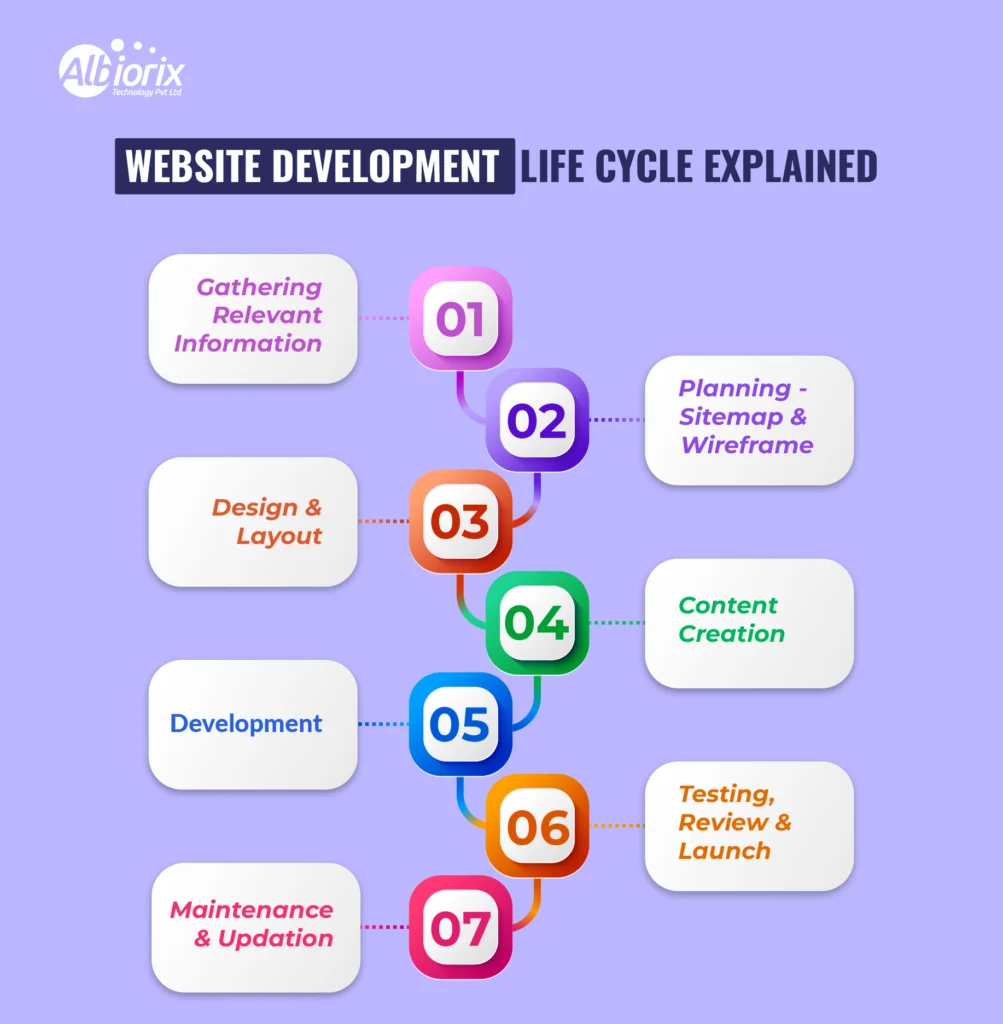
Website Development Life Cycle

The website development lifecycle outlines the process by which an idea is transformed into a fully functional digital business presence. This process from concept to execution is known as the website development life cycle.

Each phase in website development is built on the previous one to ensure clarity, accountability, and quality at scale.

Discovery and Requirement Analysis (Foundation Stage)

This is the most critical stage of the website development life cycle. In this initial step, critical decisions are made that directly impact performance, scalability, and cost of the website.

Key activities include:

  • Business goal identification and KPI mapping
  • Target audience and user persona research
  • Competitor and market analysis
  • Functional and non-functional requirement gathering
  • Technology stack evaluation using Angular frameworks
  • SEO and content architecture planning

A strong discovery phase ensures your custom website is built for real users—not assumptions.

Information Architecture and Planning (Structural Stage)

Once all the details are gathered and your business objectives are clear, it’s time to move to the next step of website development. This step is called structuring the experience.

This phase focuses on:

  • Sitemap creation and page hierarchy definition
  • User journey mapping and conversion paths
  • Navigation logic and internal linking strategy
  • Content placement aligned with search intent
  • Scalability planning for future features
  • Performance and load optimization planning

When a website’s architecture is developed on well-planned information, a website has great scalability, crawlability, usability, and ranking potential.

UI/UX Design (Experience Stage)

Back in 2010, website design was all about selecting fancy color combinations. Now, in 2026, the definition of website design has changed completely. It’s more than aesthetics. It is about behavior, trust, and usability.

In this step of the website development lifecycle, you need to concentrate on creating intuitive, engaging, and accessible experiences. You need to design an experience that sets up your website apart from competitors.

Key deliverables include:

  • Wireframes and interactive prototypes
  • Mobile-first and responsive layouts
  • Brand-consistent visual systems
  • Accessibility and usability standards compliance
  • Conversion-focused design patterns
  • Micro-interactions and engagement elements

The ultimate goal of modern custom websites in 2026 and beyond is to prioritize clarity, speed, and emotional connection.

Website Development and Engineering (Build Stage)

In this phase of the website development process, the strategy and design are moulded into a working digital product.

In this step, a team of website developers and software developers work together on the front-end and back-end of the website using Angular web development.

Core development activities include:

  • Front-end development using modern frameworks
  • Back-end logic and database architecture
  • CMS or headless CMS integration
  • API and third-party service integration
  • Security best practices implementation
  • Performance and code optimization

A robust development approach and agile development method ensure your website is fast, secure, and future-proof.

Testing and Quality Assurance (Validation Stage)

Once the backend and frontend of the website is engineered, it’s time to test the functions of the website with the real users.

The team of QC experts tests all the features, performance, user experiences, and functionalities of the website to ensure optimum functioning.

Testing typically covers:

  • Functional and regression testing
  • Cross-browser and cross-device compatibility
  • Page speed and performance audits
  • Security and vulnerability testing
  • Accessibility and compliance checks
  • SEO readiness and indexing validation

This stage protects brand credibility and reduces post-launch risks.

Deployment and Launch (Go-Live Stage)

After thorough testing of the website, it’s time to make it live and monitor the performance.

Launch activities include:

  • Production server configuration
  • Domain and hosting setup
  • SSL and security hardening
  • Analytics and tracking integration
  • Search engine submission and indexing
  • Final performance validation

A well-managed launch ensures a smooth transition with minimal downtime.

Maintenance, Optimization, and Growth (Evolution Stage)

Once the website is launched, it’s time to monitor it in terms of different parameters. You must monitor, maintain, and optimize your website continuously to ensure 100% uptime. Continuous improvement is essential for sustained performance.

Ongoing activities involve:

  • Content updates and SEO optimization
  • Performance monitoring and tuning
  • Feature enhancements and scalability upgrades
  • Security patches and compliance updates
  • UX improvements based on analytics
  • Conversion rate optimization (CRO)

This final stage turns your website into a long-term digital asset.

Types of Websites Built in 2026
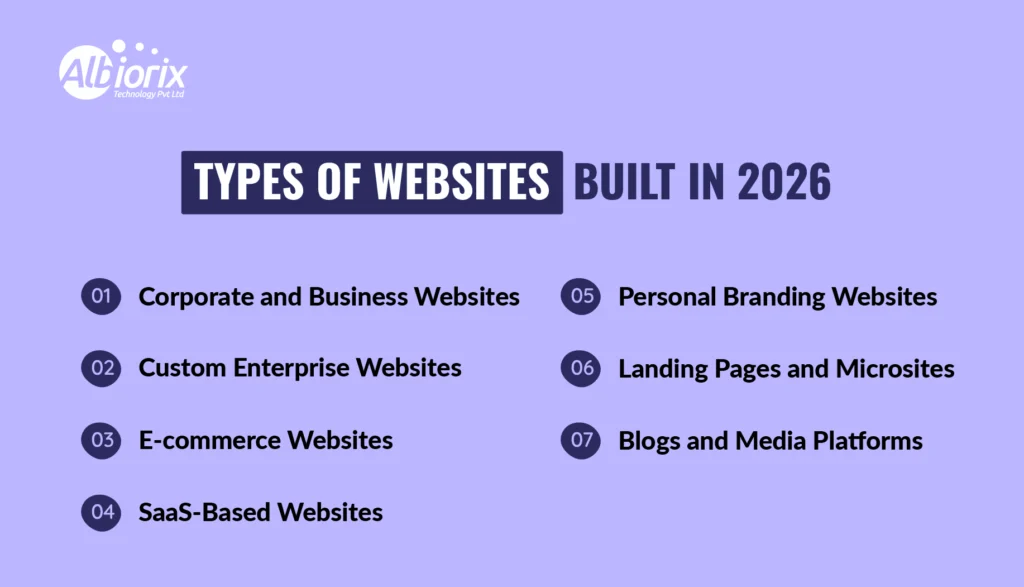
Types of Websites

There are types of businesses that require different types of websites as per their end goals and objectives.

The layout, design, and functionalities of an ecommerce website cannot be similar to a healthcare website, especially when building eCommerce web solutions.

They are totally different and demand different types of functionalities to meet their industrial requirements.

Thus, it is important that you choose the right structure and functionalities of the website as per your industry and business requirements.

Each type serves a distinct purpose—from brand building to revenue generation—and plays a specific role within the broader website development process.

Common types of websites in 2026 include:

  1. Corporate and Business Websites: These websites are designed and developed to establish the credibility of a business. Its purpose is to communicate the brand values to the audiences, partners, and stakeholders.
  2. Custom Enterprise Websites: These types of websites are built for complex workflows, integrations, and scalability. They are designed and developed to support large organisations with advanced operational needs.
  3. E-commerce Websites: These are shopping platforms focused on online transactions, product management, payment gateways, and seamless customer purchase journeys.
  4. SaaS-Based Websites: These types of websites are developed to explain software value propositions, onboard users, and drive subscriptions or demos efficiently.
  5. Personal Branding Websites: These types of websites are built by professionals and creators to showcase expertise, projects, and achievements compellingly.
  6. Landing Pages and Microsites: These types of websites are built for conversions, promotions, and short-term marketing campaigns. They are also called Purpose-driven web pages.
  7. Blogs and Media Platforms: These types of websites are developed to educate, inform, and attract audiences through consistent, SEO-optimised content. They are simple, user-friendly, and intuitive.

As there are many different types of websites as per the industry’s needs and business objectives, it is important that you choose your type carefully.

By choosing the right website type, you can align everything in the right direction for long-term growth.

Key Website Elements That Define Success

When it comes to custom website development in 2026, there are some sets of elements that are mandatory. These key website elements lay the strong foundation of a successful website for your business.

These website elements work together to influence user experience, search visibility, trust, and conversion performance across the entire website development life cycle.

Core website elements include:

  1. Clear Value Proposition and Messaging: This element communicates with your audiences, tells them what you offer, and why your products/services matter. It helps them easily understand your relevance.
  2. Intuitive Navigation and Structure: This element allows users to find the products, services, or information they are looking for on your website. It also helps in improving crawlability and internal linking for search engines.
  3. Responsive and Mobile-Friendly Design: This website element ensures consistent performance and usability across all devices and operating systems. It is critical for engagement and SEO.
  4. High-Quality, SEO-Optimized Content: This element of a website delivers value-driven information that aligns with search intent and builds authority in your domain.
  5. Fast Loading Speed and Performance: The role of this website’s elements is to improve user retention, reduce bounce rates, and support higher rankings in competitive search results.
  6. Security, Privacy, and Compliance: The purpose of this website element is to protect user data, build trust, and ensure compliance with modern regulations and standards.

When these website elements are strategically optimized, they create a seamless experience that benefits both users and search engines alike.

Build a Website That Grows With Your Business

Partner with our website development experts to design and build a future-ready, high-performance digital platform aligned with your goals.


Contact Us

Why Custom Websites Outperform Templates

While templates may offer speed and lower upfront costs, custom websites are designed for long-term performance, scalability, and differentiation.

Many businesses prefer outsourcing web development to achieve faster execution and expert-driven results.

Benefits of custom website development include:

  1. Tailored User Experiences Aligned with Business Goals – Custom websites are built around specific user journeys, ensuring higher engagement and conversion rates.
  2. Scalable Architecture for Future Growth – The underlying structure supports new features, integrations, and traffic growth without rework.
  3. Better SEO and Performance Control – Custom code and architecture allow precise optimization for speed, indexing, and search visibility.
  4. Enhanced Security and Compliance – Security measures are implemented based on business risk, industry standards, and regulatory needs.
  5. Seamless Third-Party Integrations – Custom development enables smooth integration with CRMs, ERPs, analytics tools, and other systems.
  6. Unique Branding and Differentiation – A custom website reflects your brand identity without limitations imposed by pre-built themes.

In essence, custom websites are strategic digital assets that deliver measurable business value. They are not just built to launch—but built to scale, adapt, and compete.

Website Development Trends Shaping the Future
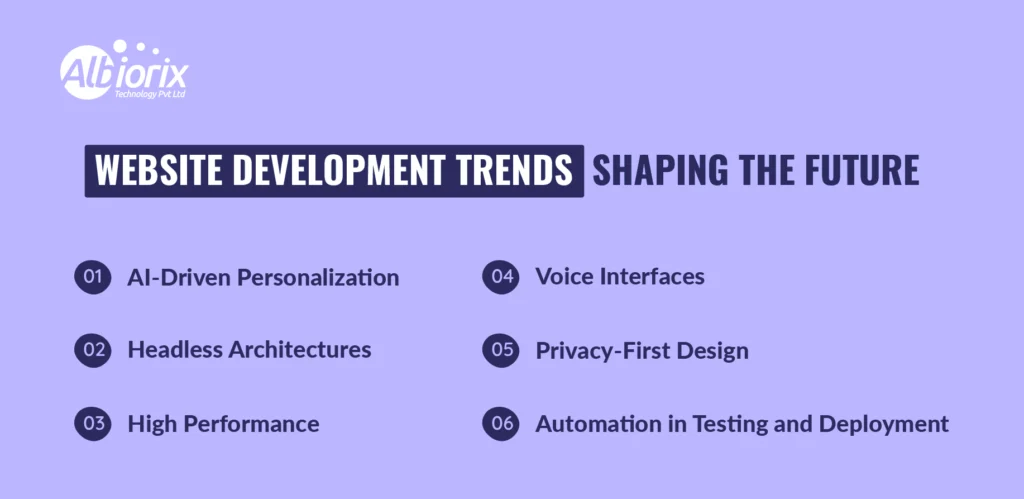
Website Development Trends Shaping the Future

The website development life cycle continues to evolve. It changes with emerging technologies, changing user behavior, and search engine intelligence. Based on these trends, it is decided how digital experiences are built.

In 2026 and beyond, businesses that are aligned with these website development trends are expected to perform better and deliver relevant, fast, and scalable business websites.

Key website development trends shaping the future include:

  • AI-Driven Personalization: With the arrival of Artificial Intelligence, most of the websites are now integrating AI to offer enhanced user experience. AI helps them offer personalized experiences.
  • Headless Architectures: By decoupling the front end from the back end, businesses gain flexibility to deliver consistent experiences across web, mobile, and emerging digital channels.
  • High Performance: In 2026, speed, stability, and responsiveness are the core ranking and user experience factors. Your website must offer a great experience.
  • Voice Interfaces: With the rise of voice search and AI assistants, websites are being optimized for natural language queries and conversational user interactions.
  • Privacy-First Design: As data regulations grow stricter, websites must be built with transparent data practices, consent management, and secure data handling.
  • Automation in Testing and Deployment: Automated testing, CI/CD pipelines, and monitoring tools enable faster releases without sacrificing quality or security.

Together, these trends signal a shift toward intelligent, adaptable, and user-centric websites. Businesses that future-proof their website development process today gain a long-term competitive advantage.

Best Website Development Services for Future-Ready Businesses

Selecting the right development partner is critical for long-term success. Businesses often decide to outsource web development to gain access to skilled teams, modern tools, and scalable delivery models.

A future-ready website must balance performance, scalability, security, and user experience while remaining adaptable to evolving digital trends.

Our approach to the website development process is rooted in deep discovery, thoughtful design, and robust engineering.

We build custom websites that align with your business objectives, reflect your brand identity, and deliver measurable outcomes. From startups to enterprises, our solutions are designed to scale as your business grows.

By combining modern frameworks, SEO-first architecture, and conversion-focused UX, we help businesses create websites that do more than look good—they perform, engage, and convert.

Whether you’re launching a new digital platform or modernizing an existing one, the right website development partner can turn your vision into a competitive digital asset.

Conclusion

The website development process is a strategic journey, not a one-time task.

By understanding the stages of website development, choosing the right types of websites, and optimizing essential website elements, businesses can create digital platforms that support long-term growth.

If you need help planning or executing your website strategy, Contact Us to get expert assistance.

In an era driven by AI, performance metrics, and user trust, investing in a structured website development life cycle and professional website development services is essential.

A well-built custom website is not just an online presence—it’s a foundation for innovation, credibility, and sustained success.
Website Development Process: 7 Easy Steps To Create a Website

A website is of prime importance for any business owner who wants to mark their online presence globally. A website is often the first point of contact between a potential customer and a company, and it’s crucial that it leave a positive impression.

However, building a website can be a daunting task, especially for those who are new to the process. In this blog post, we’ll explore the website development process, from planning and design to development and deployment.

We’ll discuss the various stages involved in creating a website and provide tips and tools that can help streamline the process.

Whether you’re a business owner looking to build a website or a developer looking to improve your skills, this guide will provide you with the knowledge and resources you need to create a successful website. So, let’s dive in!

Key Takeaways

  • The website development process typically involves several stages, which may vary depending on the specific requirements and goals of the project.
  • The phases of website development typically includes 7 easy steps, including Planning, Designing, Development, Testing, Launching, and Maintenance.
  • You can effectively use interactive tools like Integrated Development Environments (IDEs), Version Control Systems (VCS), Task Runners, Package Managers, CSS Preprocessors, Frameworks and Libraries, and, most importantly, Code Editors.

What is Website Development Process?

Website development is a multi-step process that requires a range of skills and expertise. Working with a software development company can streamline this process, offering end-to-end solutions.

The stages typically include planning, design, content creation, development, testing, and launch, with ongoing maintenance and updates to ensure the website remains functional.

The process begins with understanding your business needs, followed by designing a user-friendly interface.

Development focuses on building the website’s functionality, while testing ensures it performs well across devices.

Finally, the website is launched and regularly updated to provide a positive user experience and meet evolving requirements.

Searching for The Best Web App Development Services?

Contrive your business ideas using our web development services for innovative and state-of-the-art web applications.

Get Expert Consultation

7 Easy Steps of Web Development Process

The following are the common stages involved in the website development process:

Easy Steps of Web Development Process

Step 1: Make an Appropriate Planning for Your Business Website

The planning stage is the initial website development phases, and it involves identifying the goals, scope, and requirements of the project.

This stage consists of determining the website’s purpose, the website development checklist, the features and functionalities required, the design and layout, and the web content strategy.

The primary purpose of the planning stage is to establish a clear and deep understanding of

  • What should the website accomplish?
  • Who is the target audience?
  • What are your website development checklist?
  • How will the website meet the user’s needs?

So, based on the above questions, you need to focus on the various prime activities mentioned below.

Here are the key activities involved in the planning stage:

  • Determine the purpose and goals of the website: The website’s purpose and goals should align with the client’s overall business objectives. The website’s purpose could be to provide information, promote products or services, or facilitate online transactions.
  • Identify the target audience: Understanding them is critical for website creation that meets their needs. This involves defining the user persona and identifying their interests, needs, and preferences.
  • Develop a content strategy: Content is the backbone of any website. Developing a content strategy involves identifying the type of content writing needed to support the website’s goals and objectives, including text, images, and videos.
  • Determine the website structure: The structure refers to how the content will be organized and the pages will be connected. A well-organized website structure helps visitors navigate the site quickly and easily.
  • Develop a project plan: The project plan outlines the website development timeline, milestones, and deliverables. It helps ensure that the entire project is completed on time and within budget.

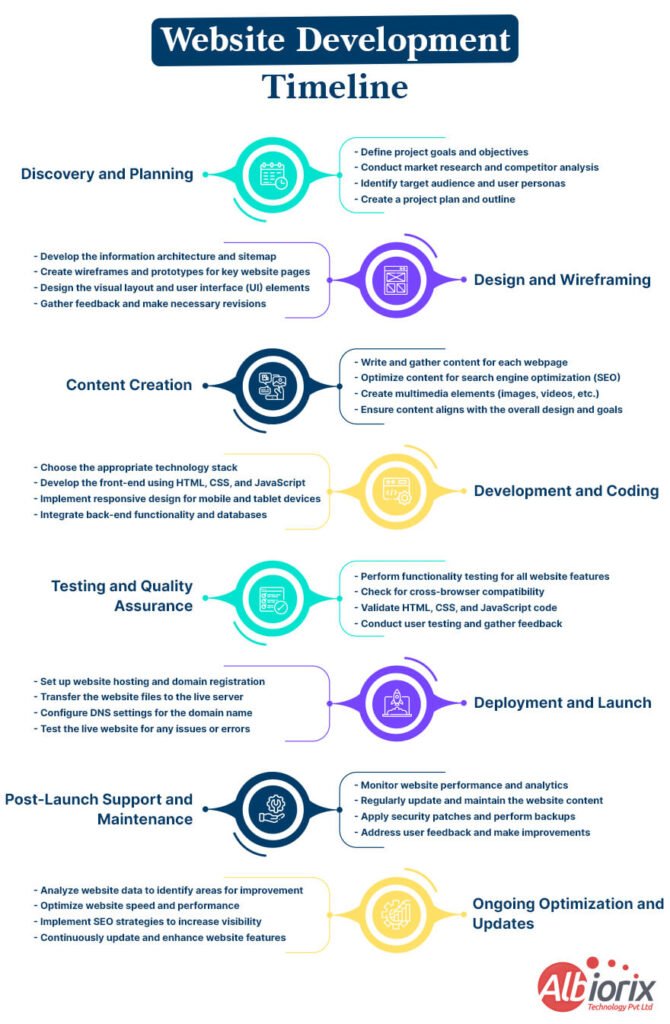
The Timeline Of Creating A Successful Website -Influencing Factors

Timeline Of Creating A Successful Website

The planning stage is critical to the success of the website development process.

It lays the foundation for the website’s design, development, and site launch, and it helps ensure that the website meets the client’s goals and objectives while providing a positive user experience for visitors.

Step 2: Take the Next Step To Design Your Business Website

Once the plan is established, the website design can be created. This stage involves creating wireframes and mockups and choosing a color scheme, typography, and other visual elements.

The designing phase is a crucial part of the website development process, as it involves creating the visual and functional elements that will make up the website.

Here are the critical steps involved in the designing phase of website development:

  • Gathering requirements: This involves understanding the client’s needs, target audience, and online business goals. The designer must have a clear idea of the website’s purpose, functionality, and content.
  • Creating wireframes: Wireframes are simple, grayscale sketches representing the website’s layout and basic structure. These sketches help designers to visualize the website’s overall structure and layout.
  • Creating mockups: Mockups are detailed, high-fidelity visual designs that represent the website’s appearance, color scheme, typography, and graphics. They give the client a clear idea of how the website will look and feel.
  • Creating prototypes: Prototypes are interactive, clickable mockups that allow clients and web designers to test the website’s functionality and user experience. They help to identify any usability issues or design flaws before the website is built.
  • Finalizing the design: Once the client approves the mockups and prototypes, the designer finalizes the web design process and prepares it for web development. This involves creating detailed design specs, style guides, and other documentation for the software development team.

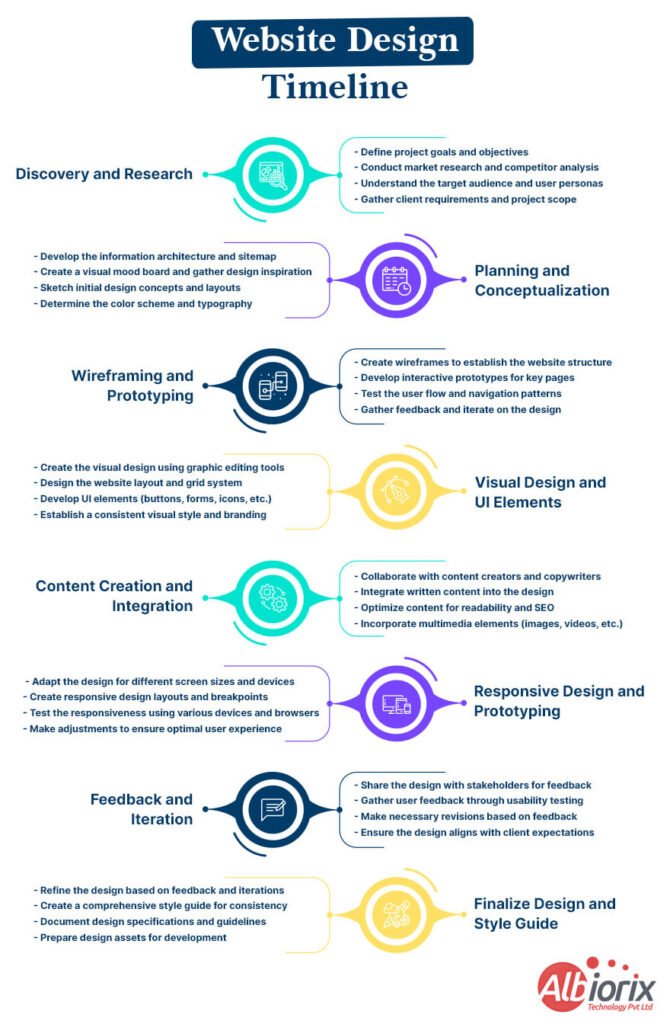
Web Design Timeline – The Plan for Successful Web App

Website Design Timeline

Overall, the designing phase is a collaborative process that involves close communication between the client, designer, and software development team.

It lays the foundation for a successful website that meets the client’s needs and delivers a great user experience.

Design Your Business Website Now With Us

We have a team of talented web designers proficient in dealing with latest tools and tech stacks to provide the best web solutions

Contact Us

Step 3: Prepare The Best and Valuable Content For Your Website

The content phase of website development is the stage where the content of the website is created and developed.

This phase is an essential component of the overall project management, as it directly affects the website’s quality, user interface, relevance, and usability.

During the content phase, the website’s content is created and organized based on the website’s purpose, goals, and target audience.

This includes creating text, images, videos, audio files, and other media elements that will be used to convey the website’s message and engage visitors.

The content development process typically involves the following steps:

Content PhaseDescription
Content PlanningDefining the website’s purpose and goals, identifying the target audience, and outlining the website’s content structure and hierarchy
Content CreationDeveloping high-quality, relevant, and engaging content that meets the website’s goals and resonates with the target audience.
Content OrganizationStructuring the content into pages, sections, and categories and creating a clear and logical navigation system.
Content Review and EditingReviewing and editing the content for accuracy, consistency, and readability.
Content OptimizationOptimizing the content for search engines by incorporating relevant keywords and meta descriptions.
Content IntegrationIntegrating content into the website’s design and layout ensures a cohesive and visually appealing website.

The content phase of website development is crucial for creating a successful website that effectively communicates its message, engages visitors, and achieves its goals.

Step 4: Start the Development Phase of Website

The development phase is an essential part of the website development process, where any software developer can quickly transform the website’s design into a fully functional one.

During this phase, developers use various programming languages like HTML, CSS, JavaScript frameworks, and PHP to create the website’s structure and functionality.

The development process typically begins with creating a development environment, which includes setting up a server, installing the necessary software, and creating a database.

Once the web development project environment is set up, developers begin to work on creating the website’s layout, structure, and functionality.

During such web application development stages, any web developer can transform the website’s design into a business logic code that web browsers can understand.

This involves writing HTML code to create the website’s structure, CSS code to style the website’s design elements, and JavaScript programming language to add interactivity and functionality to the good website.

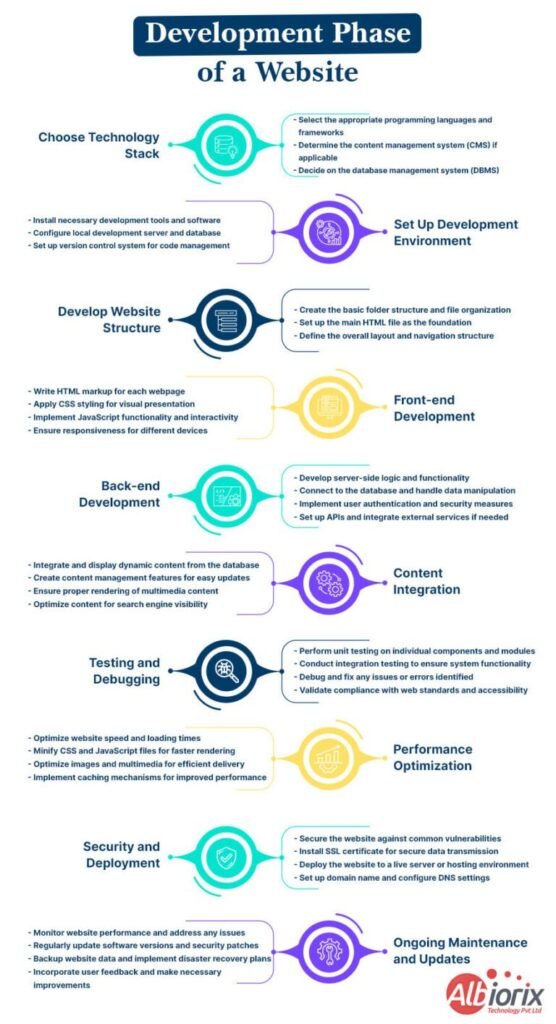
Phases of Website Development

Phases of Website Development

Hiring web developers is crucial for transforming your website design into a fully functional site.

During the development phase, developers create dynamic features such as contact forms, search functionality, and user registration systems.

They also ensure the website works seamlessly across different browsers and devices.

Once the development is complete, the website enters the testing phase, where its functionality, performance, and security are thoroughly checked.

After successful testing, the website is deployed to a production server, making it publicly accessible. This phase ensures that the website is ready for users and operates as intended across all platforms.

Let’s Discuss Your Project

Get a free consultation for web application development, and we will turn your business idea into a unique digital product.

Contact Us Now

Step 5: Test Your Business Website

Testing is a crucial stage in the web development process that helps ensure that the website or web application is functional, usable, and meets the requirements of the stakeholders.

The testing stage typically involves the following steps:

  • Unit testing: This is the first stage of testing, and it involves testing individual components or modules of the website or web application to ensure that they are functioning correctly.
  • Integration testing: In this stage, the individual components are integrated and tested as a whole to ensure that they work together as intended.
  • System testing: It involves testing the entire system, including all the integrated components, to ensure that it meets the functional requirements and specifications.
  • User acceptance testing: You can perform the testing of the website or web application with end-users to ensure that it meets their needs and expectations.
  • Performance testing: Website testing is done for improving performance and scalability, including response time, load handling, and other key performance indicators.
  • Security testing: It performs the testing for potential security vulnerabilities, including data breaches and other security risks.

Tthe testing stage is a critical part of the web development process and helps ensure that the website or web application is of high quality and meets the needs of its users.

Step 6: Launching Your Website

The launching stage of the website development process is the final step before making the website or web application available to the public.

The following are the typical steps involved in the launching stage:

  • Final testing: Before launching the website, it’s essential to conduct final testing to ensure that everything is functioning correctly. This includes testing all the features and functionalities, checking for broken links, and ensuring that the website or web application is optimized for different browsers and devices.
  • Hosting setup: Once testing is successfully complete, the website needs to be hosted on a server. The hosting setup involves choosing a web hosting provider, setting up a server, and configuring the Domain Name System (DNS) to point to the website’s IP address.
  • Content migration: If the website is replacing an existing website, the content from the old website needs to be migrated to the new website. This involves transferring files, databases, and other relevant information from the old website to the new website.
  • Launch announcement: Once the website is ready, a launch announcement is made to inform the public that the website is available. This can be done through various channels, such as social media, email newsletters, or press releases.
  • Maintenance and support: After launching the website, it’s important to provide ongoing maintenance and support to ensure that it continues to function correctly. This includes updating the website regularly, monitoring its performance, and addressing any issues or bugs that may arise.

The launching stage is a critical part of the website development stages, and it’s important to ensure that everything is in order before making the website available to the public.

Step 7: Website Maintenance and Support

After the website is launched, it requires ongoing maintenance and updates to ensure its functionality, security, and optimal performance. This involves fixing any issues that arise, updating the content, and adding new features or functionalities as needed.

The website development process is iterative, meaning that the stages of website development project may overlap or be revisited as needed to ensure that the final product meets the client’s requirements and achieves its goals.

Hire Dedicated Web Developers from Albiorix

We have a team of proficient Web developers that use smart techniques by leveraging cutting-edge technology to build amazingly creative end applications.

Hire Web Developers Now

What is Web Development Life Cycle?

The website development life cycle is the series of phases involved in the creation and maintenance of a website.

It encompasses everything from the initial planning stages through the development, testing, deployment, and ongoing maintenance of the web development project.

The specific steps of the website development life cycle can vary depending on the methodology used by the development team, but the following are the common phases:

  • Planning: This phase involves information gathering, defining project definition, goals and objectives, and creating a plan for your user-friendly website.
  • Analysis: This phase involves the process to carefully analyze the requirements of the website, identifying any potential challenges, requirement of online resources, and proposing solutions.
  • Design: This phase involves creating a design from a professional team that meets the requirements and objectives of the website.
  • Development: This phase involves actually building the website, including coding and programming.
  • Testing: This phase involves testing the website to ensure that it functions as intended and is free from errors and bugs.
  • Deployment: This phase of creating a website involves deploying the website to a live server where it can be accessed by users.
  • Maintenance: This phase of building a website involves ongoing monitoring and maintenance of the website to ensure that it continues to function properly and remains up-to-date.

By following the website development life cycle, full-stack developers can ensure that web applications are built efficiently, with high quality, and that they meet the needs of their intended audience using specific technology stack.

Impressive Tools To Streamline Web Development Process

There are many tools available that can help streamline the web development process. Here are some of the most popular ones:

  • Integrated Development Environments (IDEs): IDEs are software applications that provide a comprehensive environment for coding, testing, and debugging. Popular examples include Visual Studio Code, Sublime Text, and Atom.
  • Version Control Systems (VCS): VCS allows you to track changes made to your code, collaborate with others, and revert changes when needed. Git is the most popular VCS.
  • Task Runners: Task runners automate repetitive tasks such as minifying and optimizing code, running tests, and deploying code to production. Popular task runners include Grunt and Gulp.
  • Package Managers: Package managers help manage dependencies and ensure that all the required libraries and packages are installed. Popular package managers include NPM and Yarn.
  • CSS Preprocessors: CSS preprocessors like Sass and Less allow developers to write more modular and maintainable CSS code.
  • Frameworks and Libraries: Web application frameworks and libraries provide pre-written code and components that can help speed up development. Popular examples include React, Angular, and Vue.js.
  • Code Editors: Code editors like Visual Studio Code, Atom, and Sublime Text provide features like syntax highlighting, autocompletion, and debugging tools that can help make coding faster and more efficient.

By using these tools, web developers can streamline their development process, save time, and build better applications.

Conclusion

In conclusion, building a website can seem like a daunting task, but by breaking down the process into manageable steps, anyone can create a successful online presence.

From planning and design to development and deployment, each stage of the website development process plays a crucial role in ensuring that your website meets your goals and serves its intended purpose.

By utilizing the various tips and tools we’ve discussed in this blog post, you can streamline the development process and create a website that stands out from the crowd.

Whether you’re building a website for a business or a personal project, remember to prioritize user experience, accessibility, and functionality.

Consult Albiorix for the website app development as we have the best team to help you out on your business requirements.