




9 Best NodeJS Frameworks for Your Web & Mobile Apps

In the ever-evolving world of web development, NodeJS has established itself as a leading player, offering a wealth of powerful and versatile frameworks to choose from.

As a result, NodeJS has rapidly become one of the most popular platforms for full-stack web app development, offering a rich ecosystem of web frameworks and tools to choose from.

With the ever-growing demand for efficient and scalable web applications, it’s crucial to stay up-to-date on the latest and greatest NodeJS frameworks. This article will explore the 13 best NodeJS frameworks for your web development projects in 2023.

Key Takeaways

  • Node.js is a popular JavaScript runtime that allows developers to build server-side applications.
  • We’ve mentioned the list of different Node.js frameworks available in the Node.js ecosystem that provide various features and functionalities to streamline the development process.
  • These frameworks aim to enhance productivity, scalability, and performance when working with Node.js.
  • In general, the choice of the best Node.js framework depends on the specific requirements of your project.

What is Node.JS Framework?

Node.js is an open-source, cross-platform JavaScript runtime environment that executes JavaScript code outside a web browser. It allows developers to use JavaScript on the server side to build fast and scalable apps.

Node.js framework is a platform built on top of Node.js to simplify the web app development process and provide a structure for building web apps.

Top 9 NodeJS Frameworks For Developing Mobile and Web Applications

Here are the 9 best NodeJS frameworks to elevate your web dev game in 2023.

1. Express.js
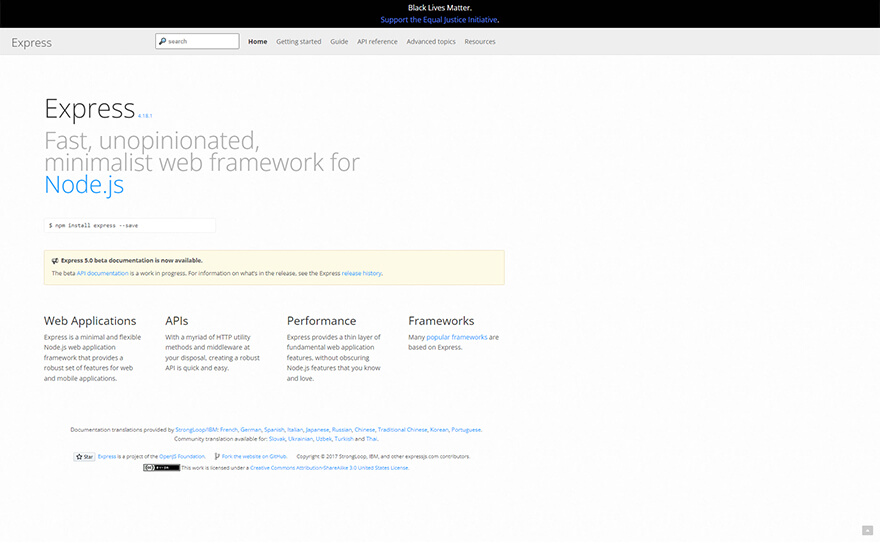
Express.js is one of the best NodeJS frameworks to help you build modern web applications and APIs for your business needs.

This free, open-source, and popular Node JS framework provides a minimal interface to build web projects and is based on full-stack Model-View-Controller (MVC architecture) frameworks.

You can efficiently use this JS framework for any enterprise-grade or browser-based app because of its robust routing, templating, security functionalities, and, most importantly, error-handling provisions.

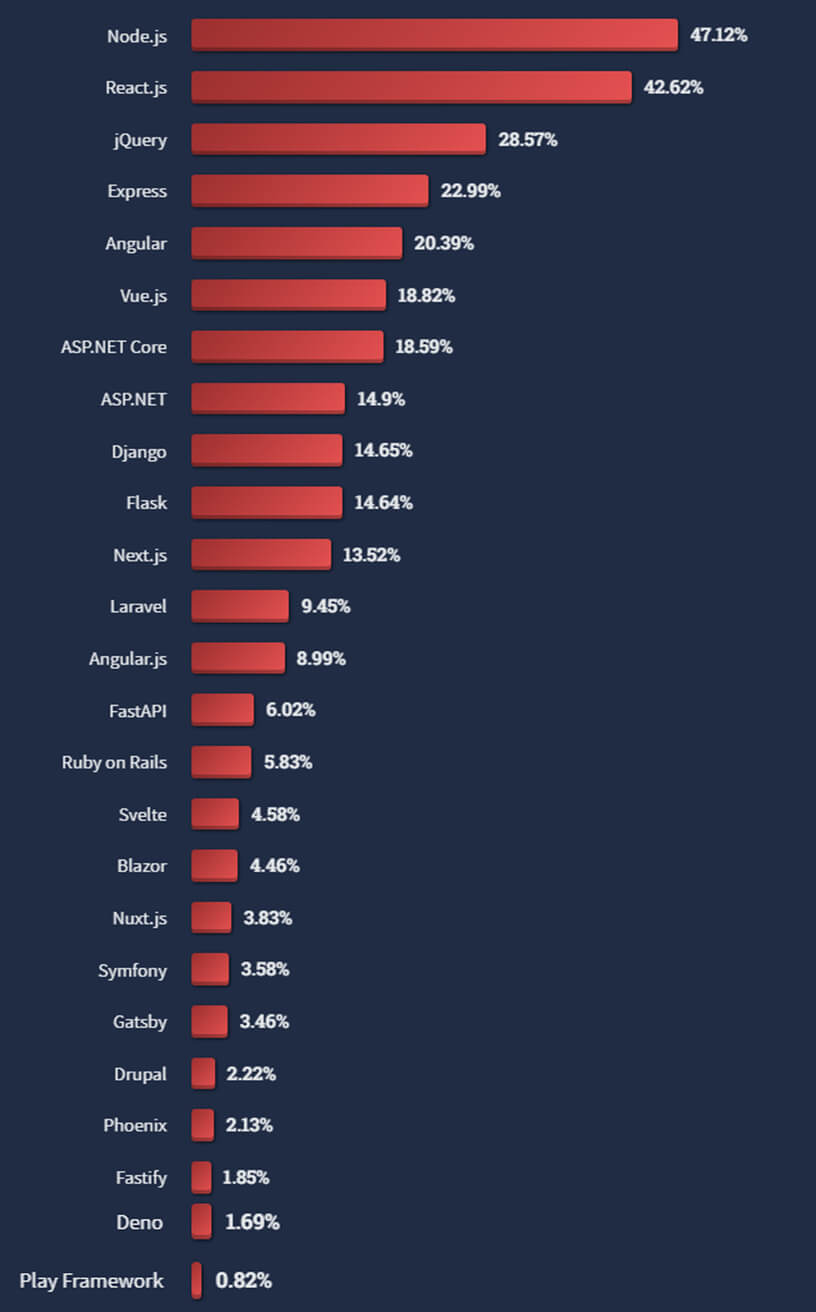
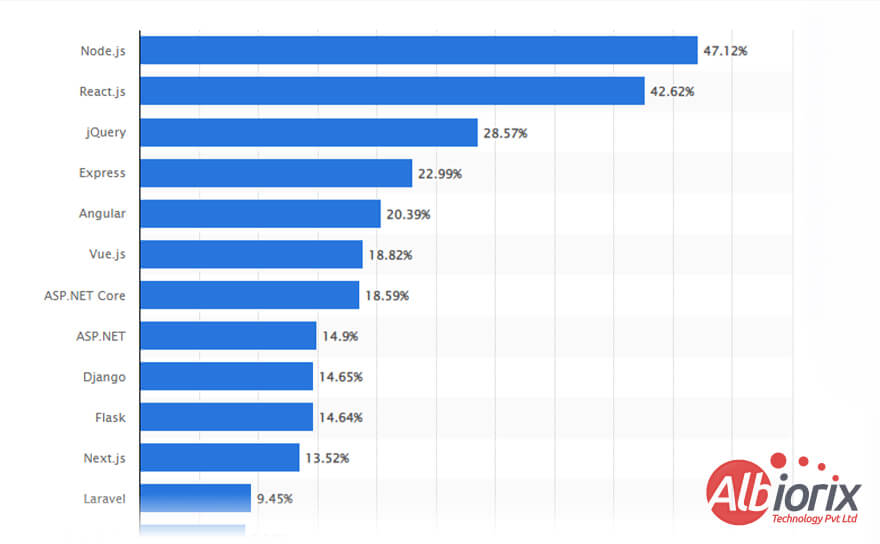
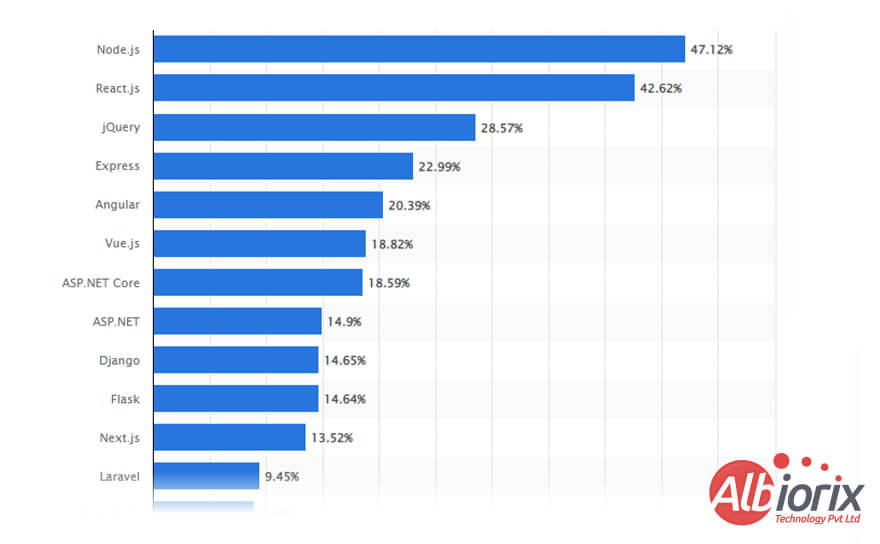
According to the Statista report 2022, over 47.12 percent of respondents reported being using Node.js for their projects.
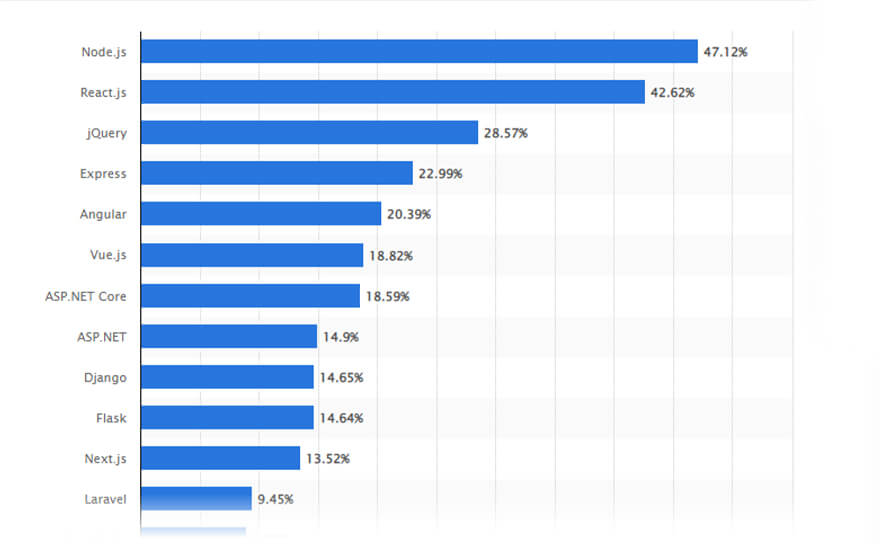
Image source: Statista

Express.js is a popular Node.js framework that provides a minimal and flexible way to build robust web applications and APIs. Some key features of Express.js include

Some key features of Express.js include

  • Routing: Express.js provides a clean and simple way to handle HTTP requests and responses using a routing system. This Node.JS framework allows you to define routes for HTTP methods (GET, POST, PUT, DELETE, etc.) and respond to them with custom handling logic.
  • Steep Learning Curve: One of the significant advantages of Express.js is the learning curve that makes it easy to learn for beginners and get started with even high-end applications.
  • Middleware: Middleware is a powerful feature of Express.js that allows you to add custom logic to the request-response cycle. For example, you can add middleware to handle authentication, parse request data, and serve static files.
  • Template engines: Express.js supports a variety of template engines, including popular ones like Pug, EJS, and Handlebars. With the help of this JS framework, it becomes easy to build dynamic and interactive web pages using templates.
  • Database integration: Express.js can be integrated with multiple databases, including MongoDB, MySQL, and PostgreSQL. This feature of this popular Node JS framework makes it easy to store and retrieve data from a database in your web application.
  • Community support: Express.js has a huge community of Node.js developers who have contributed various modules and plugins to the framework. This makes it easy to find help and resources when building apps for your business needs.

Express.js is a lightweight, fast, and flexible framework that provides a minimal and efficient way to build web services and APIs with Node.js.

2. Koa.js

Koa.js is a web application framework for Node.js that provides a more modern and elegant way to build web apps and APIs. It was created by the same team behind Express.js and offered a more minimalist and expressive way to handle HTTP requests and responses.

Some key features of Koa.js include:

  • Async functions: Koa.js uses modern JavaScript features like async functions to handle HTTP requests and responses more elegantly and readably. This feature of the Node JS framework makes it easy to write clean and readable Javascript code for your web application.
  • Middleware: Like Express.js, Koa.js uses middleware to add custom logic to the request-response cycle. Koa.js middleware is written as async functions, making it easy to write and maintain complex middleware logic.
  • Context object: Koa.js provides a context object passed to each middleware function, making it easy to share data and logic between different parts of your application.
  • Error handling: Koa.js provides a simple and elegant way to handle errors, making it easy to write robust and reliable web applications.
  • Small footprint: Koa.js is designed to be minimal, making it an excellent choice for websites that require a lightweight and efficient framework.

Compared to other popular Node.js frameworks, Koa.js is a modern and elegant Node js framework that provides a more expressive and readable way to build websites and APIs.

Whether you’re building a simple web application or a complex API, Koa.js is an excellent choice for your project.

3. Meteor JS
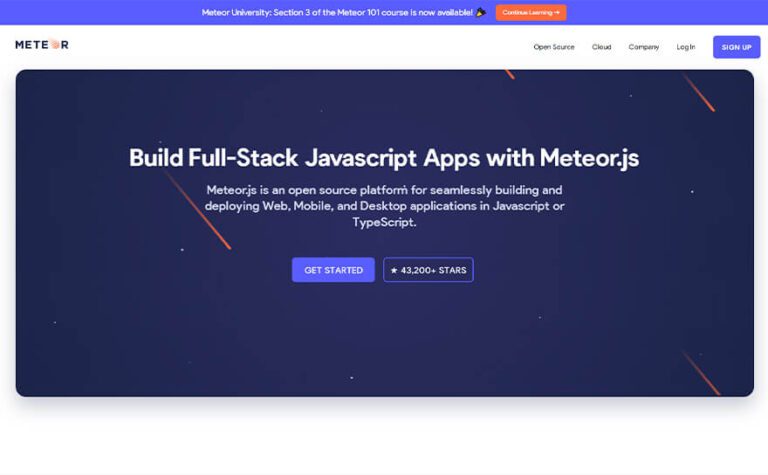
Meteor.jsis a top-notch JS framework that allows you to design and build web apps for your business needs.

This free, open-source, full-stack web app and Node.js framework is designed with simplicity, making it an ideal choice for rapid prototyping and building cross-platform development like web and mobile applications.

Compared to other Node JS frameworks, Meteor.js is one such framework that is specific to Javascript and uses only one language.

Some key features of Meteor.js include

  • Real-time data updates: Meteor uses a reactive programming model that enables real-time updates between the client and the server. It means that changes made to the database are reflected in real-time on the client side without requiring a manual refresh.
  • Cross-platform compatibility: Meteor is a full-stack framework that can efficiently build web, mobile, and desktop applications using the same code. It integrates with popular front-end frameworks such as React, Angular, and Vue.
  • Built-in packages: Meteor includes many pre-built packages for standard features such as user authentication, security, and database management. With the help of this Node.js framework feature, you can efficiently add these features to their application development without writing many functional programming languages’ code from scratch.
  • Hot code reloading: Meteor framework supports hot code reloading, which means developers working with a renowned NodeJS development company can see changes to their code in real-time without manually refreshing the browser. This speeds up the application development process and makes it easier to iterate on ideas.
  • Package management: Meteor uses the Meteor Package Manager (Meteor’s Package System) to manage packages and dependencies. It makes it easy for developers to install, update, and manage packages for their applications.
  • Cordova Integration Support: Meteor JS framework typically supports robust integration with Cordova, making it easy for you to build native mobile apps while reusing Meteor’s code.

If I compare with other popular Node JS frameworks, Meteor.js is a flexible, easy-to-use NodeJS framework that makes it possible to build web apps quickly and efficiently.

As a result, this Node framework is particularly well-suited for real-time, data-driven applications and for developers who want to get up and running with a new project quickly.

Shaping Your Business With Innovative Digital Solutions

We are always ready to transform your ideas into reality. We strive to deliver the optimum solution to build a positive impact on your business.

Contact Us

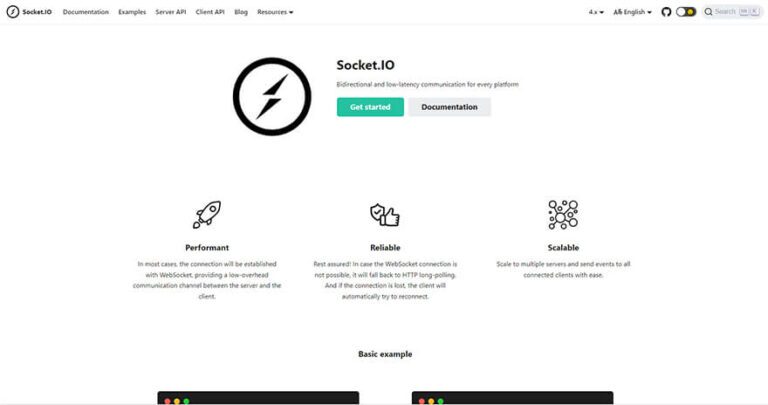
4. Socket.io

Socket.IO is a real-time communication library for web apps. It provides two-way communication between a client (typically a web browser) and a server. It enables real-time, bidirectional and event-based communication between the client and the server.

Socket.IO is an isomorphic Javascript web framework that typically uses WebSockets as the underlying technology for real-time communication.

Still, it also abstracts away the complexities of WebSockets and provides a simple API that can be used with various modes of transport, such as WebSockets, long polling, and others. This allows it to work seamlessly across different browsers and network conditions.

Here are some of the top features of the Socket.IO framework:

  • Real-time Communication: Socket.IO enables real-time, bidirectional and event-based communication between the client and the server.
  • Cross-browser Support: Socket.IO is a NodeJS framework that abstracts away the complexities of WebSockets and provides a simple API that can be used with different frameworks, making it compatible with various browsers.
  • Event-based Communication: The client and server can both emit and listen to events, allowing for flexible and dynamic communication.
  • Namespace Support: Socket.IO can divide the communication into separate “namespaces”, which can help organize communication in an extensive application.
  • Room Support: Socket.IO allows you to group connected clients into “rooms”, making it easier to broadcast messages to specific subsets of clients.
  • Automatic Reconnection: Socket.IO automatically reconnects to the server if the connection is lost, ensuring that real-time communication remains seamless despite network disruptions.
  • Server-side Broadcasting: Socket.IO provides easy-to-use API servers for broadcasting messages from the server to multiple clients. Binary Data Support: Socket.IO supports sending and receiving binary data, making it suitable for applications requiring large amounts of data transfer.
  • Easy Integration with Other Libraries and Technologies: Socket.IO can be easily integrated with other popular web application development technologies, such as Express, Node.js, and Angular.

In addition to real-time communication, Socket.IO provides some valuable features for working with WebSockets, such as automatic reconnection, namespace support, and room support.

Compared to other web frameworks, these features allow for more complex real-time applications to be built and simplify building and maintaining these applications.

Overall, Socket.IO is a powerful tool for building real-time web apps. Its simplicity, ease of use, and comprehensive feature set make it a popular choice for many developers.

5. Sails.js
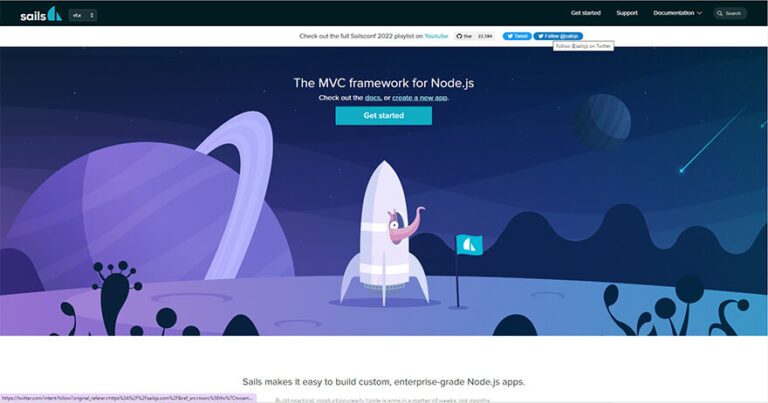
Sails.js is a popular Model-View-Controller (MVC) architecture framework for building real-time, scalable web apps using Node.js. Unlike other Node.js frameworks, it is specifically designed to simplify the dev process and provide a flexible, scalable structure for web apps.

Sails.js utilizes code generators, allowing you to create your application with minimal code writing, especially for everyday stuff that can be scaffolded.

Some key features of Sails.js include

  • Auto-Generated REST APIs: Sails.js is one of the REST API frameworks that automatically generate RESTful API endpoints for your application’s models, making it easy to build and consume REST APIs for your application using such REST API frameworks.
  • Built-In ORM (Waterline): Sails.js is a JS web framework with an Object-Relational Mapping (ORM) library called Waterline, which provides a simple and flexible way to interact with your database.
  • Real-Time Communication: Sails.js has built-in support for real-time communication using WebSockets, allowing you to quickly build real-time web and mobile apps.
  • Configurable Blueprint API: Sails.js provides a set of default API routes and actions that can be easily configured or overridden to fit the needs of your application.
  • Customizable Asset Pipeline: Sails.js provides a customizable asset pipeline for processing and serving static assets such as stylesheets and JavaScript library files.
  • Plug-in Ecosystem: Sails.js has a rich ecosystem of plug-ins and modules, allowing you to easily extend its functionality and add new features to your application.

Sails.js is an excellent choice for building real-time and scalable network applications for your business needs.

This classic and straightforward Ruby on Rails web framework allows you to quickly create REST APIs, single-page apps, and real-time (WebSockets-based) apps, which takes inspiration from the well-known Ruby on Rails web framework.

6. Nest.js
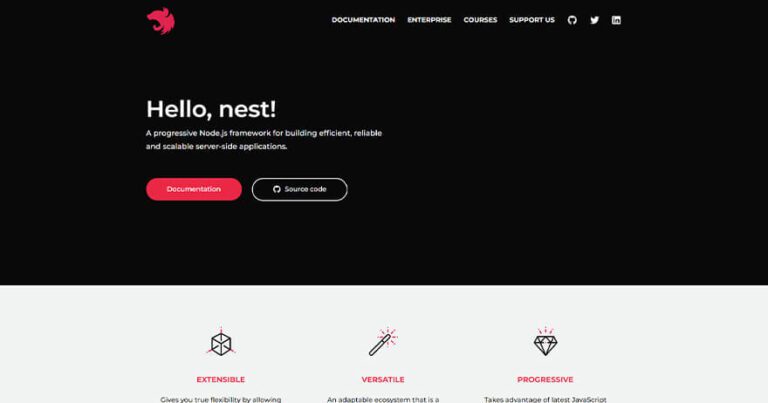
Nest.js is a back-end framework for building building scalable web and mobile applications using TypeScript. It is heavily influenced by Angular.js, providing developers with a familiar and consistent structure for building server-side applications.

The excellent part of the Nest.js framework is that it is considered the best combination of object-oriented programming and functional reactive programming(FRP).

Here are some of the top features of the Nest.js framework:

  • Modular Architecture: Nest.js allows developers to organize their code into reusable modules, making it easier to maintain and create scalable applications.
  • TypeScript Support: Nest.js is built with TypeScript, providing developers with a statically-typed language and improved code maintainability.
  • Real-time Communication: Nest.js includes built-in support for WebSockets, making it easy to add real-time communication capabilities to your application.
  • Robust Command Line Interface (CLI): Nest.js is one of the Best JavaScript frameworks with a strong CLI to increase developer productivity and basic development activities.
  • GraphQL Support:The MVC framework includes built-in support for GraphQL APIs, making creating fast and efficient data queries easy.
  • Seamless Integration: Nest.js is a robust MVC framework that easily integrates seamlessly with popular libraries and tools, including Express, TypeORM, and MongoDB.
  • Testing Tools: Nest.js provides a powerful set of testing tools, making it easy to write and run automated tests.
  • Security: The framework supports the latest security standards, including JSON Web Tokens (JWT), OAuth 2.0, and more.
  • Platform Support: Nest.js can run on various platforms, including web, desktop, and mobile devices.
  • Performance: Nest.js is optimized for performance, providing fast and efficient request handling.
  • Community Support: Nest.js has a large community of developers, making it easy to find help and resources when needed.

In summary, Nest.js is a modern and efficient framework for building back-end applications using TypeScript.

It offers a modular architecture, support for real-time client-server communication, seamless integration with popular libraries, powerful testing tools, and more, making it a great choice for building scalable and secure applications.

We are Experts in Providing The Best BackEnd Development Services

Our Back-end development team is proficient in dealing with top-notch back-end technologies to provide the optimum IT solutions.

Contact Us

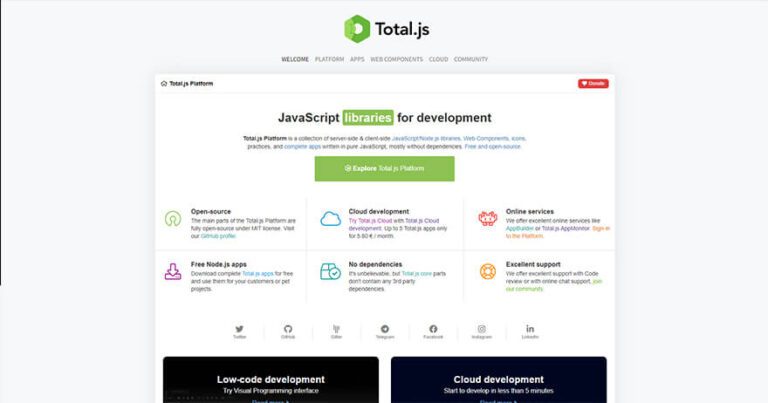
7. Total.js

Total.js is a back-end framework for building web applications using JavaScript. It provides a full-stack solution for building robust web applications, with features for both the front-end and back-end.

Here are some of the features of the Total.js Best NodeJS Framework:

  • Modular Architecture: Total.js allows developers to organize their code into reusable components, making it easier to maintain and scale their applications.
  • RESTful API Support: The framework includes a powerful set of tools for building RESTful APIs, making it easy to create fast and efficient data queries.
  • Real-time Communication: Total.js includes built-in support for WebSockets, making it easy to add real-time communication capabilities to your application.
  • Database Support: Total.js supports multiple databases, including MongoDB, SQLite, and PostgreSQL, making it easy to integrate with a variety of data sources.
  • Front-end Integration: The framework integrates seamlessly with popular front-end web frameworks, such as Angular.js and React.js, providing a full-stack solution to create web apps for your business needs.
  • Security: Total.js includes various security features, including support for encrypted communications, secure session management, and role-based access control.
  • Debugging Tools: The framework includes a set of debugging tools, making it easier to identify and fix issues during development.
  • Performance: Total.js is optimized for performance, providing fast and efficient request handling even when dealing with large amounts of data and traffic.
  • Scalability: Total.js is designed to handle large amounts of data and traffic, making it a great choice for building scalable apps.
  • Community Support: Total.js has a large and active community of developers, making it easy to find help and resources when needed.

Total.js is a full-stack based framework for building web applications using JavaScript.

It provides a modular architecture, powerful tools for building APIs and real-time communication, support for various databases, secure features, and more, making it a versatile and scalable website solution.

Related Post: Most Popular Front-End Frameworks

8. Hapi.js
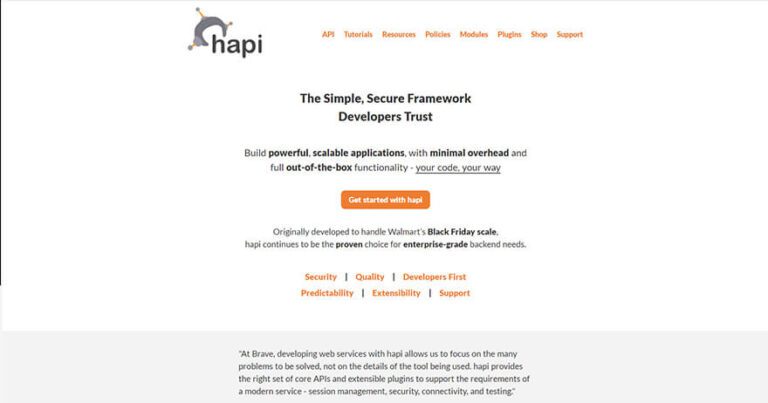
Hapi.js is a back-end framework for building web apps using JavaScript. It is designed to be a stable and secure platform for building scalable websites, API servers, Web Servers and HTTP proxy applications using a top-notch backend development process.

Hapi.js is optimized for performance, providing fast and efficient request handling. It also includes built-in support for creating and handling HTTP APIs, making it easy to build RESTful and GraphQL APIs.

Here are some advanced features of the Hapi.js framework:

  • Modular Architecture: Hapi.js allows developers to organize their code into reusable components, making it easier to maintain and scale their applications.
  • Plugins: The framework includes a range of plugins for common functionality, such as authentication, input data validation, and caching, making it easy to add these features to your application.
  • Performance: Hapi.js is optimized for performance, providing fast and efficient request handling.
  • HTTP API Support: Hapi.js includes built-in support for creating and handling HTTP APIs, making it easy to build RESTful and GraphQL APIs.
  • Security: The framework has a strong focus on security, including features for securing your application, such as SSL/TLS encryption, request validation, and input sanitization.
  • Database Support: Hapi.js provides support for various databases, including MongoDB, MySQL, and PostgreSQL, making it easy to integrate with a wide range of data sources.
  • Testing: Hapi.js includes built-in support for testing, making it easier to write and run automated tests.
  • Community Support: Hapi.js has an extensive community of developers, making it easy to find help and resources when needed.
  • Scalability: The framework is designed to handle large amounts of traffic, making it a great choice for building scalable applications.
  • Customization: Hapi.js provides a flexible and customizable framework, allowing developers to build the specific features and functionality they need for their applications.

Hapi.js is a back-end framework for building web apps using JavaScript.

It provides a modular architecture, support for HTTP APIs, strong focus on security, and integration with various databases, making it a versatile and secure solution for building web projects.

We designed an online car buying platform that allows users to buy a new car with varied features like financing, leasing, and after-market upgrades, and even supports home delivery.

9. Feather.js
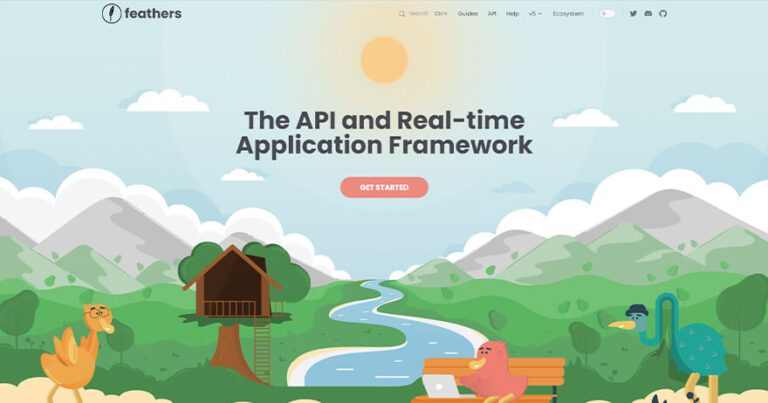
Feathers.js is a back-end framework for building real-time web and mobile app development using JavaScript.

It is designed to provide a lightweight and flexible solution for building applications while also providing robust features and tools for building scalable and high-performance applications to build backend services for your business needs.

Here are some features of the Feathers.js framework:

  • Real-time communication: Feathers.js includes built-in support for WebSockets, allowing for real-time communication between the server and client.
  • Modular Architecture: The framework provides a modular architecture, allowing developers to organize their code into reusable components.
  • Plugins: Feathers.js includes a range of plugins for common functionality, such as authentication, validation, and caching.
  • Database Support: The framework is designed to work with a variety of databases, including MongoDB, SQLite, and PostgreSQL.
  • API Support: Feathers.js provides support for RESTful and GraphQL APIs, making it easy to build fast and efficient data synchronization and queries.
  • Security: The framework has a focus on security, including features for securing your application, such as encrypted communications and role-based access control.
  • Testing: Feathers.js provides support for testing, making it easier to write and run automated tests.
  • Scalability:The framework is designed to handle large amounts of traffic, making it a great choice for building scalable apps.
  • Community Support: Feathers.js has a large and active community of developers, making it easy to find help and resources when needed.
  • Lightweight: Feathers.js is a lightweight framework that provides a simple and efficient solution for building applications.

Feathers.js is a back-end framework for building real-time, web, and mobile applications using JavaScript.

It provides real-time communication capabilities, a modular architecture, database support, and security features, making it a lightweight and flexible backend services solution for building scalable network applications.

Conclusion

The world of Node JS frameworks is constantly evolving, but the Javascript frameworks listed here provide a solid foundation for any web dev project in 2023.

Whether you’re looking for a minimalist approach, robust security, or real-time capabilities, there is a NodeJS framework to meet your needs.

Consider your specific requirements, weigh the pros and cons, and choose the best web JS frameworks for your next web and app development project.

What Are The Best Pros and Cons Of Node.JS?

Node.js is a versatile and advantageous tool for developing dynamic web applications, with several advantages and disadvantages.

Node.js is a secure backend technology framework with JS applications’ boundaries and is designed explicitly for both frontend and backend servers. This proves to be an excellent choice in today’s web development marketplace.

In fact, every technology comes up with advantages and disadvantages. Right? This time we’ve come up with an article that depicts the Node.js advantages and disadvantages.

What is Node.js?

Node.js is an open-source runtime environment based on Chrome’s V8 JavaScript engine and written in JavaScript and C/C++.

It’s used for server-side operations, bringing JavaScript programming to the backend to run Linux, Windows, and OS X applications.

As an open-source project, Node.js was sponsored by Joyent, a cloud computing and hosting solutions provider.

The company invested in several other technologies, such as the Ruby on Rails development framework, and provided hosting services to Twitter and LinkedIn.

Develop feature-rich, scalable, high-end server-side apps with Node.js backend solutions.

We help you leverage development services to build real-time, function-rich, scalable web applications for all your business needs.


Contact Us

What are the Node.js Advantages?

After exploring the basics of Node.js, it’s time to focus on Node.js advantages to make it eady for your backend development services.

1. Robust technology stack

JavaScript is the leader among the most popular programming languages. In turn, Node.js is one such technology stack that has become a stand-alone name in the industry.

As per the recent report by W3Techs, Node.js is used by 2.1% of all websites, at least 30 million.

More than 30 million websites use node JS.

JavaScript is considered to be the leader among the most popular web application programming languages.

Node.js is designed explicitly for the backend, but many leading businesses get all the pros of full-stack JavaScript development. Some of them include

  • Better code efficiency
  • Improves overall developer productivity
  • Code sharing and reusability
  • Application speed and performance
  • Easy knowledge-sharing platform
  • Multiple tools available for better flexibility

Consequently, it brings more flexibility to your Node.js development team and plays an essential role in designing fast and reliable software.

Moreover, you can efficiently start programming the server side with minimum effort and develop robust web app development solutions for your business needs.

So, you can reuse the front and backend code by using the same language on both sides. And also, you can wrap it into modules and create new levels of abstraction smoothly.

2. Fast-processing for web-tasks

Node.js is fast, as there are a couple of reasons behind it.

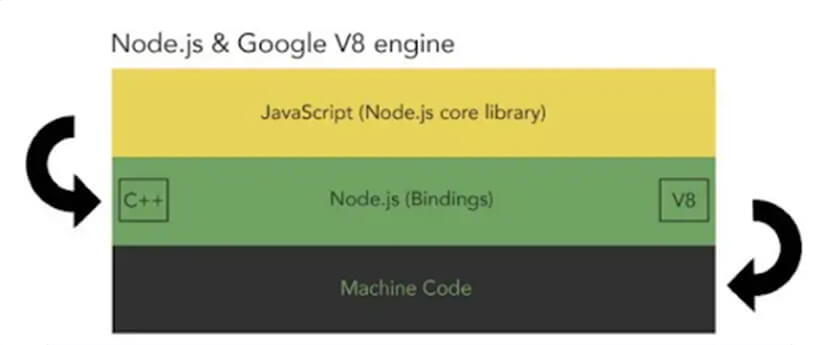
For Node.js development, Chrome’s V8 Engine is utilized to compile functions written in JavaScript into machine code, which plays a vital role in enhancing the web applications’ performance.

The below diagram depicts the conversion of Node.js into machine code.

Conversion of Node.js Into Machine Code

With the help of its Non-blocking Input/Output and asynchronous request handling functionality, Node.js allows you to quickly process concurrent requests even though JS is a single-threaded language.

In addition, you must note that it works well only for heavy CPU-intensive tasks that are rare for web servers.

Many custom software development companies switched technologies to developing Node.js applications and noticed significant improvements.

3. Rich ecosystem: Node.JS libraries and tools

Node Package Manager (npm) is a default manager that typically serves as a marketplace for open-source JavaScript tools, which is essential in advancing this technology.

You’ll be surprised to know that there are more than 1 million packages in the npm registry, about 42 thousand dedicated to Node.js alone, and over 10,000 new ones being published every week.

So you can imagine the Node.js ecosystem is built with a rich feature set.

97% of modern web applications consist of npm modules.

With access to multiple free tools, there is a massive potential for using Node.js. Likewise, open-source software enjoys growing popularity as it allows you to build new solutions, reducing development costs and time to market.

4. Scalable technology for microservices

Node.js is considered to be a lightweight technology tool, and using it for microservices architecture is one of the best choices.

As described by Martin Fowler and James Lewis, Node.js is “an approach to developing a single application as a suite of small services, each running in its process and communicating with lightweight mechanisms, often an HTTP resource API.”

Similarly, you can easily break the application logic into smaller modules and microservices rather than creating a single, large monolithic core, which enables better flexibility and lays the groundwork for further growth.

As a result, adding more microservices on top of the existing ones is much easier than integrating additional features with the basic app functionality.

With each microservice communicating with the database directly through streams, such architecture allows for better performance and speed of application.

Moreover, two frameworks widely used for microservice architecture support a match made in heaven.

Related Post: Top JavaScript Data Grid Libraries

5. Large developer community and gentle learning curve

Node.js is one of the most popular web development frameworks in 2022 engineering technology with 47.12%.

In fact, Express.JS is the most popular Node.js framework that is the fourth most common web technology with 22.99 percent of respondents using it.

The below figure demonstrate that Node.js is today’s golden standard for web development.

Usage statistics of Node.js

Companies that hire Node.js developers can efficiently solve any problem imaginable with a vibrant and thriving community. One of the reasons behind such popularity is that JS, along with Node, is easy and fun to learn.

Are You Looking For Top-Notch Node JS App Development Solutions?

We have a team of developers who are experts in delivering customer-centric Node JS applications development solutions for all business verticals.


Contact Us

What are the Node.js Disadvantages?

After having a look at Node.js advantages, let’s highlight the list of Node.js disadvantages.

1. API in Node.js are Unstable

APIs in Node.js development is not stable. So, it becomes quite challenging for Node.js developers to deal with the major complexities while writing programs that require stable APIs.

Moreover, due to unstable API in Node.js development, you need to be ready to tackle an unfortunate situation like the migration process.

In simple words, you need to pay attention even while migrating from one version of node.js to another, as the APIs keep changing.

2. Lacks Strong Library Support System

Node.js is one such backend development framework that typically lacks a robust library support system. In simple words, we can say that you are not dependent on third-party libraries to help them with tasks that are not included in the Node.js core library.

Moreover, with fewer documentation systems, it becomes quite difficult for you to search for relevant information that can be used in development.

3. Asynchronous Programming Model

The asynchronous Programming Model plays a vital role in scaling your application to a large By adopting the asynchronous programming model; you can efficiently manage the entire Node.js application for your business needs.

On the other hand, it becomes pretty challenging for business owners and developers to deal with the linear blocking I/O programming, creating a big hurdle for developing robust business applications.

Apart from this, asynchronous programming makes your code more clumsy, and the programmers have to depend on the nested calls.

4. Less capable of processing CPU bound tasks

Node.js is a JS runtime environment that can efficiently process CPU-intensive tasks but cannot handle particular tasks in a better way than the existing tools and frameworks.

The primary reason behind it is that Node.js was originally designed to work on a single thread. So, you were allowed only to handle one request at a time.

In case of any other requests, the existing implementations tend to queue them up, reducing the average performance.

5. Difficult to maintain code

With its asynchronous nature, Node.js technology responds to multiple callbacks for your business web application. This function runs just after every task in the queue, safekeeping several queued tasks in the background that are still running.

So, if you have multiple complex callbacks received at a time, this process is called Callback Hell. And that’s makes the code difficult to maintain.

Related Post: JavaScript Frameworks Popularity of 2022

Conclusion

To summarize, Node.js is the best backend framework for developing scalable and high-performing web applications for your business needs.

We’ve come across the list of Node.js advantages and disadvantages to clarify the vision of adopting Node.js as your primary backend technology. Still, if you find any challenges while selecting the backend framework, feel free to consult Albiorix.

Python vs JavaScript: Key Differences That You Need To Know

Python and JavaScript are the two primary languages that are most popular and powerful, but they do have key differences.

To understand that specific differences, we’ve come up with an article that depicts the difference between Python vs JavaScript. You’ll come across the basics of Python & JavaScript before we deep dive into their differences.

Key Takeaways

  • Python is a general-purpose programming language that is often used for scientific computing, data analysis, and web development. JavaScript, on the other hand, is a programming language that is primarily used for web development.
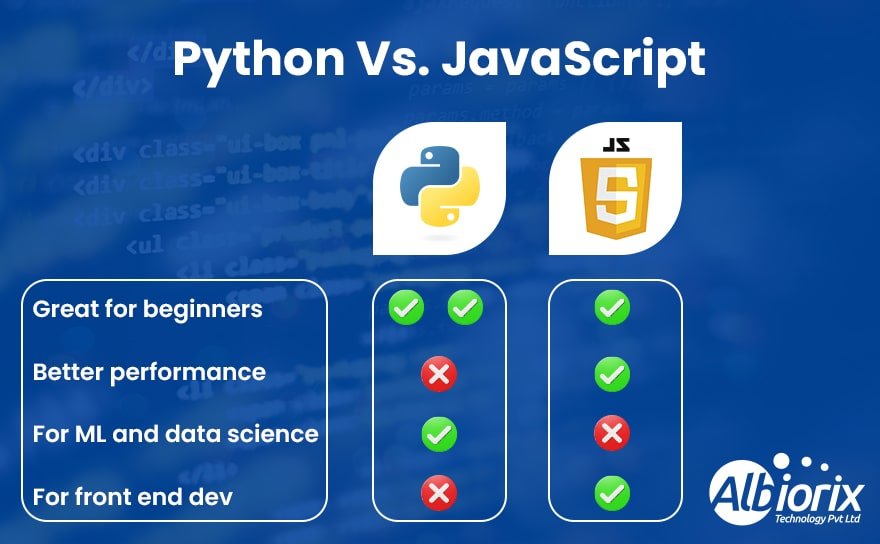
  • Python has a simpler and more readable syntax compared to JavaScript. Python code is easier to write and debug, which makes it a popular choice for beginners.
  • JavaScript is a more versatile language compared to Python because it can be used both on the client-side and server-side of web development. Python is mainly used on the server-side.
  • Python has a larger number of libraries and frameworks compared to JavaScript, which makes it easier to develop complex projects quickly.
  • JavaScript, however, has a large number of open-source libraries and frameworks that make it easier to develop front-end web applications.
  • Python has better support for scientific computing and data analysis, while JavaScript is better suited for building interactive web applications.
  • If you are developing a web application that requires dynamic features, then JavaScript is a better choice. If you need to develop a machine learning model or a data analysis tool, then Python is a better choice.
  • Python has a shorter learning curve, which makes it easier to learn for beginners. JavaScript, however, has more job opportunities and a larger community, which makes it easier to find support and resources.

What is Python?

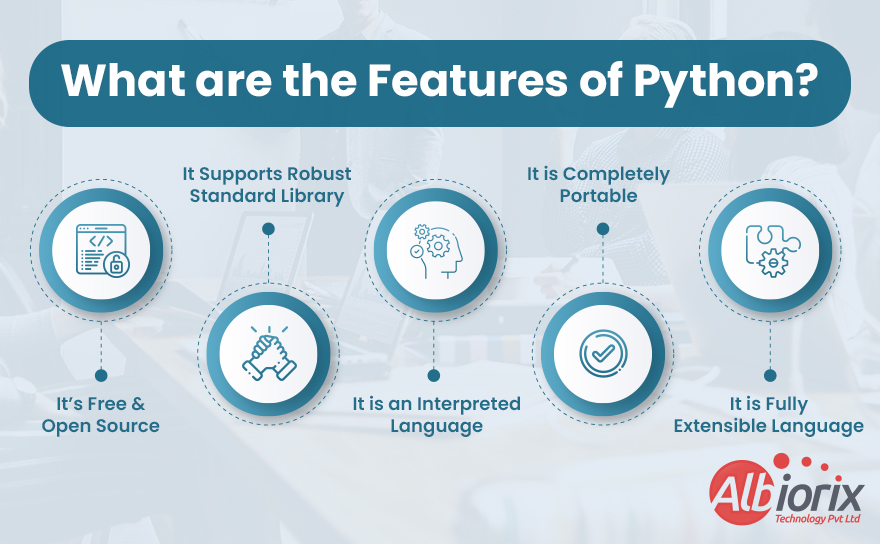
Python is a popular, high-level programming language known for its simple and easy-to-read syntax. It is widely used by developers, data scientists, and beginners to create websites, automate tasks, analyze data, and build machine learning models.

Python supports multiple programming styles, including object-oriented and functional programming, making it flexible for different projects

With its large community and libraries, such as NumPy and Django, Python allows users to develop powerful applications faster.

Because of its readability and versatility, Python is often recommended for those starting their programming journey as well as for advanced software development.

Python-Statistics-2023

[Image Source: Statista]

If I talk about the top features of Python, the list is huge. However, let’s highlight the prime features of Python Programming language.

  • Easily build web-based servers and applications.
  • Python allows you to create Machine Learning and Artificial Intelligence apps easily.
  • Python uses custom runtime patterns to enhance the application speed.
  • Python is completely object-oriented programming language.
  • It’s entirely compatible with leading platforms, databases, products, and programs.

Build High-Performance Web Applications Using Python Development

We help you leverage Python development services to build real-time, function-rich, scalable Web applications for all business verticals.
Get in Touch!

What is JavaScript?

JavaScript is a widely used programming language that helps make websites interactive and dynamic. It runs directly in web browsers, allowing users to experience features like forms, animations, and real-time updates.

Developers use JavaScript to create interactive websites, build web applications, and even develop mobile or desktop apps using frameworks like React or Node.js. It works alongside HTML and CSS to enhance user experience on the web.

With its flexibility and strong community support, JavaScript remains an essential skill for web developers and anyone interested in building modern digital experiences.

What you can do with JavaScript?

  • Displaying timely content updates
  • Creates interactive web pages with integrated maps functionality
  • Performs animated 2D/3D graphics
  • Scrolling video jukeboxes and many more

With its lightweight feature, JavaScript allows you to create more dynamic interactions when developing dynamic web pages, applications, servers, and or even games.

However, you can efficiently use JavaScript alongside HTML and CSS to make your business application more responsive. With the help of JavaScript, implementation of web, mobile application, and game development is much more easier.

Python vs JavaScript: Detailed Comparison

After looking at the basics of Python and Javascript, it’s high time to highlight the difference between Python VS JavaScript in various terminologies.

JavaScript Is Best In Terms of Speed & Performance

Python is a programming language that is well-known for its CPU-intensive tasks. On the other hand, JavaScript works the best for creating web applications and real-time interactions.

JavaScript is solely responsible for enhancing the  speed of business application and also plays a vital role in improving user engagement. And it is made possible with the help of Node.js framework. 

And if I talk about Python, its the best for processing huge data files, CPU-intensive projects, and large-scale applications.

And if you’re using Cython or NumPy tools for performing Python source code optimization, it will definitely provide you with the best application performance.

Difference between Python & JavaScript

And if I talk about Python, its the best for processing huge data files, CPU-intensive projects, and large-scale applications.

And if you’re using Cython or NumPy tools for performing code optimization, it will definitely provide you with the best application performance.

Related Post: react vs angular

Python Has Gained Huge Popularity

As we are comparing the two big back-end technologies like Python and Javascript, Python and JavaScript are popular one for developers and business owners.

In terms of popularity, both technologies are the best, but to be precise, compared to Javascript, Python is the winner.

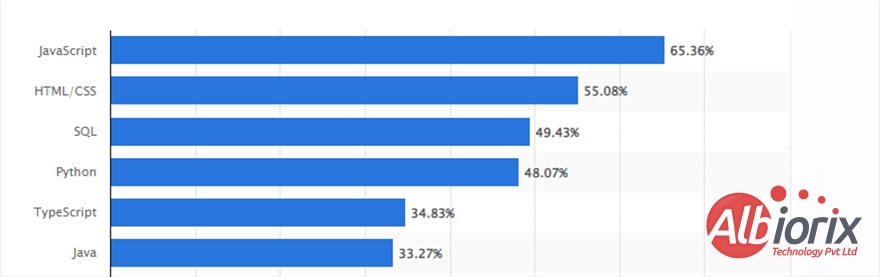
As per the recent survey by Statista, JavaScript has occupied the 4th position in the most commonly used functional programming language.

Python app development is usually fluctuating with lot of ups and down. And according to the TIOBE Programming Community Index 2022, Python has secured the top position, beating Java, C, and JavaScript.

Apps Developed With JavaScript Language are More Scalable

JavaScript is a programming language that typically supports multithreading features, while Python is a language that allows you to deal with only a single thread at a time.

If you want to build an application for your business that scales well, you should move ahead with Node.js development services. The primary reason behind it is that it is built specifically on JavaScript language. 

Simply put, the applications developed with JavaScript allow you to easily increase the number of threads and scale apps as and when needed.

On the other hand, Python actively uses GIL (Global Interpreter Lock), which does not include concurrent programming paradigms support.

Moreover, Python makes it challenging to utilize multiple processors with threads. This simply states that application scaling works best for JavaScript programming language.

Build Next-Gen Web Applications With Our JavaScript Development Services

We have a team of JavaScript programmers who can efficiently design and builds more innovative web applications for your business needs.
Let’s Connect

JavaScript Has a Steeper Learning Curve

JavaScript is one such programming language that is usually not easy to learn, and thereby I can surely say that it supports a steeper learning curve. But, it’s not the same case with Python language.

In fact, Python is a developer-friendly language and very easy to grasp for any Python developers.

Here, we are talking about the difference between Python and JavaScript; many freshers typically prefer Python as their primary language.

Some of the reasons are minimized structural lines, readable code & maintainable code, convert python code blocks, and, most importantly, a quicker development process.

Python Is Built With Feature-Rich Modules & Libraries

Python is known for its feature-rich modules and libraries that make complex tasks easier for developers. It offers built-in support for data analysis, machine learning, scientific computing, and more, through libraries like Pandas, NumPy, and TensorFlow.

This rich ecosystem allows developers to handle advanced tasks using just Python code, without needing additional tools. In comparison, JavaScript comes with only a few built-in modules, such as JSON and Math, making it less equipped for such tasks.

This is why Python is often the preferred choice for data science and AI projects, thanks to its powerful built-in capabilities.

JavaScript Makes Web & Mobile App Development Process Smoother

If you’re using JavaScript for developing mobile applications and web apps for your business needs, you’re on the right path. JavaScript helps you perform code faster, work quickly, and, yes, manage a large bunch of data.

Compared to JavaScript, Python usually takes more time for web & mobile app development. As it supports asynchronous programming nature, JavaScript plays a vital role in offering high-end scalability to business applications to a great extent.

It does not mean that Python is not a good option for application development. Python is essential as it is solely responsible for dealing with server-side development. 

However, it provides a stable software development environment with leading frameworks like Django, Pyramid, Flask, and many more.

Related Post: JavaScript Data Grid Libraries

Python VS JavaScript:  The Comparison Table

PythonJavaScript
Python is a high-level programming language that is object-oriented programming.JS, or Javascript, is a scripting language.
Guido van Rossum is the man behind the invention of Python.JavaScript was created by Brendan Eich (Netscape), currently maintained by ecmascript language specification.
Python is an imperative programming language that is easy to read and maintain code.JavaScript is completely flexible scripting language and so it does not provide easy code readability or code maintainability functionality.
An interpreter is needed to run Python code.You just need the browser to run Javascript code.
Python is a dynamically typed language.JavaScript is commonly used for client-side scripting language.
Python is best used for server-side scripting.JavaScript is commonly used for client-side scripting.
By default, Python is encoded as ASCII language.JavaScript supports UTF-16 encoding.

Related Post: Vue 2 vs Vue 3

Conclusion

If I talk about the winner, comparing these two leading technologies cannot be done as it would not be fair enough. Python and JavaScript are inspiring backend technologies but are meant for different perspectives.

Both technologies have their own predictive use cases that make the development process smoother and more efficient. 

The distinctions between JavaScript vs Python enable them to complement each other seamlessly in the software development lifecycle.

To be precise, JavaScript rules the world for mobile and web app development, while Python rules the Machine Learning and Artificial Intelligence (AI) market for its ease of use and ability to perform data manipulation using Data Analytics features.

But …but…but…..if you are still confused with Python and JavaScript, feel free to contact Albiorix and get your confusion cleared right away!

JavaScript Frameworks Popularity of 2026 That You Need To CheckOut

JavaScript frameworks are the real heroes behind implementing web and mobile applications for your business needs.

A list of multiple JavaScript frameworks is available in the market that makes your work easier, starting from designing to the deployment process. And If I talk about the previous year, there exist many ups and downs for such innovative frameworks.

We’ve come up with such JavaScript frameworks popularity and usage statistics for 2026.

JavaScript Frameworks Popularity with Usage stats of 2026

In 2026, there was a peak demand for the best JavaScript frameworks for designing and developing robust business applications. So this time, we’ve come up with the JavaScript framework usage statistics based on various factors like:

  • What tools are developers using?
  • How are they learning them?
  • What their opinions of them are?

As per the developer survey 2026, more than 70,000 developers were actively participated in the survey report. And also, 72% developers were profession developers.

Let’s highlight the survey details of the most popular and best JavaScript frameworks.

1. JavaScript Gained Its Position in Most Popular Programming Language

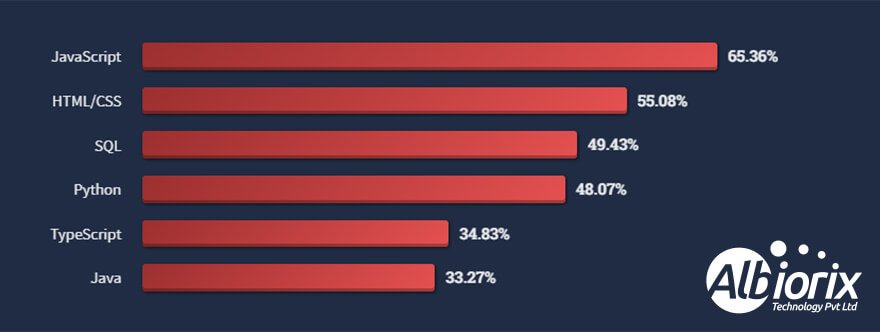
JavaScript is a scripting language and is the most popular language of 2026.

Here’s the proof, Over 65% of respondents used JavaScript technology extensively for web application development. JavaScript is the core technology that is specifically used on the web development along with HTML and CSS programming language.

JavaScript Popularity Graph

Moreover, JavaScript is vital in dealing with development environments like Node.js for backend development, Apache CouchDB, and Adobe Acrobat.

JavaScript is not limited to web and mobile app development, but its usages have also extended to mobile, game, and desktop development.

Albiorix is an expert in developing an online platform that can easily empower physicians, health institutions, and patients through a comprehensive telemedicine platform.


View Our Projects

2. Angular Occupies The Top Position

Angular is an open-source JavaScript framework that makes it easy to use HTML as a template language, write code using standard JavaScript syntax, and add attributes to DOM elements.

Currently, Angular is in fifth place among the top 10 most-used web frameworks among developers worldwide as of 2026.

Most Used Web Frameworks Among Developers

Angular is the best option for designing and building feature-rich web app development solutions.

Angular has gained huge popularity as a powerful JavaScript framework. On top of that, Google, Netflix, and Upwork are prime examples of websites built using the Angular framework.

3. ReactJS Occupies the Second Position

ReactJS continues to hold strong in 2026, maintaining its position as the second most popular web framework, according to the latest Stack Overflow Developer Survey.

It has overtaken several competitors, including Node.js, and now shows a consistent growth trend since 2020—rising from 36% to over 43% developer preference.

Its wide adoption can be credited to its simplicity, reusability, and a strong community of developers. React is not only stable but also actively supported, making it a reliable choice for modern web development.

Despite new libraries entering the field, React remains a go-to framework in 2026.

Drive Your Business Growth With Single Page Application

We have professional and experienced Angular developers that can develop single-page applications simply and fast using optimal structure.


Contact Us

4. Node.js Stand Out in the Competition

Since four years, Node.js development has become very popular and continues to stand the competition in 2026. Node.js development is designed explicitly for almost all startups worldwide and that’s what makes it top JavaScript frameworks.

If I talk about the most used web framework among software developers worldwide, as of 2026, 47.12% of respondents reported using Node.js.

Node.js framework is such an ideal and innovative technology stack that help you build secure, powerful, and solid digital solutions for your business needs.

In addition, you’ll come across various JavaScript frameworks and web application programming languages that play an essential role in impacting the app’s efficiency.

So, opting for the correct tech stack from beginning to app development is imperative. Node.js in 2026 is a significant trend that will continue to evolve and provides several clear advantages, making it the finest option for web developers.

5. VueJS Is Now Leading the Software Development Industry

Vue.js is an open-source framework that helps you create user interfaces and single-page applications for your business needs.

Vue.js is a feature-rich JavaScript framework that has a collection of effective and impressive tools for performing various business operation.

It’s compatible with TypeScript, end-to-end testing instruments, and a plugin installation set-up and allows unit testing.

Since the launch of Vue version 3, there exists many differences between Vue2 vs Vue3. It also contains a state manager, server renderer and browser debugging resources.

With its advanced software packages and supporting libraries, Vue.js framework is effective in setting in motion state-of-the-art single-page apps.

Related Post: JavaScript Data Grid Libraries

6. ExpressJS is the Best One For Businesses

ExpressJS continues to be a top choice for businesses looking to build fast and scalable web applications

Known for its simplicity and flexibility, Express is widely used to create APIs and server-side apps, especially by companies aiming to launch robust digital products efficiently.

Its strong community support, lightweight structure, and ease of handling HTTP requests make it developer-friendly. Express has earned over 57,000 GitHub stars, reflecting its reliability and popularity.

What also makes Express a smart business choice is its extensibility. With a variety of plugins and middleware, it adapts easily to different project needs—whether you’re building a startup app or scaling an enterprise-level platform.

Many modern frameworks are built on Express, showing its influence and trust in the developer world.

Businesses benefit from its stable foundation, helping teams resolve issues quickly and build efficiently—making ExpressJS a practical and future-ready solution.

Looking For the Best Front-End Development Services?

Conclusion

JavaScript is a technology accepted by almost all developers and business owners working globally to make robust web applications. Moreover, it is one such technology that is equipped highly with the list of cutting-edge technologies.

JavaScript is one of the first and most popular global technologies developers prefer. After going through the JavaScript usage statistics and data in recent years, we are quite proud of our work at Albiorix.

Top 10 Powerful Mobile App Development Trends To Know

With the extensive rise in the usage of smartphones and digitalization expansion, the demand for mobile application development is touching the sky.

Nowadays, in this technological world, we are much more addicted to convenience than anything else. So, an excellent mobile application comes in handy.

As a result, developing a mobile application after understanding all of the latest mobile application trends is a fantastic concept. The trends discussed in this article are the most important mobile app development trends for your business in 2023.

Top 10 Mobile App Development Trends in 2023 For Your Business

1. Increase in On-Demand App

On-demand development apps came into action to create the mobile app development process much easier. Of course, you’ll require technical expertise and coding knowledge if you’re just designing and building mobile apps.

Still, with the advent of the on-demand development model, the scenario has completely changed, and building apps has become much more accessible.

On-demand applications help your business create mobile apps that can efficiently scale well per your business needs. In simple words, you can quickly build mobile applications by yourself within a short interval.

Yes, an on-demand app is responsible for everything, and it goes far beyond expectations to resolve your mobile business applications.

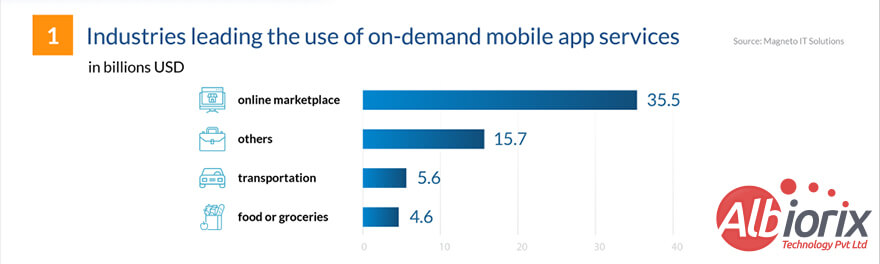
Key Mobile App Trends 2023

Data Source:Financesonline

The on-demand development model will likely grow as the demand for simplified app development increases.

Planning to Create Mobile App For Your Business?

We have a team of talented mobile app developers that possesses strong expertise in designing and building mobile apps.

2. Mobile App Security

Having developed and deployed mobile applications each year, it becomes the prime responsibility of businesses to prioritize mobile application security to protect themselves against modern threats.

The mobile app development experts have forecasted from the survey that the application security market is set to surpass a market value of $7 billion by 2023.

So, you can just imagine the heavy investment that you, as a business owner, need to make in secure application development in the incoming years.

  • 82% of Android devices were susceptible to at least one out of 25 vulnerabilities in the Android operating system
  • 77% of mobile finance apps were found to have at least one serious vulnerability that could lead to a data breach.

In addition, with the invention of the new mobile and other IoT devices coming into the market at an unprecedented rate, mobile app vulnerabilities are solely responsible for creating critical threats to security. And it applies mainly to both end users and businesses.

So, it’s the primary reason most businesses invest more in cybersecurity, given that it is directly linked to data protection and information privacy laws.

Thus, I must say that digital security has taken a big step towards becoming a top mobile app development trend in 2023.

3. Focus on Camera-Oriented Apps

You’ll be surprised to know that video conferencing apps are booming the market as it has been downloaded globally at the breaking time of 62 million. Sounds good.

So, the business has started adopting video conferencing app development as its core service. Moreover, this concept has taken a big leap in the market, especially after the Covid pandemic.

With the help of this innovative mobile app technology, it has become quite easy for end-users to use apps that let them broadcast videos, connect with friends and build a social network globally.

TikTok is one of the most popular streaming apps, generating market revenue of over $9.89 billion. Camera-based mobile development trends go for the streaming entertainment niche, broadcasting niche, and social media network niche.

4. AR/VR Development

One of the most famous games, Pokemon Go, has grabbed the top position in the gaming world and brought augmented reality technology into the mainstream.

The primary role of Augmented Reality (AR) is to superimpose artificial objects on real-world objects. On the other hand, Virtual Reality (VR) deals with an entirely artificial environment.

But I must say that only game development is a part of AR & VR applications; such techs play a significant role in improving the efficacy of training and educational apps. They can give the student a sense of performing the job.

AR & VR - Worldwide Market Size

Data Source:Statista

Interior designing and marketing are other areas where AR and VR apps create game-changing experiences. For example, the app can let the user see how the product will look in a particular space or give you a better idea about its size and shape.

You May Also Like: Top Digital Transformation Trends

5. 5G Implementation

5G is one of the leading and most prominent mobile app development trends in 2023, solely responsible for improving network latency, network capacity, and many more parameters.

This innovative cellular communication technology has entered a few parts of the world. So, the 5G technology in 2023 has become a buzzword, and many 5G-enabled devices are now available in the market.

There will be around 5 billion 5G subscriptions globally, accounting for 55 percent of all mobile subscriptions by 2028. – Source.

With its unique features introduced, 5G technology makes it easy for mobile app developers to create robust and secure apps faster and quickly.

Apart from these features, 5G technology will also help us develop mobile apps using augmented and virtual reality, IoT, artificial intelligence, and machine learning.

As mentioned, the world of mobile app development is highly competitive. Therefore, developers should take the features offered by 5G into account and create apps that can keep up with the latest mobile app trends.

6. Super Apps

One standard mobile app development company approach is adopting the fact “One App with One Purpose”. It means that significant companies typically shift from single-purpose apps to one-stop solutions that are solely responsible for solving multiple purposes.

Such apps are called Super Apps, and this trend is catching up globally. However, you must have heard the name of the most popular company in the US market, Natural AI, developed by California-based company Brain Technologies Inc.

It entirely depends on how people interact with their phones, making it easy for them to solve multiple purposes from a single app.

Facebook is one prime example of social media platform that is not only a leading social media platform but also offers marketplaces where people can buy and sell products.

Similarly, Amazon is the best online platform that allows you to make payments for online shopping.

The craze about super apps could be higher in the western world, as people prefer trying different solutions before settling on one. Still, everyone demands convenience from almost all perspectives.

So, super apps are the best mobile app development trends for your business in 2023.

7. Predictive Analytics

Nowadays, many businesses have started using predictive analytics in mobile applications. For example, Netflix allows users with recommended movies and TV shows based on users watching habits.

Another example is Amazon, which leverages predictive analytics to personalise product recommendations.

Generally, there are two areas where the Predictive Analytics trend is playing a crucial role in mobile app development in 2023:

  • Development Process Optimisation: You can efficiently process the business data gathered from software developers to discover issues before they occur and suggest better alternatives for the best possible outcomes.
  • User Experience Improvement: You can efficiently utilize user data to predict users’ actions and personalise their journey to enhance customer satisfaction.

So, it becomes easy for you minimize the development time, irrespective of the quality excellent and focusing more on delivering business processinnovations.

8. Beacon Technology

It’s a location-based technology that primarily uses the smartphone’s Bluetooth for searching the location proximity to a store, a hotel, or other premises.

If I talk about the working of Beacon technology, the beacons that are available in the location typically send signals that trigger the app to be opened on the customer’s phone.

The app performs various functions and enables users to shop from a store or order room service within a hotel. Moreover, it can even provide information about the different pieces on display in a museum.

Beacon apps are used mainly by retail and have the full potential to overhaul the retail sector. It is vital to improving customer satisfaction by providing personalised service at the customer’s fingertips.

So, the excellent part of Beacon technology is that customers will not have to wait for a salesperson to answer their queries. It is the responsibility of beacon technology for this.

You May Also Like to Read: Top Technology Trends 2023

9. Mobile Commerce

Mobile commerce is a top-rated and rising mobile app development trend. The primary reason behind this is the Ecommerce sector’s sales worth is $3.56 trillion, and 72.9% of these sales happen on mobile.

After the COVID pandemic, there has been a major lifestyle shift for everyone as they have started relying on mobile apps, from large retailers to small businesses and individual consumers.

Moreover, it has greatly impacted eCommerce businesses, losing many customers and missing out on ones they could convert.

Hence, businesses must adapt to this trend and have an eCommerce business app, making it the best way to survive in this cut-throat competition.

However, mobile commerce being a buzzword should be one of many reasons you have an app for your business.

10. Wearable Devices

Wearable devices are already ruling the world, and many crucial things are coming up in the wearable devices industry.

According to Statista, connected wearable devices reached 929 million in 2022.

Nowadays, wearable devices come up with inspiring new features like fresh watch faces, enhanced wallet access, and redesigned interface for Apple Watch users. So, I must say that this amazing mobile app development trend will greatly impact the future.

Google came up with a fantastic unified wearables platform that combines its wear operating system with Samsung’s Tizen software platform to boost app startup times by 30%.

It signifies the rise in wearable technology — one of the important mobile app development trends in 2023.

In other words, app developers and businesses should get ready with apps that provide an excellent digital experience to users on Smartwatches and wearables, thus gaining a distinct edge over those who do not.

Embrace this mobile app development trend and get close to your target customers by offering them a seamless digital experience.

You are Just One Step Away From Your Dream App!

Create seamless mobile apps with Albiorix app development services.

Conclusion

To succeed in your business, you must keep up with current technology trends and create things the market wants. And adopting such mobile app development trends discussed are the best examples.

By following such mobile app trends, you can easily design and build secure mobile apps for your business. The mobile app development world is changing rapidly to cope with your business needs with the invention of new mobile app development frameworks.

But these trends have staying power: they’ll likely continue through this year and beyond.

Greatest Tech Trends for Businesses

Are you searching for the best way for your business to save costs, improve margin, or reinvest in the coming years? Then, it’s the right time for you to reinvent the business model.

Business leaders and technologists are working hard and smartly to assess the potential impact of multiple technology trends, and partnering with an experienced AI development company helps them navigate these changes to enhance their business performance.

Such trends are vital in dealing with specific strategies, like growing revenue, accelerating digital, maximizing value from data, or protecting and building your brand.

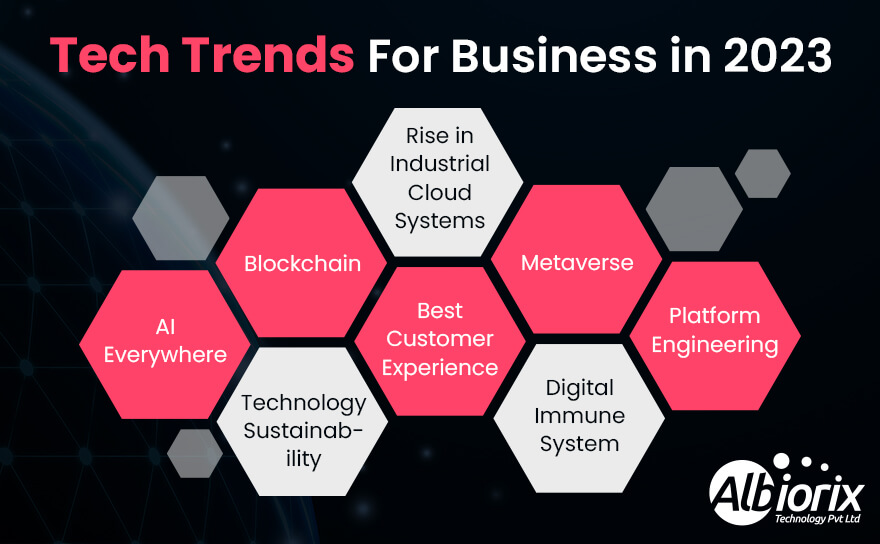
These Technology trends could represent a risk or opportunity for your organization, and this list will help you create a technology roadmap to drive impact on a range of strategic ambitions.

Technology Trends For Business That You Need To Check Out

Let’s explore the best technology trends that will help to achieve your business a big success.

1. AI Everywhere

Artificial Intelligence (AI) will rule the competitive market for almost all business verticals. With its innovative features like No-code AI and easy drag-and-drop interfaces, AI utilizes its power for designing and developing more intelligent products and services.

Such a fantastic technology trend is benefiting the retail market. For example, Stitch Fix is one of the leading fashion brands that typically uses AI-enabled algorithms to show personal clothes recommendations to its customers that match their sizes and tastes.

So the biggest question that arises in our mind is what are the most critical AI technology trends business leaders need to invest in to grow customer satisfaction and revenue?

Adaptive AI

  • This innovative technology is a decision-making framework that helps you make faster decisions and share flexibility for resolving issues quickly.
  • Adaptive AI helps you continuously learn based on new data at runtime to adapt to real-world circumstances and deal with changes as they exist.
  • With the help of this feature-rich AI engineering framework, you can quickly optimize applications that can adapt to, resist or absorb disruptions, making it easy for you to deal with adaptive system management.

As per the recent survey by Gartner, it has been predicted that companies using adaptive AI by 2026 will outperform competitors by 25%.

Generative AI

  • This impressive technology will help you create visual design mock-ups, write, design, and code smarter and more efficiently than humans.
  • Moreover, you can efficiently use content such as articles, whitepapers, press releases, blogs, or social media posts to enhance your business growth.

It has been estimated that generative AI will account for 10% of all data produced.

Build Memorable Digital Experience For Your Business

We have a team of talented developers who are proficient in providing the best possible web and mobile app development solutions for your business.


Contact Us

Hyperautomation

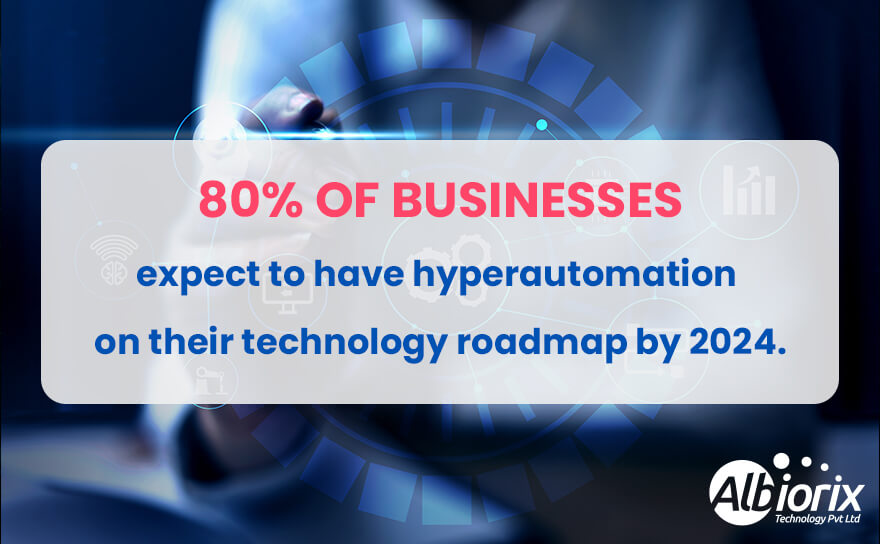
  • Hyperautomation is nothing but the combination of multiple technologies, tools, or platforms such as artificial intelligence (AI), machine learning (ML), robotic process automation (RPA), business process management (BPM), integration platform as a service (iPaaS).
  • In the coming days, businesses must be ready to adopt hyper-automation to solve their staff, customer, and economic challenges.
Hyper Automation on their technology Roadmap in 2024

Data Source: Hyperautomation statistics

Fast IT

  • In this rapidly growing market, business process automation is taking a big lead towards technological advancement. It will help you automate your work process, and that too with digital workforces.
  • Fast IT is a feature-rich and innovative solution that helps you solve business costs and enhance workforce challenges in a cash-constrained business environment.

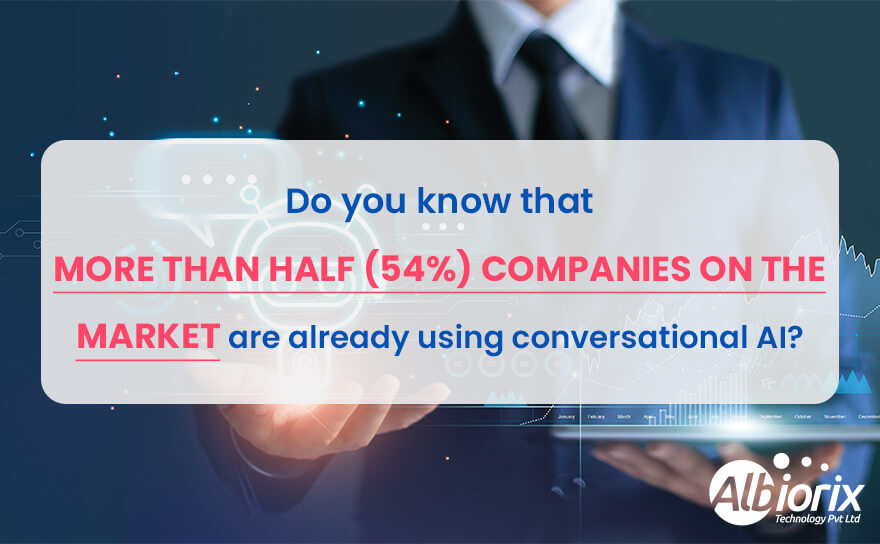
Conversational AI

  • Great conversations generate engagement and brand loyalty, and ultimately, you can achieve great success for your business.
  • Conversational AI is an emerging technology trend that works as a powerful virtual AI agent.
  • This fantastic technology helps your customers to deal with intelligent conversations.
Companies on the Market are Already Using Conversational Artificial Intelligence

Data Source: Conversational AI Statics

Cyber AI

  • Cybersecurity AI will benefit networking personnel by allowing you to enlist AI and ML with the network to improve security.
  • It is pretty challenging for the human brain to stay alert with the ever-growing cyberattacks. But with this invention, you can quickly enhance the speed, complexity, and scale of any potential attacks they face.

Artificial Intelligence (AI) in Cybersecurity market size is expected to reach USD 60.6 billion at CAGR rate of 21.9%.

Intelligent Document Processing (IDP)

  • With the effective usage of AI, ML, and natural language processing (NLP) tech stacks, IDP solutions help your businesses quickly process large volumes of unstructured and semi-structured data.
  • The excellent part of IDP technology is that it can smoothly manage thousands of data samples to develop and improve their accuracy.
  • IDP platforms are solely responsible for dealing with advanced techs like computer vision, deep learning, and ML models to help businesses classify, categorize, extract, validate and multiply data at speed and scale.

As per the recent survey by Think Automation, the digital automation market will reach to $12.61 billion.

Digital Twins and AI

Generally paired with AI advancement, Digital twins are a tech trend that plays a vital role in transforming business operations or creating new business value.

As per Gartner’s definition, a digital twin is nothing but a digital representation of a real-world entity or system.
With the help of digital twins, you can effectively integrate multiple data for a composite view across many real-world entities, such as a power plant or a city, and their related processes.

Seeing the AI technology trends, the demand for software developers will slow down with the invention of new AI, ML, and low-code platforms.

2. Blockchain Becomes the Cornerstone of Digital Trust

Before we start to understand the concept of Blockchain as one of the top technology trends, we need to analyse the idea of working with Blockchain. Generally, only two parties are deeply involved in verifying data, and that is with a centralised system.

Now, as there is only one centralized system, there are more chances of getting complexities. Is there any optimum solution to get rid of it? Yes, Blockchain is the ultimate solution that makes your work easier than ever.

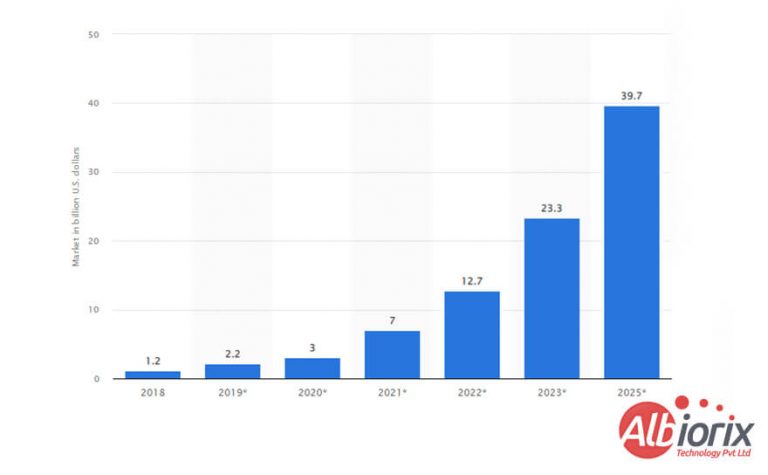
The revenue of the Blockchain technology is expected to climb to over 39 billion U.S. dollars in size by 2025 – Statista.

Revenue of the Blockchain Technology

Moreover, the ultimate control of an organization is removed, and you can quickly store the data in an encrypted format and much more secure.

Decentralization helps you easily transact, communicate, and do business and facilitates automation, translating into a massive boost in digital property.

The primary goal of implementing Blockchain in your business process is to

  • Speed up the transaction verification process
  • Get rid of fraud and cyber-attacks
  • Deal with highly efficient, reliable, and secure application

For that particular reason, Blockchain is essential to be implemented for improving data tracking, creating new billing systems, hosting patents, tracking sales processes, protecting medical data, etc.

3. Technology Sustainability

Since the Covid pandemic, almost all businesses have been addicted to climate disasters, which has shown a significant impact of challenging factors in recent decades.

So, investors and customers generally prefer businesses that strictly follow the proper environmental and social credentials.

On the other hand, buying trends are also taking a giant leap towards conscious consumers who have prioritised factors such as ecological impact and sustainability when choosing who to buy from or do business with.

And if we talk about the green technology and sustainability market size, you’ll be surprised to know that it’s going to peak at 417.35 billion U.S. dollars by 2030 – Statista.

It would help if you initiated by measuring their business impacts on society and the environment. Moreover, it will help you gain transparency, reporting, and accountability functionality.

Every business needs a plan with clear goals and timeframes to reduce negative impacts, which needs to be underpinned by solid action plans.

4. Increase in Industrial Cloud Systems

As we are talking about the technology trends, Industry cloud platforms are next on our list. Such an innovative platform is designed explicitly to meet the specific needs of almost all business verticals that are primarily served by generic solutions.

Vertical cloud platforms are the best examples of such industrial cloud systems as they combine software, platform and infrastructure as a service (IaaS) capabilities as a centralized system.

The recent survey of Statista says that the cloud system infrastructure services (IaaS) segment is forecast to grow by 30.5 per cent.

And if we talk about virtual cloud platforms, they are entirely based on public cloud services. In addition, it offers you a more agile way, and you can efficiently manage workloads and accelerate change against the particular business, data, compliance or other business needs.

5. Captivating Customer Experience

A major factor that makes your business a huge success is the positive and improved customer experience. It does not mean that companies must be ready to deal with any sort of compromise for both price and quality.

And yes, both are the essential parameters you need to consider while choosing, purchasing, and enjoying the goods and services we spend our money on.

Traditionally, the primary role of technology role is to efficiently streamline business processes and remove the hassle from the client’s life.

The best way to do this is to use recommendation engines that play a crucial role in deciding what to buy or online customer service portals that deal with problems and after-sales support.

Are you the one looking for the best custom software development agency?

Your search ends at Albiorix as we provide you with cost-efficient solutions to meet your business IT needs.


Contact Us

6. Metaverse

The term “metaverse” has adopted a new terminology of the internet where you have full freedom to work, play, and socialize on a persistent platform.

As per the expert’s review, the Metaverse will add $5 trillion to the global economy by 2030, and will be the year that defines the direction of the Metaverse for the next decade.

Augmented reality (AR) and virtual reality (VR) are the leading technologies constantly upgrading with new advancements.

One area to watch is the work environment in the Metaverse, I predict we’ll have more immersive meeting environments where we can talk, brainstorm, and co-create.

One of the best companies that have adopted Metaverse as their primary technology are Microsoft and Nvidia for collaborating on digital projects.

7. Digital Immune System

A digital immune system (DIS) helps you mitigate business risks by combining best practices and technologies for software design, software development, operations and regular analytics.

Digital Immune System’s excellent part is improvising the customer experience by combining various software engineering practices.

It is made possible by strictly following observability, automation, and revolutionary design and testing for your business product.

Companies that are investing more in creating digital immunity will increase customer satisfaction by decreasing downtime by 80% – Report by Gartner.

DIS is actively responsible for delivering resilient systems that will help you mitigate operational and security risks in your business process.

Digital Immune System helps protect your business from the effects of software bugs or security issues, making your applications more resilient. In addition, you can quickly recover from failures.

8. Platform Engineering

Platform engineering is an emerging technology trend for your business, as it accelerates the application delivery and the pace at which you can efficiently produce business value.

The platform engineering aims to improve the developer experience and productivity by providing self-service capabilities.

This technology approach typically uses automated infrastructure operations, and it’s trending because it promises to optimize the developer experience and accelerate product teams’ delivery of customer value.

Conclusion

These top technology trends will help you and play an essential role in fulfilling your business needs to optimize, scale or pioneer.

The main motive for listing such trends was to make you align your technology innovation with the future strategic objectives of your enterprise.

I recommend starting investment in sustainable technology, as it helps you provide operational and financial benefits and create growth opportunities. If you need guidance on implementing the right solutions for your business, feel free to Contact Us to explore the best way forward.

Which One Is Better Choice For Back-end Framework: Node.JS vs Python

Node.js and Python are the leading backend technologies that make your web application more robust. But the big question arises: Do both Python and Node JS have any similarities?

Node.js and Python are modern technologies for web app development, but there is some difference in many aspects you must know. So, to make it easier for you, we’ve come up with an article that depicts the difference between Node.js vs Python.

Whatever technology you prefer for your business, make sure you consider selecting the best technology that matches your business requirements.

What is NodeJS?

Node.js is an open-source JS framework that builds both client and server-side network apps. It has a robust reputation for creating scalable and high-performance apps with its rich tech stack and robust ecosystem.

Node.js is a feature-rich backend technology that stamps out the dilemma between client-side and server-side development.

What is Python?

Created by Guido van Rossum, Python is an object-oriented, high-level programming language that offers an extensive set of libraries and packages to build dynamic web, mobile applications, and desktop apps.

Python is a leading backend technology that supports many programming standards and is very convenient.

As the creator said, the delight of Python as an object-oriented programming language is its short, readable, and concise classes that exhibit a lot of action.

Features of NodeJS vs Python

After having a look at the basics of Node.js vs Python, let’s highlight the top features of Python and Node.js in detail.

Top Features of Node.JS

Features of nodejs
  • Single-threaded: Node.js is the technology that typically operates on Single Threaded Event Loop Model architecture.

    By enabling the Node.js server to work with all non-blocking operations seamlessly, the event loop mechanism contributes to the server’s increased scalability.

    In addition, unlike Apache HTTP servers, Node.js version 19.0 can handle multiple tasks, multiple client requests, and even supports the multithreading concept.

  • Asynchronous: Node.js API are asynchronous by design. Simply put, whenever a client requests a server, the request is dealt with by a single thread.

    If the request does not involve any interaction with the database, it will be processed, and you can quickly send the response.

  • Event-driven: The notification mechanism in Node.js is called “Events” and helps you receive and keep track of previous API requests from the server.

    This mechanism works the same as the callback mechanism found in asynchronous functionality.

    Once the Node.js application starts the server, you can efficiently declare its functions, begin setting its variables, and then wait for the event to occur.

  • NPM: The Node Package Manager is the most comprehensive online repository for the Node.js JavaScript runtime environment.

    You can efficiently develop, install, and publish node programs. The NPM registry possesses 1.3 million different packages and effectively allows your business to manage private web development.

  • Highly scalable: Node.js operates asynchronously and supports only one thread. It utilizes child processes to partition applications horizontally.

    It enables organizations to customize app versions following individual customers’ preferences more easily.

  • Performance: Node.js is built with the Google Chrome javascript engine V8 JavaScript Runtime environment model, contributing to more rapid code execution.

    With the assistance of C++, the JavaScript code used in Google’s app engine (V8) is compiled into machine code. Moreover, the code implementation is more streamlined and quicker with the help of Node.js.

Related Post: Web Application Architecture

Top Features of Python

Features of Python
  • Free and Open-Source: Developed under an OSI-approved open source license, Python is free to use, even for commercial purposes.

    You can easily download Python from the official Python website. You can freely modified and re-distribute the code as per your business needs.

  • Powerful Standard Library: Python is an interpreted language that comes up with an extensive standard library, making it easy for you to develop application without writing too much code for every single thing.

    You’ll find different libraries for image manipulation, databases, unit-testing, expressions, and other functionalities.

  • Interpreted: When a programming language is interpreted, the source code is executed line by line and not all at once.

    Programming languages and compiled languages such as C++ or Java are not interpreted, so they must be compiled first to run them.

    You do not need to compile Python repeatedly, as it is processed at runtime by the Python interpreter.

  • Portable: You can efficiently run Python code that is the same on different machines, whether Windows, Linux or Mac.

    You do not need to make any specific changes to the code. Simply put, you do not need to write a program multiple times for several platforms.

  • Extensible: Python is a completely extensible language, as you can easily extend Python code to other languages.

    As compared to Node JS, Python code can also be written in languages like C++, making it a highly extensible language.

Related Post: Angular vs React

When To Use: Python vs NodeJS

When to Use NodeJS?

NodeJS helps you build scalable network applications like Machine Learning and Artificial Intelligence, as the platform is entirely built on Chrome’s JavaScript runtime environment.

Moreover, it is the best option for developing data-intensive real-time applications as it comes up with innovative features like event-driven architecture and even event-driven non-blocking I/O models.

If we compare NodeJS with Python performance, NodeJS plays well in terms of application performance and speed. NodeJS allows you to quickly develop messaging or chat applications.

So, if you’re planning to develop heavy-load applications, eCommerce platforms, enterprise applications, or Machine Learning apps, business websites, NodeJS is the one-stop solution for your business needs.

When To use Python?

Python is a robust platform that comes up with a list of libraries like open-source data analysis tools, web frameworks, and testing instruments. So, Python’s structured programming methods language ecosystem is more substantial in communities available globally.

With such a sizable community support, Python language comes up with multiple resources, making it a highly preferred option for you to deal with creating applications and performing data analytics smoothly.

By comparing Python vs Node.js, Python is essential in dealing with terminologies like features consistency, stability, and ease of use.

But, I must say that Python is the most highly preferred programming language for developing scientific applications, big data solutions, government projects, and other large projects.

Build High-Performance Web Applications Using Python

We help you build real-time, function-rich, scalable Web applications for all business verticals.

Contact Us

Detailed Comparison: NodeJS vs Python

1. Scalability: NodeJS vs Python

Scalability is an essential factor you need to consider while developing business web applications. It helps you decide on resource requirements and brings a major impact on creating MVP for your business.

If you’re creating a lightweight application, any specific language or coding environment will work fine.

But what happens when you need to include additional functionalities in your business application? You’ll need more resources to deal with such a situation, and that’s what makes a huge difference in selecting the best back-end tech stacks for your needs.

Node.js provides you with great flexibility, where you do not have to create a core, instead, you need to create multiple microservices and modules.

So, once your Node application is scaled well, microservices and multiple modules help you run their process dynamically.

Scaling your application horizontally becomes smoother by efficiently adding nodes to the existing ones and vertically by adding more and more resources to your business application.

But with Python, the scenario is entirely different. Python faces various challenges with threads. With its Global Interpreter Lock functionality, Python does not allow it to operate several threads simultaneously.

So, the best recommendation is that you are not allowed to run another process before the sequentially historical process is over.

Above all, Python is a dynamically typed language, making it a challenging factor for a larger development team to deal with code maintenance activities.

2. Application Performance & Speed: NodeJS vs Python

Once you scale an application, every bit of efficiency plays a vital role in minimizing operating costs. So, I can definitely say that in terms of node vs python, performance and speed are crucial factors, especially while assessing a programming language or environment.

Node.js strictly follows non-blocking architecture, so the execution process is simpler and faster.

Moreover, if we talk about Python vs Node JS performance, Node.js is solely responsible for executing the asynchronous code outside the web browser, making it a solid contender.

So, the Node applications that typically run on web browsers process at a faster speed and of course, perform well on efficiency.

Python’s application architecture usually forbids multithreading and is a major challenge in this aspect as well. This dynamically typed language is solely responsible for slowing down the processing speed as processes don’t run parallelly.

With the help of Python’s easy-to-learn syntax, it becomes difficult for your applications that frequently recall data from the web server. So, in terms of Node JS vs Python speed, we can say that Node js is the ultimate winner.

3. Syntax & Learning Curve: Node vs Python

‘Syntax’ typically performs a massive set of functions with as minimum code as possible, and that’s what plays an essential role in maintaining language efficiency. You can quickly achieve it by granting popular operations into specific inbuilt functions.

I must say that it’s an easy way to deal with assessment for the learning curve, mainly associated with the primary languages. In simple words, the easier the Javascript syntax, the more chances there are of flattening the learning curve.

If you are an expert in JavaScript technology, NodeJS’s learning curve is not steep.

However, many times, it happens that you find it challenging to install NodeJS using the documentation file, and it is just due to the event-driven programming concept. And that’s what make Node.js scalable and efficient.

With Python’s syntax, Python’s USP has greatly impacted the various industry-wide fact that the length of code is relatively smaller in Python program.

So, if I compare NodeJS with Python, writing and maintaining code using Python’s syntax is a straightforward process, especially when you’re dealing with other programming languages and a runtime environment.

4. App Architecture: NodeJS vs Python

Architecture means following best practices or principles to strictly adhere to the framework/environment or language.

To put it simply, Nodejs follows single-threaded architecture. It means that you can efficiently handle multiple requests with a single thread. And if I talk about Python, it usually follows “cpython” – a standard implementation utilising interchangeable code modules.

And as we know, Node.js deal with server-side asynchronous programming, making a huge impact on the input-output functionality that is not blocked because a certain process is still underway.

NodeJS is a robust and dynamic typing platform that typically adopts parallel processes, making the deployment process faster. With its event-driven architecture, Node.js allows you to perform actions as and when an event occurs.

Compared to Node.js, Python is not dependent on a multithreading process and doesn’t provide such functionalities.

As a result, it becomes your prime duty to initiate and finish one process before others, making Python development a little more stringent programming language.

You’ll come across various data analysis tools that help you create asynchronous apps using Python. Unfortunately, you would wind up using workarounds in your business applications and not actually get the desired asynchronicity.

5. Community: Node vs. Python

Programming community is a platform that helps you decide which language suits your backend web development services best.

Based on the information provided in the Node.js vs Python community, every community member and developer actively updates the existing tools, runs debugging operations, and even releases brand-new features.

As we are talking about Node JS vs Python, Node.js is not a traditional and multipurpose programming language like Python, but it is a universal programming language that possess an extensive community.

As a part of NodeJS vs Python backend terminology, Node.js is an open-source backend technology that always returns to the community for support.

For Node.js developers, finding peer support is made possible. But on the other hand, business owners need to always rely on hiring Node.js developers from a reputed organisation.

Python is a veteran language and has a larger community of experienced Python developers.

Since anyone can benefit from the supportive community, Python allows you to hire dedicated developers and boost your business by using it.

6. Extensibility: NodeJS vs Python

Extensibility is a feature that allows you to quickly add new features and functionalities to a language or framework. So, to make a robust functionality to your application, you can include more frameworks, data structures, and functions on to the base platform

Let’s see how Node JS vs Python deal with the extensibility support.

Node.js has achieved huge success by having maximum downloads in previous years, and this has given more business benefits. You’ll be surprised to know that a new framework or tool pops up with Node as a base on daily basis.

Here are some of the best ones that are mostly used by leading businesses globally.

  • Babel is the compiler for JavaScript and is primarily used for front-end development services.
  • Jasmine is a behavior-driven development framework specifically used for testing applications.
  • Log.io is typically used for project management and handles real-time log monitoring in your browser.
  • Webpack is a tool that bundles JavaScript files for usage in a browser.

Python is a technology that is a rage for efficient backend development that provides huge extensibility with multiple frameworks for web development as per your business needs.

  • Robot is a keyword-driven acceptance testing framework that makes the testing process smoother.
  • Flask is a micro web framework that makes your web applications for your business needs.
  • Web2py typically follows agile development to create, modify, deploy and manage business applications from anywhere using your browser.
  • Django is the most popular web development framework that makes your backend development services efficient.

And if I talk about the extensibility support for both Node JS vs. Python, both Node.js and Python are the winners in this specific category.

We offer Top-Notch Python Development Solutions

Our Python developers are expert in delivering customer-centric Python application development solutions for all business verticals.

Contact Us

7. Universality: NodeJS vs Python

Universality is a feature that typically defines the total number of different applications a functional programming language supports.

And if we are talking about universality, it’s quite challenging to identify who is the best in Python or Node js. In fact, both Node.js and Python come up with multiple use cases and can be helpful across many platforms.

As compared to Python, Node is a popular tool that typically uses JavaScript as a primary language. In addition, you can quickly deal with frontend and backend development with the same popular programming language.

With its cross-platform support functionality, Node.js allows you to use the same desktop app on Mac. Linux and Windows OS. In addition, this technology has multiple use cases for web apps, mobile development, and even cloud and IoT solutions.

Like Node.js, Python is universal and can be used for both frontend and backend development.

Moreover, you can use Python for cross-platform development as pre-configured Python is already available on Linux and Mac platforms.

But, for Windows, you’ll require the installation of a Python interpreter.

The excellent part of Python is that you can efficiently build IoT and Natural Language Processing (AI and ML). So, both Python and Node JS are the ultimate winners in terms of Universality perspectives.

8. Libraries & Tools: NodeJS vs Python

Libraries play a vital role in the web development process. You must be aware that many websites come up with thousands of lines of code, making it challenging for developers to select a language with libraries.

So, you can efficiently minimize the burden as machine code reusability would be the key to time-efficient development.

Node Package Manager (NPM) is the library and the package manager of Node.js. If you install NPM and Node.js on Windows and Mac OS, you can efficiently develop scalable applications smoothly.

You’ll be surprised to know that there are over a million packages available in NPM. Node.js documentation is huge just due to its popularity, and this helps Node.js developers to create a smooth learning curve for the language.

And if we talk about libraries and tools in Python programming language, PIP (Pips installs Python) is the library and package manager.

The excellent part of PIP is that developers find it easy and most reliable to work with it.

With its huge documentation and multiple library support, its a favorite language for Python developers having clean, compact code. However, not all newer frameworks have that much documentation.

NodeJS vs Python: The Comparison Table

NodeJSPython
NodeJS is the best option for dealing with asynchronous programming concepts.Python is not an ideal option to write asynchronous code execution for your programming needs.
Node.js brings convenience to the developers to perform coding; hence it’s pure JavaScript.Python framework allows developers to write fewer lines of code to get more functionalities.
By using Node.js, you’ll find it needing more clean coding standards. So, it’s not a good option for larger projects.It works well for large projects as you can do anything using PHP code.
Node.js is an ideal platform for dealing with real-time web applications and mobile applications for your business needs.Python is not ideal for developing real-time web applications for your business.
NodeJS is a language well suited for small projects to enable functionality that needs less scripting.Python is a back-end programming language that is well-suited for developing larger projects.
NodeJS is the best option for memory-intensive activities.You, as a business owner, cannot use Python for performing memory-intensive activities.
Node.js is an ideal option for designing and developing web application development.With the help of Python, you can easily perform things like web applications, integration with back-end applications, machine learning systems, and network programming.
Node.js typically uses a JavaScript interpreter as a primary sourceCPython is an interpreter for Python programming language.
Node.js is an ideal programming language that strongly supports callback, entirely based on an event/callback that makes it process.Python supports generators, making it a simpler process to deal with web app development.

Conclusion

Which is the best technology for backend development: Node.js or Python? Of course, it’s a challenging question, especially when your business needs a full-flagged product.

The answer to this question typically impacts both Python and Node.js features and benefits.

I recommend you, as a business owner, must opt for Node.js if you need a memory and data-intensive project, and that tool does not require too much coding.

On the other hand, if you’re dealing with a larger project bundled up with multiple integrations and calculations, Python is the best option for your business.

13 Powerful Web Development Trends for Better Business

Are you planning to build a successful and viable web app development solution for your business? The modern world is steadily developing, and new web technologies emerge every day.

Implementing the latest web development trends in 2026 is essential to help you enhance business engagement and grow your business. Moreover, such trends create multiple opportunities for entrepreneurs to engage more users.

To make it easy for you, we’ve come up with the top 13 latest trends in web development in 2026 that you should know about.

  • As technology rapidly evolves, so does the field of web development. Staying up to date with the latest trends is crucial for developers to create modern, engaging, and efficient websites.
  • In this blog post, we will explore the top web development trends of 2026, highlighting key advancements and techniques shaping the industry.
  • In the ever-evolving landscape of web development, staying abreast of the latest trends is crucial for developers to create innovative and user-centric websites.

Top 13 Web Development Trends For Your Business in 2026

Top Web Development-Trends

1. Agile Development

Following an Agile methodology is one of the best and most essential trends for web development that makes your business process smooth.

In simple words, Agile web development is a common and most used approach that many custom software development companies use to create software.

Your project’s complete process is generally divided into iterations of two to three weeks. You’ll find a set of tasks to perform every iteration in a defined time.

Every task typically goes through a predefined cycle of requirements analysis, design, programming, testing, and documentation.

If we talk about the breakdown of software development methodologies adopted in 2022, almost 47 percent of respondents state using a DevOps or DevSecOps method.

Software Development Methodologies Trends
Source: Statista

Once your iteration is ready, the concerned team reviews the results and reprioritizes for the next iteration.

Let’s highlight some of the core principles that the Agile development approach follows:

  • You can efficiently maintain strong communication and relationships between people to deal with smooth work processes.
  • Your business product documentation is implemented with full accuracy.
  • You can quickly deal with the rapid changes to get the proper implementation of your project plan.
  • A mutual understanding exists with your prime clients rather than implementing a contract with them.

The primary goal of implementing Agile methodology in your business is developing a working product faster and more efficiently.

Microsoft, Netflix, Facebook, and Amazon are the most popular giants that have already implemented the agile methodology.

2. Adopting Blockchain Technology

Blockchain is one of the rapidly emerging web technologies in software development. A blockchain is an emerging technology that provides a two-sided transaction event. So, every transaction is verified by a decentralized distributed network.

The global Blockchain market is expected to grow at a CAGR of 42.8% (2018-2026), leading to global revenue of USD 19.9 Bn by 2026.

Blockchain technology is solely responsible for keeping your business data verified and clear.

Let’s highlight some of the benefits of using Blockchain technology.

  • It helps you in minimizing the overall financial business expense.
  • It is responsible for reducing the transaction contract quantity.
  • You can quickly improve the business cash flow typically provided by transparent records/data.
  • Blockchain technology is equipped with a Smart prediction system.
  • You can easily deal with the high web page interactivity.
  • Blockchain technology comes with data security and safe transactions.

If you’re planning to implement Blockchain technology in your business web application, consult Albiorix, as we have the best team to work as per your needs.

3. Internet of Things (IoT)

The Internet is the only emerging terminology that has revolutionized education, management, healthcare, and the other industrial world.

With the enhanced impact of web app development, our lives have become much easier than imagination by jumping into an industry called the Internet of Things (IoT).

IoT helps you connect home devices, appliances, or wearable technology directly to the Internet. Simply put, you can easily connect your devices via phone.

With its constant data transferring technique, IoT has made its position one of the most powerful and latest web development trends for businesses in 2026.

As a result, your business can easily deal with the service offerings for enhancing user engagement quickly and creating a personalized experience.

You must have heard the name of the device, “Google Nest smart speakers” It’s the best example of a smart IoT device, making it easy for you to enjoy media & entertainment features with a simple voice.

IoT Connected Devices Trend Worldwide
Source: Statista

As per the recent survey by Statista, it has been found that there will be more than 29 Billion IoT-connected devices by 2030.

IoT will definitely shape the future of web development as it comes up with inspiring benefits like:

  • Scalability: You can quickly distribute and collect data for your business application.
  • Reliability: Accurate results without any errors is made possible with IoT, irrespective of considering data collection and delivery.
  • Support and security: IoT is equipped with robust security technologies that are solely responsible for protecting both business and user data.

4. Internet of Behavior (IoB)

IoB (Internet of Behaviors) is a modern communication ecosystem after a successful launch and implementation of IoT. With the help of IoB, you can efficiently collect data into a single database for your business web application.

IoT is considered to be the logical continuation of IoT and typically allows human behaviour monitoring, control, and modelling. In simple words, we can say that IoB is an extension of the Web that enables your devices to react to human emotions.

The excellent part of this web development tech stack is that you can quickly empower businesses to forecast user behaviour smoothly. So, IoB has grabbed the position of the best web development trend for your business in 2026.

IoB typically uses sensors, apps, and wearables and is responsible for collecting information about user interaction. Such devices are solely responsible for translating that particular information into valuable business data.

The IoB web development technology is expected to gain popularity and be worth $2 trillion by 2030.

Undoubtedly, the accelerated adoption of IoB technologies means significant changes in people’s lives. For example, IoB can significantly help track patients’ health conditions in the healthcare industry.

5. Single-Page Applications

One of the most popular and essential web technology trends in 2026 is Single-page apps (SPA). SPA is nothing but a JavaScript-based web app that avoids loading separate HTML pages directly from a server.

Instead, its primary role is to show a specific page to a visitor for your business web app.

SPA is solely responsible for loading markup and data to render them dynamically on a single web page. You can even use the Angular framework to build single-page applications for your business needs.

This latest website development technology makes your clients feel like they browse a single page for all their needs.

Gmail, Google Drive, Facebook, and Twitter are the best examples of Single-page applications. SPA technology is the best example of cross-platform nature, as most devices support SPA to a great extent.

Drive Your Business Growth With Single Page Application

We have a team of professional and experienced Angular developers who can develop single-page applications simply and quickly using optimal structure.


Contact Us

6. Motion UI

Motion UI is the web development trend that typically falls within the web design of your business application.

It’s a robust front-end library that helps you design customizable animated UI elements, and you can construct modular scrolling, background animations, or animated charts.

According to the Top Design Firms’ report, half of the customers (50%) consider the website design essential for the brand.

Web design is an emerging and innovative approach that helps you create intuitive and responsive interfaces that will make your users love your web application.

Such major elements play a vital role in expressing your unique style and keeping your user entertained. Therefore, motion UI is the primary terminology that is essential in dealing with progressive web app development.

Motion UI is one of the most important modern trends in web application development that helps you in many ways:

  • Boosting your web application ranking in the top search results
  • Making the UI design process simpler and faster.
  • Enhancing the web page conversion rate is entirely based on extensive research.

7. Smart eCommerce Web Development

Nowadays, people are using mobile devices rather than tablets or laptops to browse the internet.

As a result, mobile devices typically generate more than half of the web traffic, and responsive web development is key to offering a better user experience and, thus, to user engagement.

As we are talking about the upcoming years, we can expect web development to be investigated and tested more with features and designs.

So, it becomes easy for you and developers to design and build more fascinating sites, avoiding standard designs and fundamental layouts.

The website’s primary role is to get more intelligent and more adaptive to users’ needs.

For example, once you visit any online or physical store, you’ll start getting push notifications on your mobile devices for different products and offers.

Such push notifications are solely responsible for offering you a selective proposition or a connection to their site.

Mobile Payment Transaction Users Worldwide
Source: Statista

The above diagram represents the total number of mobile proximity payment users worldwide from 2018 to 2026.

Generally, this technology combines digital and real-world marketing seamlessly, and it’s called beacon technology.

Moreover, contactless payment has become much easier for payment processing, thereby enhancing client expectations. Such payments can quickly be made using debit, credit cards, online banking, the UPI system (Unified Payments Interface), and wallets.

Retail executives typically integrate their order management system to satisfy this specific demand. In addition, these systems are needed for effective inventory management from the backend.

Quickbooks Commerce, Skubana, Oddo, and others are the best examples of this technology trend.

8. Serverless Architecture

Serverless architecture has become one of your business’s best web development trends in 2026 and has expanded to the next level even more recently.

With the help of web app development, it has become a rapidly evolving domain and documented approach, significantly increasing the serverless architecture.

As per the recent survey by The State of the Cloud Report, it has been announced that businesses should have the right cloud computing strategy to remain competitive in the evolving digital market.

So, we can say that serverless architecture will take its position as the primary future trend in web development.

Serverless computing is one of the most interesting current web trends that can efficiently boast many benefits.

The serverless architecture approach comes up with various benefits that are mentioned as follows:

  • Enhanced scalability
  • Faster time-to-market
  • Cost-effectiveness
  • Delegated maintenance

9. JavaScript Frameworks

JavaScript is the most popular software development language, and modern trends are elevating, bringing more competition to the market.

As per the report by Statista, I am sharing the list of the most popular and trending JavaScript frameworks used by many organizations in 2022.

Most Used Web Frameworks
Source: Statista

JavaScript frameworks are JavaScript programming libraries that come up with pre-written code, making it easy for developers to create web and mobile apps smoothly.

Moreover, it is solely responsible for dealing with standard programming tasks.

JavaScript frameworks are essential for your business requirements as they follow the right environment that can make the web developers’ work much easier.

You’ll come across many best JavaScript frameworks that will make your work easier than ever, but it entirely depends on your business needs.

10. Voice Search

The importance of voice optimization in your business website is booming nowadays in web application development. Many leading organizations are now adopting voice search terminology to shape the future of web development.

Voice search optimization is a process that is solely responsible for improving digital products with voice search capabilities. Moreover, voice search technology is a boon for both users and business owners.

I am sharing the statistics on the people using the voice search terminology from different perspectives.

Voice Search Trends 2023
Source: Financesonline

Voice search technology comes up with two primary benefits that are mentioned as follows:

  • Save your valuable time and make ordering more products easy for end-users.
  • Serves as a primary source of customer behaviour analytics.

In addition, Voice search and navigation are the leading terminologies considered the most current trends in web development for your business.

11. AI Assistant

AI assistant is an emerging and innovative web development trend that helps you learn, collect data, or solve complex issues. It is considered to be one of the most influential technologies that are solely responsible for shaping the future of web application development.

AI-enabled communication is now becoming widespread in 2026. Nowadays, you’ll find multiple AI virtual assistants like Alexa, Siri, Cortana, and many others to make your work process much easier.

Your business can quickly engage and upgrade human interaction with such inspiring technologies. So, if you’re planning to develop a marketplace platform, AI assistant plays a vital role in enhancing the customer experience to a great extent.

AI assistants are beneficial for millions of people and businesses to perform operations faster by approaching text or voice chats. And because of the spread of AI assistants, businesses of all sizes must provide continuous customer engagement.

12. Augmented Reality

Augmented Reality technology is next on our list of best web development trends for your business in 2026 and has penetrated our business process. This emerging technology is used in mobile devices, education, healthcare, and games.

According to Statista, the global AR, VR (virtual reality), and MR (mixed reality) market will rise from nearly $28 billion to $250 billion by 2028.

AR, VR, and MR Market size
Source: Statista

But, it’s a fact that many eCommerce business owners find it challenging to use AR technology to enhance user experience.

Some prominent examples of e-commerce brands that typically use AR are Amazon, Sephora, IKEA, and MOSCOT.

You can experience AR on your business website via a browser, hence known by the name WebAR. In addition, AR solutions help your eCommerce websites to:

  • Reduce time for service
  • Allow customers to try goods before buying
  • Make shopping in online stores more tangible

AR technology allows the creation of virtual showrooms, which gives customers a real-store experience.

13. Progressive Web App (PWA)

A PWA is a web application that gives your full native mobile app experience for your business website. It runs irrespective of the browser, and you can easily deal with user interaction as a native app.

Let’s explore the benefits of Progressive Web App development that can be beneficial for both users and business owners:

  • Reduced development time and support costs
  • Faster launch to the market
  • Smooth installation
  • Saving device power and storage
  • High speed of your business website
  • Offline app usage
  • Boosted website’s engagement and conversion
  • Seamless maintenance and updating

According to Statista’s research, the global mobile sales market is projected to reach $8.1 billion in 2026.

Although this technology is comparatively new, PWA development allows your businesses to be at the top of the modern market.

Conclusion

In 2026, the current web development trends will transform how businesses interact with their clients. We’ve seen the list of emerging web development technologies that play a vital role in boosting user engagement.

Adopting the latest web technologies allows your business websites to stay competitive and offer great UX. By implementing some of them, you can create modern web solutions.

You must utilize such unique web development trends to be ahead in this competitive world.

If you’re in deep search of such web development trends to implement in your business web application, feel free to consult Albiorix.

We have a team of passionate web developers to make the best possible and optimum solutions for your business needs.

Full-Stack vs MERN vs MEAN: Everything You Need to Know

A tech stack is one of the core technical perspectives that allow you to deal with different programming languages, software tools, and technologies to make a single application.

MERN, MERN, and Full stack are the three essential tech stacks ruling the market. If you’re the one who is planning to build such robust web applications using the stacks, then this article will help you a lot.

And if you’re enthusiastic about grabbing the understanding of selecting the right stack technology between Full-Stack vs MEAN Stack vs MERN Stack, then you have landed on the perfect page.

What is a Stack?

A stack, commonly known as “technology stack”, is a terminology that helps you work with a combination of different technologies and programming languages.

With the help of the technology stack, you can efficiently make your application more smooth and more secure.

Generally, two types of development stack exist (1) Technology Stack and (2) Application Stack. These development stacks are responsible for developing web and mobile applications for your business needs.

Types of Technology Stack

A tech stack is actively responsible for performing different activities like application programming languages, patterns, libraries for project development, frameworks for building web apps, and, most importantly, UI/UX software.

Therefore, all such terminologies play a vital role in building web and mobile apps for your business while dealing with different tech stacks.

After exploring the concept of what is a tech stack, Let’s discuss the different types of the technology stack.

  • Full-Stack Development Stack
  • Front-End Development Stack
  • Back-End Development Stack

All such tech stack types are actively responsible for making your development process smoother and more efficient. It ultimately depends on how you want to go ahead with the perfect technology stack for your business needs.

It would help if you considered the following metrics before selecting the best stacks: Full-Stack vs MERN vs MEAN stack.

  • You must be ready with your project requirements and specific goals that you want to set for your project.
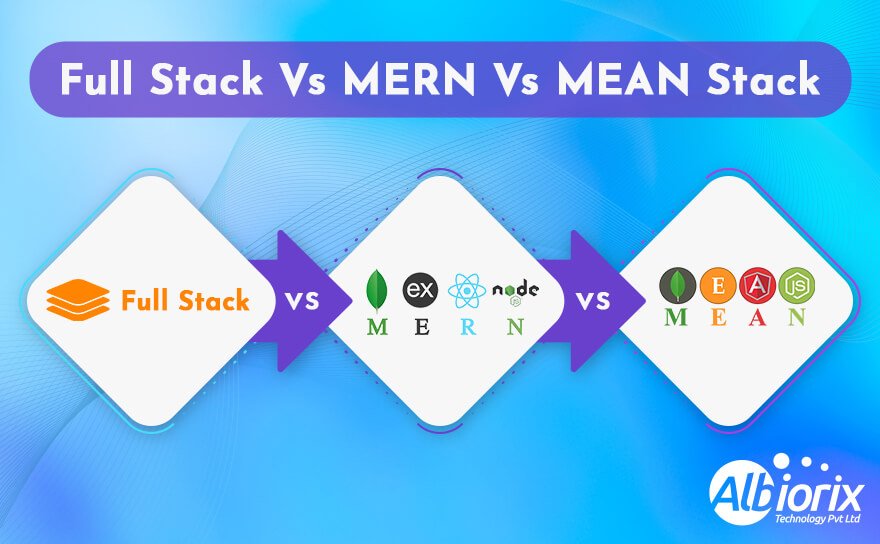
  • The project agility must be well-defined before you go for starting the development.
  • Make a habit of creating applications far beyond expectations to meet specific needs.
  • Above all, the essential thing you need to consider is the development cost for your application.

It’s time to start the discussion on the Full-Stack vs MERN vs MEAN stack war per your project requirements, and I hope you select the best one for your web and mobile app development process.

Essential Factors To Consider For Selecting the Perfect Stack

If you’re planning to move ahead with the selection of the right tech stack for your project needs, I must say that you must question yourself about the following:

  • What are the project requirements that you’ve set up?
  • Do you want project agility to be adequately maintained?
  • Have you ever planned about meeting or exceeding your project requirements to get a better audience?
  • Is Your team passionate and knowledgeable in the field?
  • Have you ever decided about your development team’s scalability and flexibility?
  • What is the final cost of development?

Once you’ve answered such questions, it will be easier for you to design and build web apps for your business needs. So now, let’s focus on the detailed information about Full-Stack vs MERN vs MEAN stack.

What is a Full-Stack Development?

As the name suggests, full-stack development involves developing applications using front-end development and back-end development technologies.

Let’s make it simple; a full-stack development includes

  • Front End Technology: Angular, React, Vue, Vite, JavaScript, TypeScript
  • Back End Development Languages: Node.js, ExpressJS, PHP, Django
  • Version Controlling Systems: Git, CI/CD
  • Server: Amazon Web Services (AWS), Apache
  • Database: MySQL, Postgres, MongoDB, Clusters, and many more.

If you’re planning to hire a full-stack web developer, it becomes pretty easy for you to manage the project design structure for your business needs.

And as we are talking about MERN vs MEAN stack, the development process includes identifying errors and offering solutions across different web application architecture streams.

Full-stack development is the perfect option for small and mid-sized enterprises dealing with different project needs.

Advantages of Using Full-Stack Development

After exploring the basic information on full-stack development, it’s time to explore the leading advantages of using a full-stack development process for your business needs.

1. Saves Your Time and Money

If you’re dealing with full-stack development, you obviously can work with both front-end and back-end technologies. So, you can quickly build web and mobile applications as it allows you to:

  • Perform troubleshooting faster
  • Make changes as per your own irrespective of any dependencies
  • Help improve development efficiency and regularly optimize app workflow
  • Eliminate the need for multiple development teams to work on the same project task

So what are you waiting for? Consult the best full-stack developers from a reputed full-stack development company to ask for the best possible web and mobile app solutions.

2. Increased Application Efficiency

Increased application efficiency means building and running apps faster and with fewer resources. With full-stack development, teams can handle both front-end and back-end tasks, which reduces delays and helps release updates more quickly.

This streamlined process not only saves time and cost but also keeps projects flexible. It allows developers to adapt to market changes faster and respond to user needs without long development cycles.

As a result, businesses stay competitive while delivering better-performing applications.

So, full-stack development is the best option for you if you want to gain a competitive advantage over your competitors.

3. Improved Scalability

Full-stack development helps you improve the application scalability as it allows you to quickly handle increased loads or traffic without making primary changes to your business applications.

Application scalability plays an essential role by ensuring that you can efficiently deal with customers’ needs as and when the business grows on a large scale.

Full-stack development provides a robust and flexible architecture that plays an essential role in improving the application scalability to a great extent.

So, this type of development helps you easily add new features and functionality to your system as needed.

4. Quicker Time to Market

Full-stack development helps your business to launch products more quickly, and it can be a boon for you to be among the top in this competitive market.

Moreover, full-stack development aids you in reducing the time spent on your development practices and frees up time and resources so businesses can focus on other areas of their business.

5. Improved Customer Experience

Improved customer experience in app development means creating apps that are easy to use, fast, and meet user needs.

When development teams use full-stack methods, they can better align design and functionality, resulting in a smoother and more consistent user experience.

By having one team manage both front-end and back-end, it’s easier to fix issues quickly and implement features based on real user feedback. This leads to better satisfaction, more engagement, and increased trust.

In today’s digital world, delivering a seamless experience can set your app apart from the competition.

Improve Your Best Customer Experience With Full-Stack Development

We help you leverage the best possible full-stack development services for your business needs.


Contact Us

What is MERN Stack Development?

MERN stack development is a way to build web applications using four key JavaScript technologies: MongoDB, Express.js, React, and Node.js.

Together, they form a powerful full-stack development solution that allows developers to create fast, scalable, and dynamic web apps.

MongoDB handles the database, Express.js manages the back-end logic, React builds the user interface, and Node.js runs the server.

This combination streamlines the development process, making it easier to build modern business applications from start to finish using a single programming language—JavaScript. It’s widely used for creating responsive and feature-rich web apps.

Well Structure 3 Tier Architecture of Mern Stack

Three Tier Architecture of Mern Stack

MERN Stack typically comprises the following technologies for building web app solutions.

  • MongoDB: It’s a database that is completely open-source and document-based.
  • Express.js: It’s a quick and responsive web framework specifically used for Node.js.
  • React: A frontend JavaScript library that is explicitly used for building user interfaces.
  • Node.js: It is a JavaScript runtime and brings it to the server.

The good part of the MERN stack is that it helps you provide end-to-end framework support to developers.

However, there exist many similarities between the MEAN stack vs MERN stack. For example, the MEAN stack uses Angular development tools for building front-end web apps. On the other hand, the MERN stack uses React instead.

I am happy to share that Facebook, Instagram, WhatsApp, DropBox, and Netflix are the most popular websites and mobile apps built with MERN Stack technology.

Advantages of Using MERN Stack Development

Now, let’s highlight the advantages of MERN stack development that will be beneficial for both the developers and businesses to make a huge success.

1. MVC

MERN stack typically supports Model-view-Controller architecture to handle specific development aspects of an application. Therefore, it’s the best option for web developers to build web applications for your business needs.

MVC is one of the most frequently used industry-standard web development frameworks for creating purely scalable and extensible applications.

2. Full-stack

MERN stack technology has no context-switching scenario. It means you can quickly use highly compatible and robust technologies to make responsive web apps for your business.

In addition, the MERN stack terminology allows you to work together and efficiently handle client and server-side development faster.

3. Easy Learning Curve

To build web applications using MERN stack technologies, it is optional that you need to learn heavy programming language. Instead, you must have only basic knowledge of JavaScript technology and JSON to grab its advantages for developing web apps for your business needs.

4. Code Maintenance

If you create applications using MERN stack development, maintaining code and bug fixing makes it a cost-effective option for your business requirements. In addition, it also comes with powerful testing tools.

5. Strong Community

If you are using leading apps like Airbnb, Facebook, Netflix, and Instagram, you’ll come across multiple technology stacks that support community support that ensures the best possible web app solutions.

6. Flexibility

Apart from the already mentioned benefits, the tech stack’s components are open source, hence no licensing disputes. Furthermore, with the popularity of the tech stack, you get multiple options to get the web application developed.

Related Post: Vue vs React

What is a MEAN Stack Development?

MEAN Stack development is a method for building web applications using four JavaScript-based technologies: MongoDB, Express.js, Angular.js, and Node.js.

These tools work together to handle everything from the database to the user interface, making it easier to create dynamic and scalable web apps.

MongoDB stores data, Express.js manages server-side logic, Angular.js builds interactive front-end interfaces, and Node.js runs the back-end server. This setup allows developers to use one language—JavaScript—across the entire project.
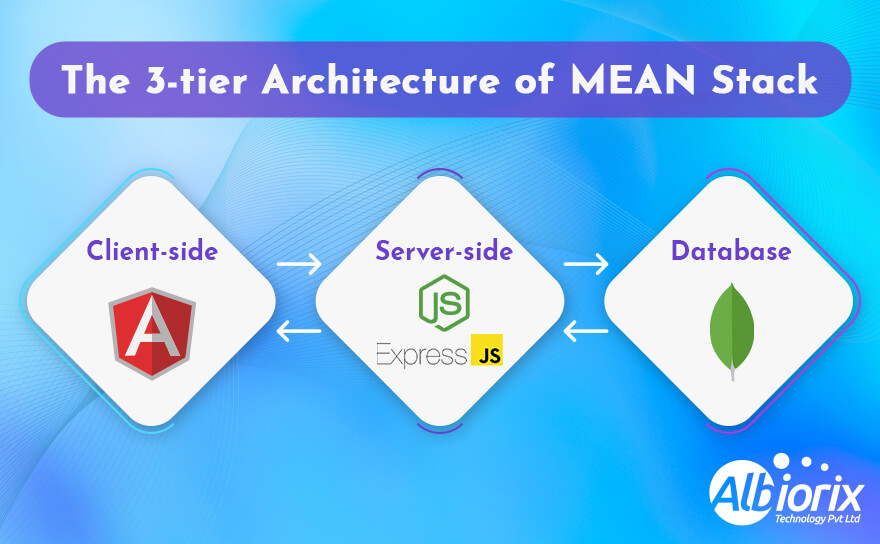
MEAN Stack is especially useful for creating responsive and feature-rich applications with a consistent development workflow.

Three Tier Architecture of Mean Stack

One of the most widely used frameworks for developing robust web apps for almost all industries is the MEAN stack. And I talk about MEAN stack, being a developer.

In that case, it plays a vital role in developing web apps, websites, and APIs that are completely deployed easily and solve complex development challenges.

You’ll be surprised to know that prominent and leading companies like Shutterstock, Tumblr, Forbes, YouTube, Flick, and PayTm have developed mobile apps using the MEAN stack.

Want To See Our Projects?


View Our Projects!

Advantages of Using MEAN Stack Development

After discussing what is MEAN stack development, it’s time to focus on the great advantages of using MEAN stack development.

1. Ease in Communication Between Client and Server

If I talk about the developer’s perspectives, MEAN Stack development helps you design and build web applications using only a single language. A JavaScript developer can efficiently execute projects by strongly using the robust MEAN Stack formula application.

In addition, it becomes easy for you to easily deploy web and mobile applications immediately on a server, avoiding deployment to a standalone server first.

2. Simple Solution

With the help of MEAN Stack development solutions, you can efficiently create a simple and open-source solution for your business needs. You just need to have a basic knowledge of JavaScript, and you’re good to go with developing scalable and secure web apps using the MEAN stack.

3. Open Source Components

The components play an essential role in developing any web app for almost all business verticals. And the good part of the MEAN stack development is that the components are entirely 100% open-source and free to use.

So why wait for more? Use MEAN stack as your primary technology for designing and building robust web app solutions for your business needs.

4. Cost-Effective

MEAN Stack is the best option for multiple businesses to create web and mobile apps.

As stated earlier, dealing with the application components is all open-sourced and free, so there exists no cost involved in building your business websites.

The only investment that you need to work on is hiring full-stack JavaScript developers from a reputed organization.

5. Timer-Saving and Resourceful Tool

In the MEAN stack development, the only thing that is important for building applications is dealing with the module libraries coming with Node.js development.

The primary goal of such libraries is to help you prevent creating the modules from scratch.

And being a JavaScript developer, I personally receive multiple notifications from the automatic testing feature.

It allows you to deal with troubleshooting the problems that might come up with the developers during web application development.

6. Maximum Flexibility

MEAN Stack comes up with flexibility for both developers and businesses, which is essential during web application development.

With the help of this great tech stack, you can easily build and add new parameters, especially while developing applications or during the post-development.

Full-Stack vs MERN Stack vs MEAN Stack: The Comparison Table

ParametersFull-StackMERN StackMEAN Stack
Application ScalabilityMediumHighMedium
App Architecture3-Tier web application architectureSmooth UI RenderingYou need to upgrade & manage code
Application Security LevelMediumMediumHigh
App ProductivityBetterLowBetter

Conclusion

Full Stack vs MEAN Stack vs MERN Stack: Who’s the ultimate winner?

Generally speaking, all these three leading stack technologies are best on their way. And if I talk about selecting the best one for your business needs, it ultimately depends on your web and mobile app development and how you want to handle the project.
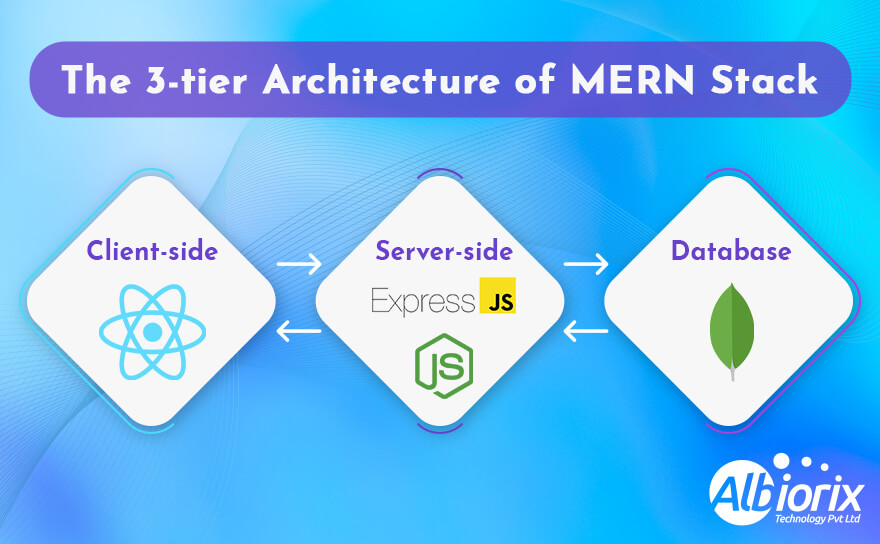
Yes, it is challenging for you to invest in dedicated projects for the number of technology stacks available in the market.

The best option is to consult a renowned full-stack development company that helps you choose the best MEAN stack developer or MERN stack developer.