





7 Powerful Reasons to Choose Angular for Mobile Apps in 2026

Nowadays, you’ll come across a list of mobile app development languages and also robust frameworks for making the development process much smoother.

Angular is one of the leading open-source front-end development frameworks that primarily focuses on single-page applications.

And guess what, Angular plays a vital role in developing mobile apps for your business requirements. So, you’ll ask me, a big WHY?

We’ve gathered a list of top reasons to select Angular for mobile app development for your business needs.

What is Angular?

Angular is one of the best Typescript-based frameworks that plays an essential role in building robust web apps like PayPal, Netflix, and many other websites built using the Angular framework.

The Angular framework is a user-interactive platform that makes it a simplified process to design and build web and angular mobile app for your business. In addition, the framework plays an important role in dealing with front-end development.

Do you know that there are around 2,439,149 downloads of the Angular framework for November 2022? This number is constantly increasing on an hourly basis.

Now let’s explore the top reasons to use Angular for mobile app development for your business requirements.

Top 7 Reasons For Using Angular for Mobile App Development

The Angular framework plays an essential role in developing mobile applications for your business needs. I hope you’re now clear with the concept of what is Angular.

You can avail the benefits of using AngularJS for mobile app development process for various different reasons, as depicted below.

1. Angular is Pretty Easy to Use For Developing Mobile Apps

AngularJS is the most popular framework for web and mobile app development. It does not require any specific or advanced tools for creating feature-rich and industry-best mobile app solutions for your business needs.

You’ll come across many JavaScript frameworks that will help you build robust mobile app solutions for your needs, but AngularJS is equipped with less code. Obviously, it’s going to save more time and effort for AngularJS developers.

2. Angular Strictly Supports Code Reusability

If you have written the code in the Angular framework, you can efficiently use it in other mobile app development processes. Quite interesting?

In simple words, we can say that you can code for one mobile technology and reuse the same code with the other technology.

It’s one of the best and most unique features of the Angular framework. And that’s what makes the possible reason for you to select the framework that works for Android and iOS applications.

Angular codes are entirely flexible, and their proper implementation can be efficiently done anywhere per your business requirement for mobile application development.

The most exciting part of the Angular framework is that you can efficiently implement mobile apps for your business needs.

Moreover, this framework is solely responsible for giving interactive touch to the codes to make your app’s user interface world-class.

In the Angular Talks March 2022, Haim Agami – Turjeman shared his expert opinion on how to automate the development process to ensure code maintainability.

3. Supports Fewer Code and Inspiring Declarative Features

Angular is one such robust framework that typically requires fewer codes to accomplish the mobile app development process for your business needs. So, it is amongst the most sought software used for mobile apps.

Moreover, you’ll come across multiple libraries that you can quickly implement in AngularJS development services that you can use as declarative code.

So, you can eventually make use of the software to grab the advantages of various libraries while developing a robust and highly-efficient mobile application.

And if you ask me, as a developer, Angular is the most-preferred framework to deal with a stress-free coding experience.

We crafted a telemedicine platform that becomes a boon to empower physicians, health institutions, and patients globally.

View Our Work

4. Angular Application Architecture

For Angular, mobile app development process typically uses both MVVM and MVC architectures. With the help of this powerful front-end framework, you can efficiently perform the integration of varied features in your business applications.

It primarily depends on your business requirements and how you should opt for the best application architecture.

However, you must ensure that your selected architecture must be helpful to you in developing a robust, efficient, secure, and feature-rich app.

Angular application architecture is one inspiring reason that could help you achieve the desired level of flawlessness. You should hire AngularJS developers from a reputed organization where you can fulfil all your needs with the right set of skills.

5. Angular’s Big Community Support To Help You Out

Angular is an open-source and typescript-based platform with extensive customer support. You can easily avail the support for any complexity you’ve achieved in your coding by simply troubleshooting the issue.

Angular’s extensive community support is the best example for getting help for any business software solutions for your needs. So, if you’re stuck on any issue, visit the Angular community, and you’ll get instant support for your queries.

6. Angular’s Data Binding Feature is Just Inspiring

What’s the crucial factor that makes the mobile app development process more efficient with Angular? It’s a data-binding process and plays a vital role in designing and developing a powerful mobile app for your business needs.

With the continuous evolution of trending technologies, it becomes essential for you to keep track of them. Otherwise, it would help if you were ready for a further upgrade.

Data binding is entirely dependent on various Angular’s in-built libraries. So, it would help if you had a proper understanding of such libraries and frameworks to make your AngularJS Development Services more accessible, as expected.

7. High-Performance Ranking For Your Mobile App

Angular is a typescript-based framework that is well-known for building mobile apps which are efficient and supports next-gen features. Moreover, it is quite easy for you to develop applications right from the scratch and within a short period of time.

Being one of the top-rated front-end development frameworks, Angular is solely responsible for making things easier with the Angular best Practices.

Rather than dealing with the workflow’s complexity for the whole development team, this feature-rich platform offers well-established practices to accomplish results with less effort and more precision.

The mobile applications developed using the Angular framework are highly performant and work smoothly as per your business needs.

Develop Single-Page Applications from Albiorix’s Angular Stars

Our talented Angular developers are proficient in designing and building front-end applications for all your business needs.


Contact Us

Mobile Apps You Can Build With Angular

Angular is a versatile framework that enables developers to create a wide range of angular mobile app. Some of the types of apps you can build with Angular include

  • Single Page Applications (SPA): Angular is widely known for its capabilities in building powerful and interactive SPAs.

    SPAs are web applications that load a single HTML page and dynamically update the content as the user interacts with the app, without the need to reload the entire page.

  • Enterprise Web Apps:Angular is a popular choice for developing enterprise-level web applications. These applications are typically large-scale, complex, and require robust features to handle various business processes.

  • Progressive Web Applications (PWA): Angular has extensive support for building Progressive Web Applications (PWA). PWAs are web applications that leverage modern web technologies to deliver app-like experiences to users.

    With Angular, developers can create PWAs that are responsive, reliable, and installable on users’ devices.

  • Server-side Rendered (SSR) Apps: Angular provides support for Server-side Rendering (SSR), also known as Angular Universal.

    SSR is a technique where the initial rendering of the web application is performed on the server, and the pre-rendered content is sent to the client.

  • Social Media Apps: Social media apps require real-time interactivity and dynamic content updates.

    Angular’s ability to create Single Page Applications (SPAs) with two-way data binding makes it well-suited for building responsive and interactive social media platforms.

  • E-commerce Apps: E-commerce apps demand a smooth user interface and efficient handling of product catalogs, shopping carts, and payment processing.

    Angular’s features, such as client-side routing, forms handling, and dependency injection, make it an excellent choice for building feature-rich e-commerce applications.

  • Business Productivity Apps: Business productivity apps often involve data manipulation, analytics, and collaboration features.

    Angular’s robust data binding and built-in directives enable developers to create data-driven applications that update in real-time, helping users stay productive.

  • Gaming Apps: While Angular is not primarily designed for gaming applications, it can still be used for certain aspects of game development.

    For instance, Angular can be used to create the frontend user interface of a gaming app, displaying game menus, user profiles, and settings.

Industry-Based angular Mobile App Development

Angular has been adopted by various industries for mobile and web app development due to its robust features and benefits. Some prominent examples angular for mobile and web include

  • Banking and Finance: Major financial institutions use Angular for secure and reliable online banking platforms.
  • Education: Educational institutions leverage Angular to create e-learning portals and interactive learning applications.
  • Entertainment: Media and entertainment companies adopt Angular to build content streaming and distribution platforms.
  • Real Estate: Angular is used to develop property listing and real estate management applications.
  • Transportation: Logistics and transportation companies rely on Angular for tracking and fleet management apps.
  • Health and Fitness: Fitness centers and health-related startups utilize Angular to create personalized health tracking apps.

Which Companies Uses Angular?

Angular is widely adopted by organizations of varying sizes across the globe. Some notable companies and projects that use Angular include. You’ll see best websites Using Angular framework

  • Google: As the creator of Angular, Google implements the framework in numerous products and internal tools.
  • Microsoft: Microsoft employs Angular in its applications and platforms to deliver seamless user experiences.
  • IBM: IBM uses Angular for developing enterprise-grade web and mobile applications.
  • Forbes: The popular media company utilizes Angular for its web and mobile platforms to engage readers.
  • Upwork: The freelancing platform leverages Angular for its responsive and interactive interface.
  • WhatsApp Web: The web version of WhatsApp is built with Angular, providing users with browser-based access to their messages.

Conclusion

Searching for the perfect development tool for building mobile apps in this competitive technological world is complex. But after analyzing this entire article, Angular is the best framework we can consider a winner of the mobile app development process.

And if you’re looking for the Angular mobile app development process, consult Albiorix today as we follow the flexible engagement model to provide you with the best possible outcomes.

Angular Promise vs Observable: Ultimate Differences You Must Know

JavaScript strictly follows the asynchronous concurrent language and its engine instantly moves to execute the next statement without waiting for the concurrent statement to finish.

Such a concept is called the asynchronous function, and you need to deal with the callbacks approach. So, I know it’s a challenging task to manage the codes, making the callback hell.

Angular Promises and Observables are the one-stop solutions to overcome such situations. Their implementations help us deal with that asynchronous code more cleanly. However, they have different APIs, and their motivation is slightly different.

And we have come up with an article that depicts the technical difference between Angular Promise vs Observable — one of the most common comparisons developers encounter when working with asynchronous programming in Angular.

What is Promise in Angular?

One of the best ways to execute asynchronous functions in your application that typically uses callbacks is opting for a Promise in Angular.

Many developers search for what is promise in Angular or how promises in Angular differ from other asynchronous patterns, so let’s break it down.

The promise in Angular takes place while emitting and completing (resolving or rejecting) one value at a time. So if you’re using an Angular Promise, it becomes easy for you to emit a single event from the API.

Then, the controller’s (directive) sole responsibility is to register up to three callbacks – success, error, and notifications.

Generally, four states of the Angular Promise are available for your Angular application development.

  • fulfilled
  • rejected
  • pending
  • settled

Remember that Angular Promise is not as active as an Observable. It means AngularJS developers are not allowed to cancel any specific event once it starts.

So, passing the callback to the Promise constructor (controller or directive) will provide you with two options: either resolve or reject the function, depending on your needs.

If you’ve ever explored Angular 2 Promises or looked at a simple Angular Promise example, you’ll notice that promises are straightforward to use when your app only needs to return a single value from an async operation.

Get Custom-Tailored Web App Development Solutions For Your Business Needs

We strictly adhere to the standard software development lifecycle to provide the best possible IT solutions for your business success.


Contact Us

What is an Observable in Angular?

Many developers wonder what are Observables in Angular or what is Observable in Angular and how they differ from Promises. Observables in Angular are preferable to Promises as they allow you to run functions asynchronously and synchronously.

Furthermore, it means that you can deliver multiple values over time with the help of Observables. Such values are actively responsible for handling 0, 1, or multiple events, and that too by using the same API for every event.

The excellent part of Angular Observables is the number of operators actively simplifying coding, including retry(), replay(), map, forEach, reduce, and others.

With the help of Observables, the first thing that you need to perform is to have a subscription to start emitting values. If you do not perform this step, it’s just a blueprint of code responsible for handling future emits.

So, when comparing Promises and Observables in Angular, remember: Promises emit a single value once, whereas Observables can emit multiple values over time — making them ideal for streaming data or event-based systems.

Related Post: Resolver in Angular

Angular Promise vs Observable: Differences You Must Know

Now, it’s high time to see the technical differences between Angular Promise vs Observable. Developers often ask, “What is the difference between Promise and Observable?” or “Promise vs Observable in Angular – which is better?”

I have gathered a list of examples to clarify doubts about the difference between Promise and Observable in Angular applications.

1. Angular Promise handles one value; Observables handles multiple values.

One of the significant differences between Observable vs Angular Promise is that you are not allowed to change the fulfilled value. Instead, you can just emit (either reject or resolve) a single value for your Angular application.

To understand this concept, you need to have basic information about what Angular is and how it manages asynchronous operations.

And if we talk about Observables, you can freely emit multiple results. The subscriber will receive results until the observer is completed or unsubscribed.

Let’s see an example of handling values in terms of Angular Promise vs Observable.

Copy
// Promises
const x = new Promise((resolve) => {
    setInterval(() => {
        // ✅ when resolve is called, the promise will become
        // fullfilled and it's value won't ever change
        resolve(Math.random() * 10)
    }, 3000);
});

// Observables
const observable$ = rxjs.Observable.create((observer) => {
  // ✅ you can pass multiple values by using `next` method
  observer.next(1);
  observer.next(2);
  observer.next(3);
  observer.complete();
})

// ✅ base will be receiving values untils it's completed
observable$
    .subscribe(
      v => console.log(v),
      err => console.log(err),
      done => console.log("completed")
    );

Observables vs Promises is one of the core concepts in Angular’s asynchronous design. Observables are responsive tools that quickly listen to data streams. In addition, there exists a bidirectional kind of Observable: Subjects — they are a perfect use case for those web sockets. The RxJS library helps you deal with shipping using a thin wrapper on web sockets.

import { webSocket } from “rxjs/webSocket

We crafted web and mobile application that allows users to easily search for a car by entering the essential car options, colour specifications, and location.


View Our Project

2. Observable subscriptions are cancellable; promises aren’t

Once an Angular Promise is started, it seems impossible to cancel the event. The callback passed to the Promise constructor is solely responsible for resolving or rejecting the promise.

The subscriber reacts to the result once fired; hence, it’s completely passive.

Compared to Angular Promise, Observables are less passive, and on subscription creation, you can quickly opt out of the observer at any time.

So, if you are no longer interested in getting the response, you can opt for such scenarios. The best example is when a user leaves a page.

Yes, you’ll find multiple ways to cancel/complete subscribers. Some of the common ones to cancel subscribers are mentioned below:

  • unsubscribe: It allows you to cancel the subscription from the Observation manually.
  • take: It enables you to take number X of elements and easily cancel the subscription process.
  • takeUntil: It makes it easy for you to take values until the passed Observable emits any value.

Let’s go through an example to demonstrate it.

Copy
// ✅ 1. Cancelling by using the unsubscribe method
const observable1$ = rxjs.interval(1000);
const subscription1$ = observable1$
  .subscribe(x => console.log(x));

subscription1$.unsubscribe();

// ✅ 2. Cancelling by taking a number of elements
const observable2$ = rxjs.interval(1000);

observable2$
  .pipe(rxjs.operators.take(5))
  .subscribe(x => console.log(x));

// ✅ 3. Conditionally stop listineing for more elements
const subject3$ = new rxjs.Subject();
const observable3$ = rxjs.interval(1000);

observable3$
  .pipe(rxjs.operators.takeUntil(subject3$))
  .subscribe(x => {
    console.log(x);
    if (Math.random() > 0.5) {
      subject3$.next(1);
      subject3$.complete();
      console.log('complete');
    }
  });

This is one of the most practical distinctions when comparing Observable and Promise in Angular — Observables are cancellable, but Promises are not.

The operators of Observable are essential as they allow you to compose declaratively complex asynchronous operations quickly.

Planning To Develop a Robust Single-Page Application?

Our Angular development team has core expertise in designing and building feature-rich applications for all your business needs.


Contact Us

3. Eager vs lazy execution

In the discussion about Angular Promise vs Observable, we need to understand the process of execution. That is done by using the Eager and Lazy execution methods.

Let’s put it simply. You can execute Angular Promises eagerly. On the other hand, Observables are executed lazily.

What is Lazy and Eager execution?

  • Eager: It allows you to execute the Promise callback, especially at the constructor level.
  • Lazy: The Producer function will only trigger after a subscription is created for that Observable. Otherwise, it will stay idle.

I’ll make it easier for you by demonstrating it with a good example.

Copy
const foo = new Promise((resolve) => {
  console.log('1. Callback execution');
  resolve(true);
});

foo.then(() => {
  console.log('2. Promise resolution');
});

console.log('3. Pre exit method statement');

// ✅ console output
// 1. Callback execution
// 3. Pre exit method statement
// 2. Promise resolution

const observable$ = new rxjs.Observable(observer => {
  console.log('1. Execution of observable body');
  observer.next(1);
  observer.complete();
});

console.log('2. Pre Subscribe statement');

observable$.subscribe(() => {
  console.log('3. Execution of subscribe callback')
});

// ✅ console output
// 2. Pre Subscribe statement
// 1. Execution of observable body
// 3. Execution of subscribe callback

This difference between Promise and Observable execution style — eager vs lazy — is one of the fundamental factors developers consider when deciding between the two.

4. Runtime execution

Once ES Promises enter the resolved state, it becomes pretty easy for you to queue the callback in the microtask queue. Simply put, the execution takes place after the current macro task has been completed.

Let’s see an example:

Copy
console.log('1. Start');

setTimeout(() => {
    console.log('2. Timeout callback')
}, 0);

Promise.resolve().then(() => {
    console.log('3. Promise callback')
});

console.log('4. End');

// ✅ outputs
// 1. Start
// 4. End
// 3. Promise callback
// 2. Timeout callback

You can’t change the above behavior.

Related Post: Angular Ivy

However, Observables enable you to effortlessly fine-tune the runtime execution by strictly using schedulers. The primary role of a scheduler is to control the state, especially when a subscription starts and you receive notifications for the same.

Here are some common scheduling options:

  • null: You’ll receive notifications synchronously and recursively by default.
  • queueScheduler: It allows you to schedule quickly on a queue in the current event frame.
  • asapScheduler: You can efficiently schedule it on the microtask queue — and it uses the same queue as Promises.
  • asyncScheduler: This concept is similar to scheduling a task using setInterval. So, you need to schedule it in the macro task queue.
  • animationFrameScheduler: Relies on the requestAnimationFrame API.

I’ll demonstrate an example by using asapScheduler:

Copy
const observable1$ = rxjs.interval(1000)
  // ✅ using the asapScheduler scheduler
  .pipe(rxjs.operators.observeOn(rxjs.asapScheduler));

const subscription1$ = observable1$
  .subscribe(x => console.log(x));

This flexibility makes Observables in Angular much more powerful for handling complex asynchronous flows.

When developers compare Observable vs Promise in Angular, this is one of the decisive differences — Promises have fixed timing, while Observables can adjust execution timing dynamically.

5. Interoperability

So, we have seen many differences between Angular Promise and Observables, but the biggest question developers ask is — can you use both together? Or do you have to select only one of them?

Well, the answer is no — you can use both together.

Observables can easily be created from a Promise, and you can also convert Observable to Promise efficiently. This ability to switch between the two makes it easier to integrate different data streams or external APIs.

If you’re working with Angular 9 promise examples or experimenting with rxjs promise to observable conversions, you’ll often find that both are interoperable with just a few lines of code.

Promises take only one value, so you must choose whether you want the first or last value to be dumped on the Promise.

In the RxJS library, you can use:

  • firstValueFrom — to get the first emitted value from an Observable as a Promise.
  • lastValueFrom — to get the last emitted value.

This is one of the most useful features when bridging older async code (which uses Promises) with newer reactive designs (which use Observables). In practice, developers often need both — so Angular Promise to Observable conversions are quite common.

Example of converting Observable to Promise in Angular:

import { firstValueFrom } from ‘rxjs’;

const promise = firstValueFrom(myObservable);

Example of converting Promise to Observable:

import { from } from ‘rxjs’;

const observable$ = from(myPromise);Both promise angular examples and angular promise to observable conversions are essential when integrating multiple data sources, especially when you rely on both synchronous and streaming responses.

Let me demonstrate you with a simple example.

Copy
// ✅ Observable -> Promise
const source$ = rxjs.interval(2000).pipe(rxjs.operators.take(10));
// toPromise is deprecated in favor of firstValueFrom and lastValueFrom
// outputs 9
const result = await source$.toPromise();

// ✅ Promise -> Observable
const promise = Promise.resolve(10);
rxjs.from(promise)
  // outputs 10
  .subscribe(item => console.log(item));

6. Summary: Angular Promises vs Observables

Let’s quickly summarize the Angular Promises vs Observables differences:

FeaturePromises in AngularObservables in Angular
ExecutionEager — runs immediatelyLazy — runs after subscription
ValuesEmits a single valueEmits multiple values
CancelationNot cancellableCancellable using unsubscribe()
OperatorsLimitedRich set (map, retry, filter, etc.)
InteroperabilityCan convert to ObservableCan convert to Promise
Use caseOne-time async responsesContinuous or streaming responses

Whether you’re exploring Angular Observable vs Promise, Observable and Promise in Angular, or Promise vs Observable in Angular, the takeaway is that each has its own purpose.

7. When to Use Promise vs Observable in Angular

If your task emits a single value and then completes — for example, making a one-time HTTP request — a Promise is simple and effective.

However, if you’re dealing with multiple asynchronous values over time, such as live updates or streams, Observables are far superior.

This decision becomes crucial in modern Angular development. Many developers learning Promises and Observables in Angular start with Promises for their simplicity and then move toward Observables as their apps grow more reactive.

Conclusion

I hope you clearly understand the technical difference between Angular Promise and Observable. It entirely depends on your business use case on when to use one or the other.

But they are going to play a vast role in solving the async paradigm in JavaScript. Moreover, observables are cost-effective as the Browser does not natively support them.

If you’re planning to develop a robust web application using the Angular framework, we are a renowned AngularJS development company. We have a team of Angular developers who are proficient in providing the best possible web app solutions for your business needs.

What is Application Software? A Better Guide

Choosing the right application software can dramatically boost productivity, simplify workflows, and help your business operate more efficiently.

With so many tools available today—from mobile apps to enterprise suites—understanding what application software is and how each type works is essential before making a decision.

This guide clearly explains the definition, types, examples, and selection criteria, giving you a deeper understanding of how application software supports both personal and business needs.

Key Takeaways

  • Application software includes any computer program designed to help users perform specific tasks, such as writing documents, analysing data, managing projects, or creating presentations.
  • Common tools include word processors, spreadsheet software, mobile devices apps, project management software, and any web browser used to navigate the internet.
  • Categories include business application software (like CRM, ERP, BPM) and general-purpose applications (browsers, multimedia tools, office tools).
  • Choosing the right solution depends on scalability, features, user needs, integration capability, and long-term support.

What Is Application Software?

Application software refers to programs that help users complete everyday activities—writing reports, managing finances, processing data, designing graphics, or communicating online.

Unlike system software, which operates behind the scenes to run your device, application software directly supports user actions.

Examples include:

  • Word processors
  • Spreadsheet software
  • Email applications
  • Project management software
  • Web browsers
  • Mobile apps

As organisations adopt digital solutions, global enterprise tech spending continues to rise—especially in areas like enterprise resource planning (ERP), cloud systems, automation, and AI.

Whether accessed on mobile devices or desktop systems, application software enables users to work smarter, more efficiently, and with better accuracy.

Related Post: Top Software Development Trends

Types of Application Software

Application software is broadly categorised into two groups:

1. Business Application Software

2. General Application Software

Let’s explore each category.

Business Application Software

Business application software is designed to automate, streamline, and enhance essential business processes.

Companies rely on these tools to improve accuracy, reduce manual work, and stay organised across departments. Common business applications include ERP systems, CRM platforms, BPM tools, and more.

1. Enterprise Resource Planning (ERP)

Enterprise resource planning (ERP) software centralizes core business functions—finance, procurement, inventory management, HR, and compliance. ERP acts as a unified platform that brings real-time visibility into operations, helping decision-makers respond efficiently.

2. Customer Relationship Management (CRM)

A customer relationship management (CRM) system helps businesses capture, analyze, and organize customer data. CRM tools improve communication, increase sales effectiveness, and support long-term customer relationships.

3. Database Management Systems (DBMS)

A DBMS allows businesses to store, access, update, and manage structured data efficiently. It is one of the most vital components in data-driven industries.

4. Project Management Software

Project management software enables teams to collaborate, schedule tasks, allocate resources, and monitor progress in real time. These tools keep projects aligned and help ensure timely delivery.

5. Business Process Management (BPM)

BPM software enhances workflow automation and optimises repetitive operations. It’s designed to support efficient business processes and improve productivity.

6. Resource Management Software

These applications help teams allocate personnel, budgets, and equipment while ensuring that business operations run smoothly.

7. Code Platforms & Development Tools

Organisations often rely on code platforms and custom development to extend features. A full stack developer may build custom integrations using open-source frameworks, enhancing flexibility and control across the software ecosystem.

General Application Software

General-purpose software is used by individuals and teams for everyday tasks.

1. Word Processing Software

A word processor is used to write, edit, and format documents. Tools like Google Docs and Microsoft Word are common examples.

2. Spreadsheet Software

Spreadsheet software is ideal for calculations, financial modeling, and data analysis. Microsoft Excel and Google Sheets dominate this category.

3. Presentation Software

Presentation software helps users create professional slide-based presentations using visuals, charts, and animations. PowerPoint and Google Slides are popular tools.

4. Multimedia Software

These applications allow users to create and edit audio, video, and image files. Examples include VLC, Adobe Premiere, and Audacity.

5. Web Browsers

A web browser such as Chrome, Safari, or Firefox allows users to browse, search, and interact with content online.

6. Educational Software

Used in learning environments, these tools include e-learning platforms, virtual classrooms, and interactive courseware.

7. Graphics Software

Tools like Adobe Photoshop, Illustrator, and Figma help users design images, edit photos, and create animations.

8. Freeware & Shareware

These are software categories where tools are available for free or under trial-based licensing.

9. Open-Source Software

Open-source platforms such as Linux and GIMP allow users to inspect and modify source code for improved flexibility.

10. Closed-Source Software

These applications restrict source-code access and typically require paid licenses, such as Microsoft Office or Adobe Creative Cloud.

Examples of Application Software

How to Choose the Right Application Software for Your Business

Selecting the right business application software starts with understanding your operational needs. Here’s how to begin:

  • Analyze your workflows and key business processes.
  • Gather feedback from employees using the existing tools.
  • Review scalability, customization, and automation capabilities.
  • Evaluate integration options with CRM, ERP, or other business applications.
  • Consider consulting a development company for customized or complex solutions.
  • Hire a full stack developer if you need custom-built functionality or integrations.

What to Look for in Application Software

When evaluating application software, consider:

  • User experience and ease of use
  • Customization options
  • Automation features
  • Real-time communication or data syncing
  • Ability to integrate with ERP, CRM, or third-party tools
  • Support for collaboration
  • Scalability as the business grows

Low-code and no-code types of application software may also be useful for rapid development with lower costs.

How Much Does It Cost to Create Application Software?

The development cost of application software depends on:

  • Scope and complexity
  • Type of application (web, mobile apps, desktop, hybrid)
  • Required features
  • Third-party integrations
  • Backend requirements
  • Deployment across mobile devices or other hardware
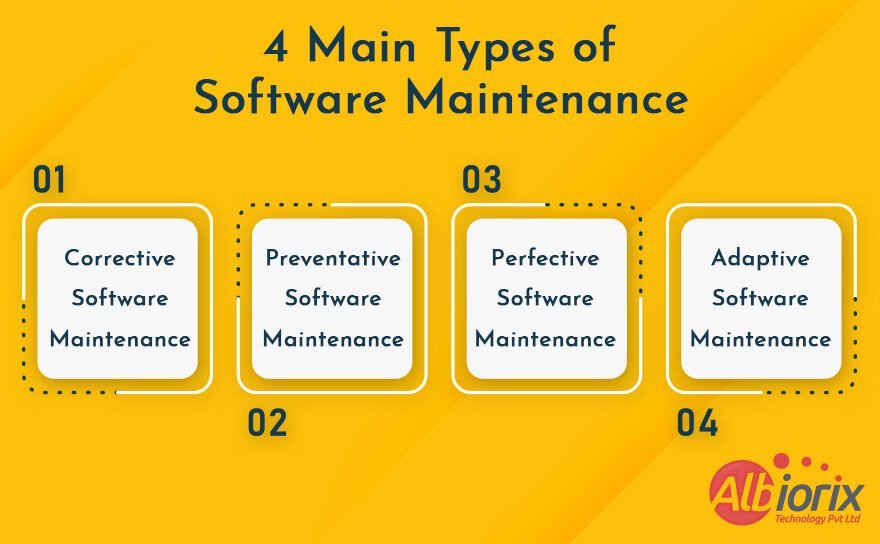
  • Software Maintenance and updates

Because every project is unique, the best approach is to consult software experts and share your specific requirements.

Conclusion

You now have a complete understanding of what application software is, the various types of application software, and how each one supports everyday and business needs.

Whether you need business application software like CRM and ERP or general tools like presentation software, word processors, web browsers, or mobile apps, the right solution depends on your goals and how you want to optimize your operations.

If you need professional help selecting or building the best solution, the contacting Albiorix team can assist you with tailored, scalable, and high-performance software designed around your business needs.

7 Best React UI Frameworks and Component Libraries You Should Know

Are you find it challenging to create user interfaces for your React application?

You need to adopt a reliable framework to help create a great-looking interface for your React application.

To make it easy for you, we’ve curated the list of the best 7 React UI frameworks in 2026 and their features to make a better selection for your business needs.

What is ReactJS?

ReactJS is a popular JavaScript library used to build interactive user interfaces for web applications. Developed by Meta, it runs in the browser, meaning it works directly on the user’s device without needing constant server communication.

React helps developers build fast, dynamic web apps by allowing updates to parts of a page without reloading the whole site. This improves both performance and user experience.

It’s widely used for building everything from simple components to large-scale enterprise applications. With reusable components and real-time data syncing, ReactJS makes UI development more efficient, flexible, and easy to manage.

  • Builds dynamic application faster
  • Improves React app performance to a great extent
  • Reusable components make your app build faster
  • Strictly follows unidirectional data flow
  • Small learning curve
  • Debugging process made easier by using dedicated UI tools

Easily Develop Robust User Interface With Our ReactJS Development Services

We have a team of expert ReactJS developers that can efficiently build web applications that drive business growth.


Contact Us

What is React Component UI Framework?

React is a robust front-end development framework that enables you to design and build a robust user interface for your business web app. The good part of React UI framework is that it allows you to easily build web and mobile app development.

Moreover, it allows you to perform integrations with other leading JavaScript libraries and frameworks. The React component libraries’ primary goal is to enhance React applications’ performance due to their flexibility and higher modularity expectations.

Top 7 React UI Frameworks For 2026

After exploring the basic concept of React UI framework, its time to jump right into the list of best 7 React UI frameworks in 2026.

1. React Bootstrap

React Bootstrap is the most-popular and trending front-end development framework that is rebuilt for React application.

React Bootstrap plays an essential role for different app developers working on the same application using the same application at the same time.

The good part of React Bootstrap is that it comes up with React libraries typically equipped into the Bootstrap core, making it easy for performing back-end designing and front-end prototyping.

This feature-rich React framework is actively responsible for controlling the overall look and feel of the React component library introduced in your React application.

With its Bootstrap environment, you can quickly adjust the app, plugin, and theme as per user preferences using an appropriate component library.

So, we can say that React Bootstrap is a key part of ReactJS development.

1. How to install React Bootstrap in your React application?

You’ll just need npm installed in your system and you are good to go with React Bootstrap by passing the following command.

2. npm install react-bootstrap bootstrap

The above command demonstrates that you can easily customize the Bootstrap Sass files, or you’re not using a CDN for the stylesheet, it may be helpful to install vanilla Bootstrap as well.

Top Features of React Bootstrap

  • You can efficienly perform the implementation of different Bootstrap components using React application
  • Your application is not dependent on either jQuery or Bootstrap.js
  • You’ll require direct manipulation of DOM for every event or method change of ReactJS application
  • You’ll require direct manipulation of virtual DOM for every event or method change of ReactJS application
  • State management is made easier with React BootStrap

npm install react-bootstrap bootstrap How to install React Bootstrap in your React application?

2. Material UI (MUI)

Material UI has successfully gained the position of one of the best UI frameworks for React.js that efficiently performs React integration with Google’s Material Design system.

With the help of this React UI component framework, it becomes quite easy for you to handle an array of React UI component libraries and tools for your React app.

Moreover, this best UI framework of React is responsible for making it a one-stop resource for building and shipping the latest features.

MUI is a leading React framework for UI that comes up with production-ready and custom React components and React UI libraries, mainly divided into four essential products.

  • MUI Core (foundational components of MUI)
  • MUI X (advanced MUI components)
  • Templates (pre-designed UI layouts)
  • Design Kits (React-based UI toolkit for customizing MUI components).

Last but not least, MUI comes up with a list of powerful theming tools, Material Design, and templates, so such ReactUI components rely on your business needs and how you want to set a custom color theme for your app.

Top Features of Material UI

  • The framework is perfectly compatible with different styling systems as per your business needs.
  • You’ll get a complete access to pre-built components like icons, dialogs, typography, grids, etc for your React applications.
  • Customizable themes are available that makes your work even more easier.
  • The framework’s comes up with frequent updates that shows latest features.
  • Detailed documentation and extensive active community support.

3. React Redux

React Redux is a popular library that helps manage the state of your React applications. It acts as a central store, making it easier to track and update shared data across multiple components without confusion.

Instead of manually passing data between components, Redux allows you to define the data you need and lets the framework handle updates automatically. This keeps your app predictable and organized, even as it grows.

React Redux also comes with built-in DevTools for debugging. You can monitor state changes, track actions, and spot errors more easily.

It supports testing across environments, helping ensure stable performance. For developers building complex apps, React Redux provides clarity, control, and consistency in managing application state.

Top Features of React Redux

  • State predictability is one such fantastic feature that makes React Redux the best responsive React UI framework.
  • You can efficiently re-render only once significant state changes exist, allowing state persistence for your React application.
  • DevTools available in this React UI framework allow you to deal with efficient state management and debugging processes.
  • The framework is equipped with a robust built-in performance optimizer.

We crafted a compliant TV platform that is specifically built on a multi-tenant cloud middleware TV platform using ReactJS.


Contact Us

4. React Router

React Router is the best option for your business application if you’re planning to opt for a router UI to use together with another interface.

React Router is one such routing solution that typically matches all multiple pre-built components with their application URLs. React Router UI framework’s primary goal is to ensure you deliver a seamless experience to your users.

It’s a time saver tool that speeds up your application, and around four layers of layouts will bind your business application with different hierarchies.

This React UI framework automatically changes your layout components along with the URL, making it easy for you to create fewer routes on your end.
Furthermore, React Router is actively responsible for automatically selecting the best routes for your application.


Top Features of React Router

  • With the help of this React framework, it’s optional to set the browser history manually.
  • You can actively use the link for navigating the application’s internal links, just like the anchor tag we use in HTML applications.
  • This React UI framework typically uses the Switch feature for rendering the React application.
  • You’ll require only a single child element while dealing with the Router functionality.
  • You can quickly grab additional features like MemoryRouter, Prompt, StaticRouter, and generatePath.

Related Post: react native best practices

5. Blueprint UI

Blueprint UI is the React desktop UI framework that is primarily used for building complex, data-heavy interfaces requiring multiple modules and almost all the components.

Blueprint UI is one such React framework that is capable of dealing with application complexity and works for almost all use cases for your business needs.

The good part of this React UI library framework is that it comes up with lengthy documentation, making it easy for you to work with ease for every functionality of your business application.

With this React UI library framework, you can efficiently combine visual and written guides to make your business application more responsive. So, Blueprint UI is the best one as it allows to deliver as brilliantly on the mobile front.


Top Features of Blueprint UI

  • With the help of this framework, you’ll get 30+ standard components that can easily be customized using CSS for your application.
  • The entire framework is written in TypeScript and styled with SASS, which makes React development faster.
  • This React framework strictly adheres to WCAG 2.0
  • It supports the great flexibility of the framework through composable React components and reusable high-quality React components for your application.

Related Post: Best Front End Frameworks

6. Grommet

Grommet is a modern UI library for React that helps developers build accessible, responsive, and user-friendly interfaces. It’s known for its mobile-first design approach, making it a great choice for building apps that work well on all screen sizes.

Grommet includes pre-built components, responsive layouts, and interactive elements, so you can design quickly without starting from scratch. It follows W3C accessibility standards, ensuring your app is usable by everyone, including users with disabilities.

This focus on design responsiveness and accessibility makes Grommet ideal for teams building forward-thinking web applications. Whether you’re creating dashboards, forms, or mobile views, Grommet offers a reliable and easy-to-use framework to speed up your UI development.

Top Features of Grommet

  • Grommet is a React framework that is solely responsible for making mobile-friendly applications
  • The framework actively relies on an external CSS system for dealing with various styling functionalities.
  • It comes up with a comprehensive design system including design templates, patterns, and sticker sheets for your React project.
  • You’ll find the default support for Web Content Accessibility Guidelines (WCAG) 2.1 for your React application.

7. Fluent UI

Fluent UI is the last on our list of the best React UI framework, which is entirely Microsoft-based UI elements that are used specifically for developing cross-platform applications.

Although you can actively use the interface for developing Microsoft apps, you can even use Fluent with React for your projects to make them more responsive than ever.

With this React framework for UI, you’ll get multiple component libraries, including primary inputs, notifications, and menus.

Not only this, this framework allows you to customize these components and React UI libraries easily for your specific project.

Fluent UI actively uses an intuitive system that makes it easy for you to write code and CSS to every component defined in your React application. So, my continuous changes to an element will not affect your global styles.

Yeah, but there can be advantages or disadvantages to using this framework. So, it entirely depends on your business app needs.

Top Features of Fluent UI

  • You can effectively design and develop a unique, modern, standards-based, and highly performant front-end application.
  • Web development project is made relatively easier using only the web platform code.
  • The framework supports great integration with leading frameworks like .NET, Blazor, Vue, React, and many more to develop web and desktop applications.
  • You can actively develop a web-standards UX built with W3C Web Component standards for your React application.
  • Customizing the project’s design language is made possible by modifying and adopting a new design token.

Planning To Build Feature-rich Applications?

Our top-notch and skilled developers that are always ready to build resilient and client-centric solutions for our clients.


Contact Us

Conclusion

With this, I can definitely say that you are now ready to select the best React UI framework for your business needs. We’ve come across the best frameworks along with the top features to make it easy for you.

The best option that you can opt for is to hire ReactJS developers from the reputed organization that can help you build React application.

Top 10 Best Digital Transformation Trends Driving 2026 Growth

Adopting digital transformation trends is the key to your business success.

With the continuous evolvement of customer experience, technology advancement is increasing daily. So, it becomes your prime duty to stay updated with the recent digital transformation trends.

Based on the survey by the leading experts, we’ve come up with a list of the top 10 trends in digital transformation 2026 that trends to watch and you can adopt digital trend to improve your business performance.

What is Digital Transformation?

Digital transformation helps you and your business to keep track of recent technology updates and business process methodologies. It is actively responsible for keeping your system and improving business efficiency.

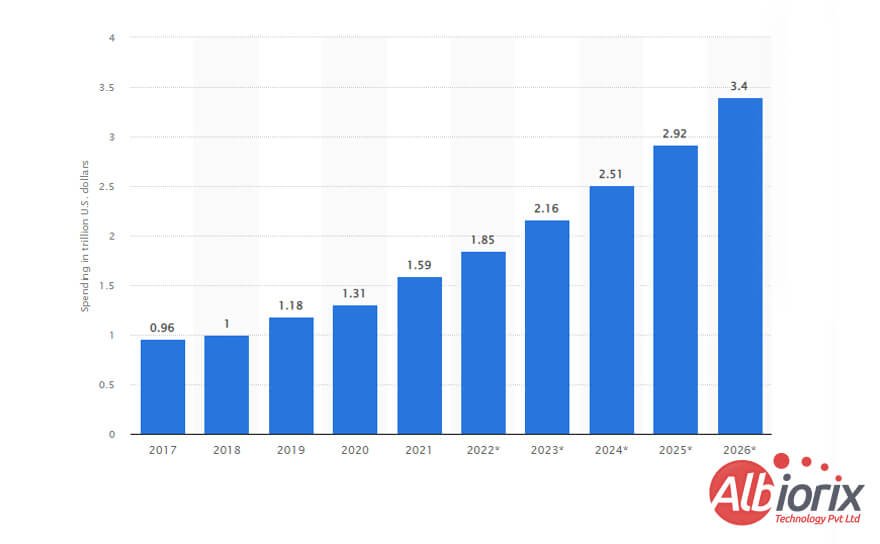
In 2025, digital transformation (DX) market reach 1.6 trillion U.S. dollars and is expected to reach 3.4 trillion USD by 2026.

Digital Transformation Market Size

Digital transformation plays a vital role in enhancing the business performance for almost all verticals of all sizes and shapes. In addition, successful digital transformation helps an organization deliver better customer experiences and earn lasting loyalty.

Shaping Your Business With Our Custom Software Solutions

We have a team of software developers proficient in dealing with full-stack development services for your business needs.

10 Best Digital Transformation Trends of 2026 For Your Business

Let’s highlight the best trends in digital transformation, including wider adoption of low-code platforms, increased migration to the cloud, leveraging AI and ML technologies, increased automation, and wider investment in Blockchain.

1. Wide Usage of Low Code Platforms

A low-code platform is a development environment that makes it easy for non-technical users to quickly design, build, and deploy software applications for their business needs.

With the help of this platform, you can efficiently create a graphical user interface and drag-and-drop tools, especially for business analysts and non-technical users, to design and create custom solutions without coding.

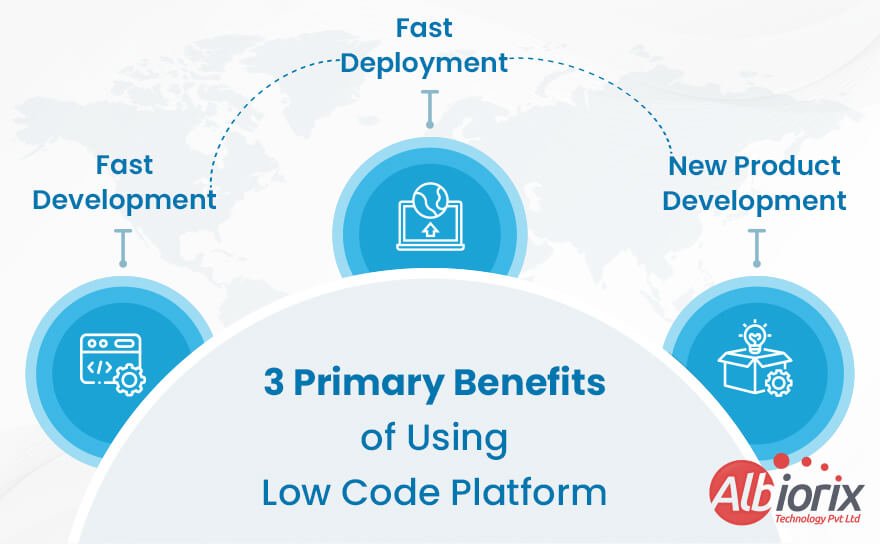
Benefits of Using Low Code Platform

Low-code platforms have recently increased due to their time, cost, scalability, and risk reduction benefits. Such inspiring benefits play a vital role in dealing with use cases like:

  • Rapid prototyping
  • Rapid deployment
  • New product development
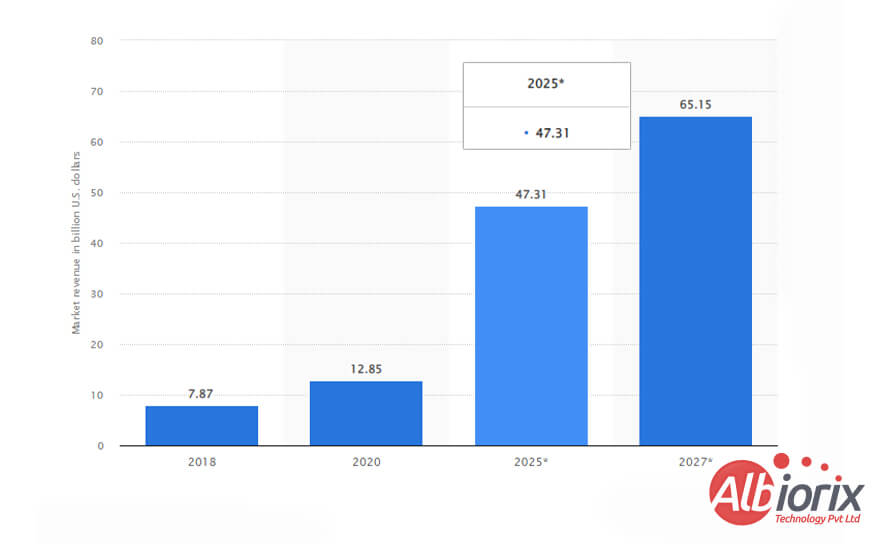
The survey by Statista says that the low-code platform market revenue is expected to reach approx. 65 billion U.S. dollars in 2027 from 13 billion USD in 2026 at a CAGR of 26.1%.
Low Code Platform Market Revenue

As these solutions progress, businesses will adopt them more quickly because they will be able to determine whether certain digital products can survive in their ecosystem more quickly.

2. Cloud Migration is Increasing

With the advancement of upcoming technological trends, almost all businesses are migrating more and more towards cloud technologies. It significantly impacts the industry when cutting expenses, improving accessibility, and outsourcing tedious routine maintenance work.

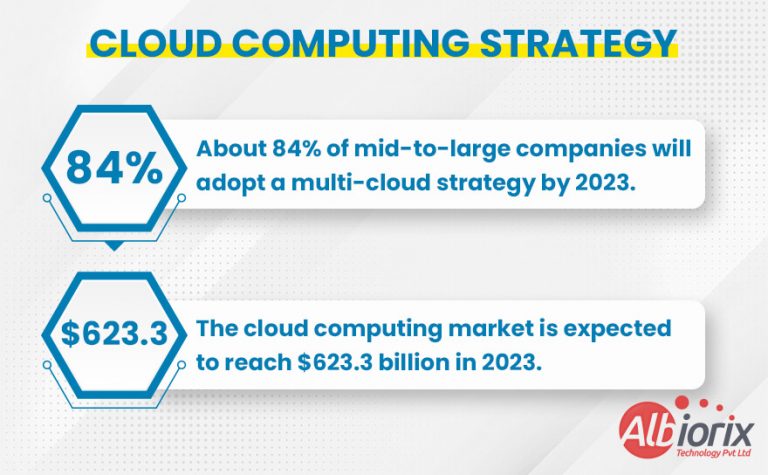
Cloud Computing Strategy

More businesses will move to the cloud as technology develops and internet speeds rise, especially in historically slow nations, to take advantage of their unique advantages.

With the help of cloud technologies, you can efficiently handle sensitive data, which is essential in strengthening your business’s security model.

Distributed cloud will become a part of an emerging digital transformation trend in 2026. As a result, you can quickly connect data and applications across multiple locations, allowing for faster innovation and better resiliency.

Distributed cloud is the future of the cloud. It makes it easy to improve the public cloud’s flexibility and scalability with the private cloud’s security and control.

Related Post: Top Software Development Trends 2026

3. Artificial Intelligence and Machine Learning

AI and ML are the leading technologies that are moving ahead in this great competition for digital transformation. AI helps you to make better decisions by providing insights about customer behavior, demographics, and what they want.

On the other hand, ML helps you use data to create personalised customer experiences.

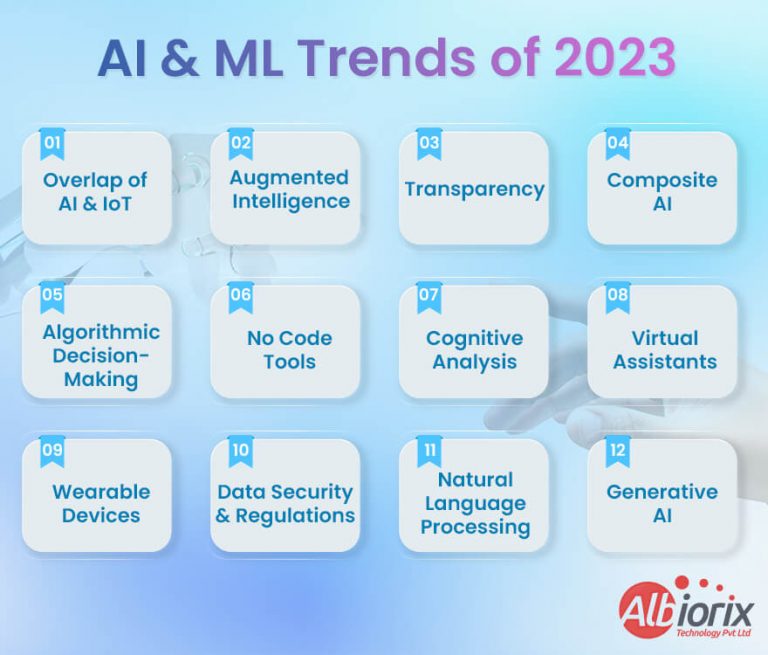
AI & ML Trends of 2023

Nowadays, many custom software development companies have started utilising these two prime technologies for developing intelligence for their team personnel.

It helps you eliminate tedious and challenging activities and assist senior management in making wise judgments.

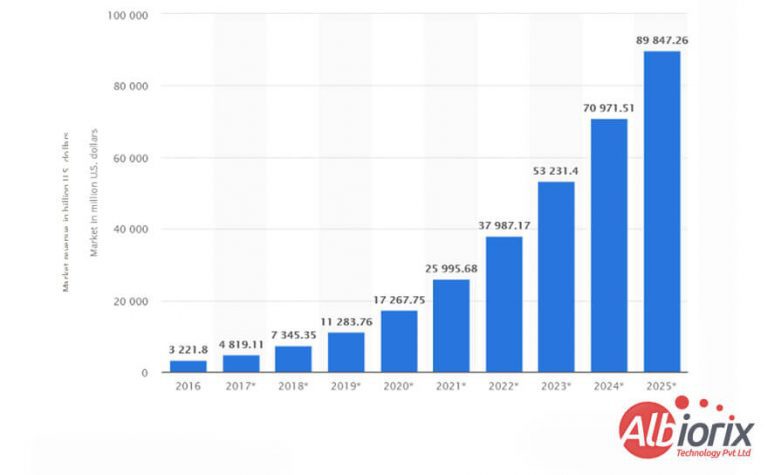
And if I talk about the survey, the global AI market is expected to reach more than half a trillion USD by 2026.

Global Artificial Intelligence Market

For almost all businesses, ranging from tech-savvy startups to large corporations, it becomes easy for you to incorporate AI into your business solutions and processes for reaching business goals.

Explore Service Offerings That Drives Through Digital Transformation

We are experts in providing web and mobile app development through knowledge transfer from our innovation ecosystem.

4. Intelligent Search

Intelligent Search, often known as natural language search, AI-powered Search, or cognitive Search, allows you to get more accurate and personalized search results.

Intelligent Search follows AI technology to help you break down data silos, making it easy for you and your customers to get the information they need within less than seconds.

Some of the trending technologies that emerge Intelligent Search involves

  • Machine learning
  • Computer vision
  • Semantic Search
  • Natural language processing
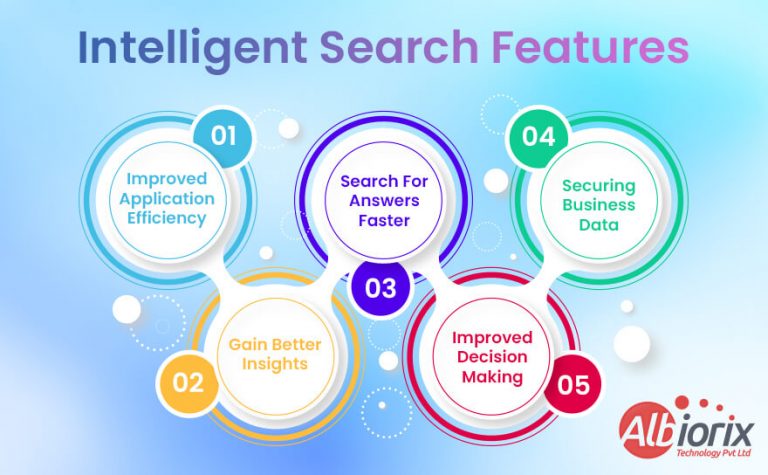
Intelligent Search Features

The primary role of search intelligence is to deliver more innovative results faster and provides a single point of access to enterprise content sources.

In addition, it plays a vital role in allowing data to be enhanced, searched, and analyzed in structured and unstructured formats.

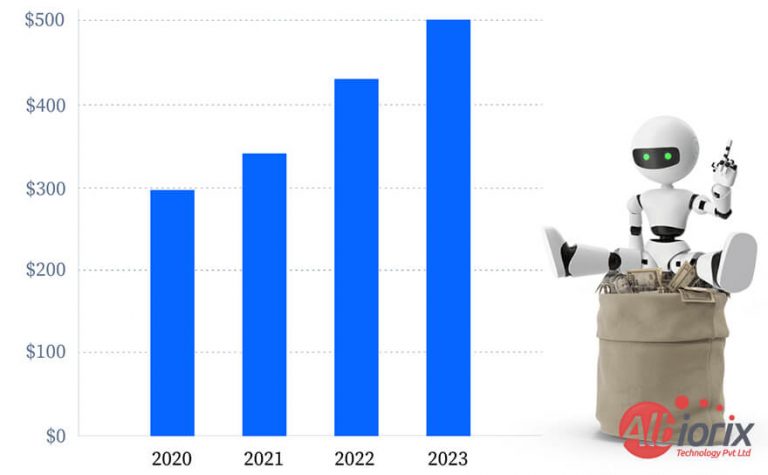
The recent survey says that AI growth is expected to reach around half a trillion USD in 2026.

Artificial Intelligence Growth Graph

5. Business Process Automation Solutions

As we are talking about the best digital transformation trends in 2026, Business Process Automation is of prime importance that you must follow.

The primary goal of Business Process Automation is to help your business in removing the human execution needs of internal procedures and accelerating their completion.

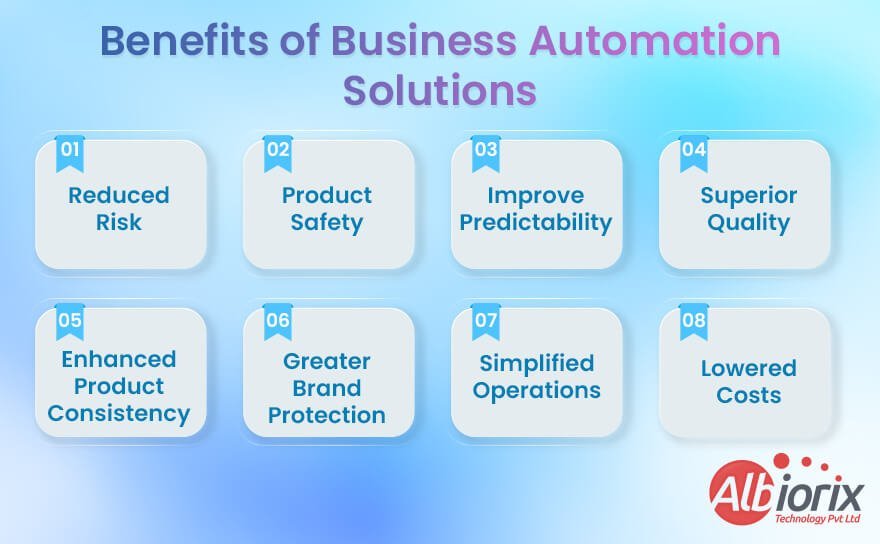
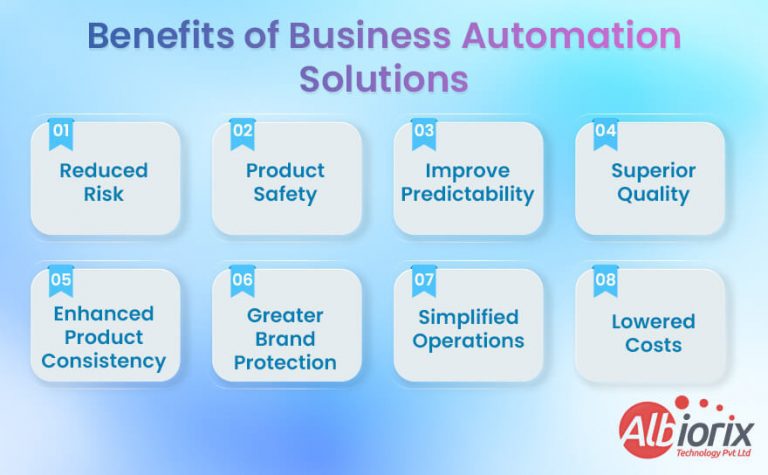
Benefits of Business Automation Solutions

Such technologies are actively responsible for improving business productivity, enhancing the customer experience, and digitising operations. Moreover, they require a learning curve to get any project off the ground.

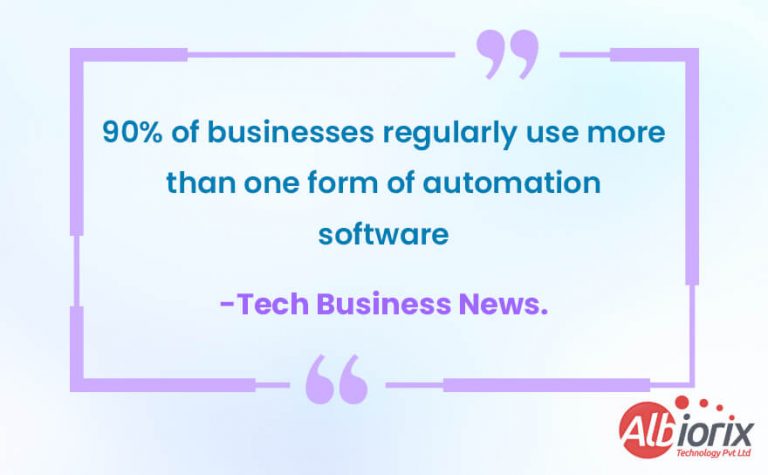
As per the Tech Business News report, 90% of businesses regularly use more than one form of automation software.

Benefits of Business Automation Solutions

One of the best ways to accelerate automation is to select the perfect business process automation tools, which may assist in producing faster outcomes with fewer coding skills.

6. A Big Investment in Blockchain

Blockchain is one of the digital transformation trends and a great emerging technology stack that is designed explicitly for leading industries like finance, healthcare, supply chain management, and many more.

Blockchain is the most popular technology in this competitive world and possesses a robust potential to change traditional business performance.

In addition, you’ll come across multiple sectors that quickly develop smart contracts and store records permanently without facing any challenges.

Automation Software Stats

Blockchain is one of the trends in digital transformation in 2026 and a great emerging technology that is designed explicitly for leading industries like finance, healthcare, supply chain management, and many more.

Blockchain is the most popular technology in this competitive world and possesses a robust potential to change traditional business performance.

In addition, you’ll come across multiple sectors that quickly develop smart contracts and store records permanently without facing any challenges.

Business owners are more likely to invest in a secure environment where they can efficiently prevent sensitive information from being leaked to the public.

So Blockchain is the prime technology that has taken a step to be included in the list of trends in digital transformation to watch for.

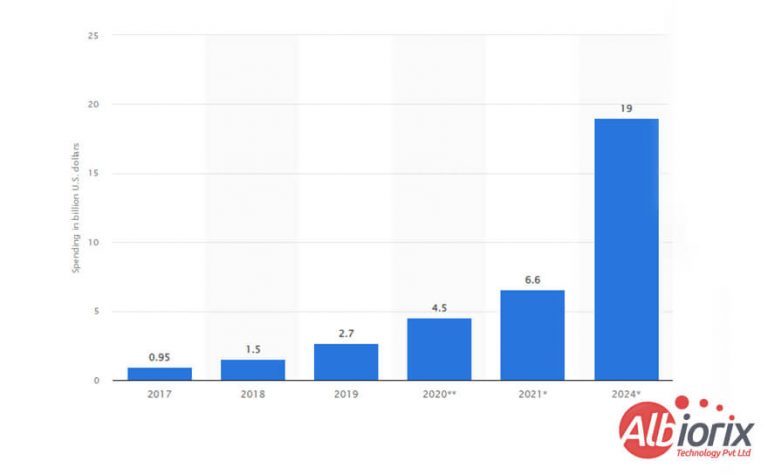
If we talk about the worldwide spending on blockchain solutions from 2017 to 2026, it is expected to reach almost 19 billion U.S. dollars by 2026.

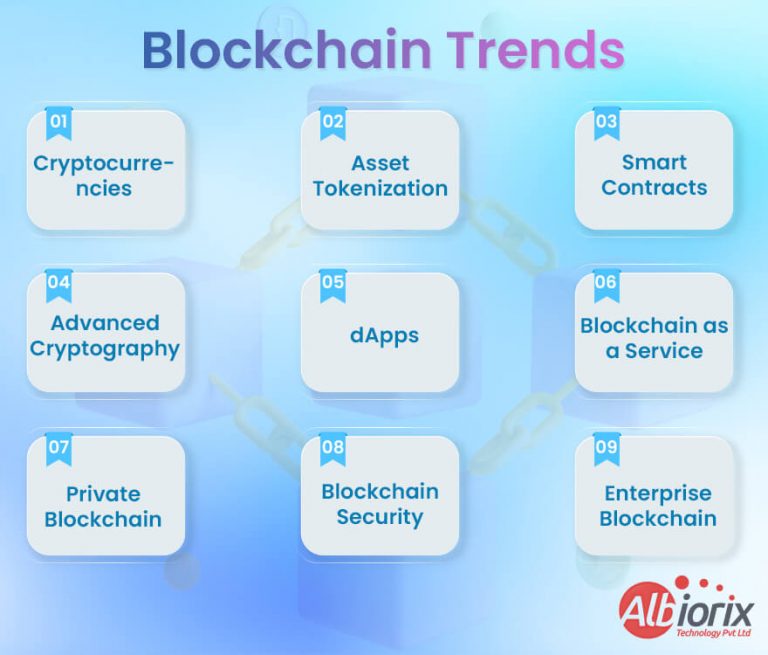
Blockchain Trends 2023

7. Business Collaboration in Virtual Mode

Since the COVID-19 pandemic, multiple challenges have come into existence where different businesses have been influenced to take an essential decision to begin using or aggressively adopting digital technologies.

worldwide spending on blockchain solutions

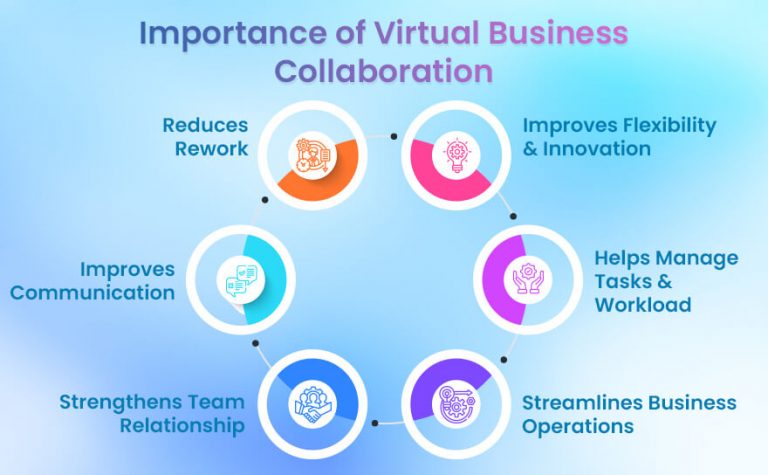
Many businesses took a lot of work to allow their employees to work from home. The reason was the increased investment in a digital software solution that significantly impacts virtual collaboration, whether it be team collaboration tools or document collaboration tools.

We anticipate increasing investment in creating an environment for virtual collaboration that is better than working from your company’s offices.

8. Customer Data Platform

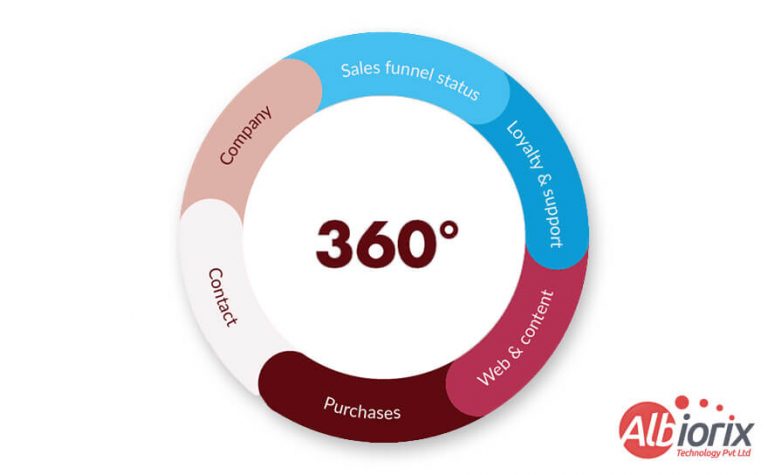
A customer data platform is an impressive and innovative technology that allows you to connect multiple applications and databases quickly. This process is primarily performed to enable customer-centric data and analytics for your business process.

  • The primary goals of using customer data platforms are to
  • Easily manage the customer information
  • Analyse the customer digital trends
  • Identify interesting opportunities, especially for future marketing efforts
  • Develop more personalised customer experiences
Importance of Virtual Business Collaboration

With the help of this platform, you can efficiently integrate all of the information about your customers from different sources into one place so that you can make better decisions.

Digital transformation is solely responsible for meeting customer satisfaction and providing the best customer experience. So, it becomes of prime importance to follow such trends in digital transformation to achieve big success for your business.

It would be best if you adopted the perfect strategies based on the data accuracy features. So let’s highlight some of the best resources that can help you provide accurate data regarding customer experience.

  • (Online) behavioral data – Website, mobile app and other related activities come into this section. Some examples include live chat, help centres, or digital assistants, and the quantity, length, and frequency of encounters.
  • Transactional data – Essential data like e-commerce or point-of-sale systems that users specifically do while making purchases and returns.
  • Demographic data – It includes the name of the customer, birth date, and customer address.

The excellent part of a Customer Data Platform is that your customers can quickly interact with your business using multiple platforms.

9. Adoption of Everything as a Service (XaaS)

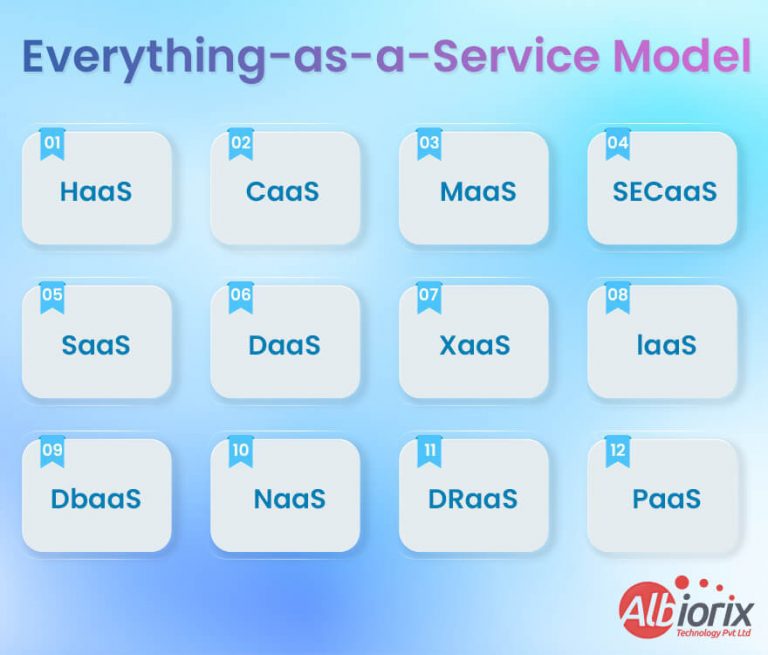
XaaS is a new business model that provides an efficient way to provide robust software on demand to your prime customers.

Everything as a Service (XaaS) is becoming popular as it is an extension of the SaaS (Software as a Service) model that provides explicit access to applications over the internet.

Customer Data Platform

With the help of this XaaS model, it becomes quite easy for you to access all service types directly from only one provider. For example, it may include your business application’s infrastructure, data storage and processing power.

Amazon Web Services is one of the best examples of XaaS as it provides cloud computing services to its customers.

10. AIOps

Artificial Intelligence for IT Operations (AIOps) is one of the digital transformation trends that is nothing but AI applications ranging from Machine Learning to IT operations.

AIOps is one such inspiring technology trends that is primarily used by IT operations (IT Ops), development operations (DevOps), and site reliability engineering (SRE).

In addition, the speed of the testing process becomes faster by eventually using algorithmic analysis of IT data with the help of AIOps.

With the help of AIOps, they are detecting and resolving digital-service issues before they impact business operations and customers.

Everything As a Service XaaS

Accordingly, implementing AIOps as a digital transformation strategy and using its data analytics feature can remarkably help with cost savings.

AIOps tools are primarily used by your DevOps teams to centralize data and manage the data created by modern IT infrastructures. It will eventually help to prevent application failures, ensures app uptime, and provides service assurance for your business.

AIOps tools help your business to operate quickly at the speed of modern business to design and deliver an amazing user experience. That’s why IT is at the centre of digital transformation activities.

AIOps tools enables your business to deal with business process specifically based on the data structure. Moreover, it is solely responsible for entralizing your business solutions and services with these tools.

Conclusion

So, we’ve seen the top 10 trends in digital transformation that can benefit all businesses in 2026, whether IT departments, tech companies, or any other enterprises.

With the proper utilization of such inspiring tools, your business can quickly avail of the great benefits of these technologies. Moreover, it becomes possible for your businesses to lead toward the future of innovation, digitalization, automation, and modernization.

What is Vite JS? A Ultimate Guide

Adopting new technologies is essential to enhance the performance of web applications and developers’ experience to the next level. To cope with it, Evan You, the one and only man behind the creation of the VueJS framework, launched Vite JS.

ViteJS is a next-generation frontend development tool with inspiring features like an instant server start, a lighting-fast Hot Module Replacement (HMR), rich features, an optimized build, server-side rendering, and more.

To make it easy for you, we’ve come up with an article that will guide you through what is Vite JS, how Vite works, and its modern Javascript features to help you understand why Vite is one of the best frontend build tools you need it.

Key Takeaways

  • ViteJS is a fast, lightweight, and versatile development framework for building web applications.
  • ViteJS uses ES modules (ECMAScript modules) and leverages the native browser’s ability to load modules directly without bundling, resulting in faster development and build times.
  • ViteJS offers a highly efficient development server that provides hot module replacement (HMR), allowing developers to see instant changes in their code without refreshing the entire page.
  • ViteJS is known for its fast startup time, enabling rapid development and iteration cycles.
What is Vite.js?

Vite is an impressive build tool solely responsible for improving the front-end development experience to a great extent.

This rapid development tool helps you build and maintain web projects smoothly and primarily focuses on speed and performance.

The primary use of Vite JS is to create a development environment where you can efficiently deal with the leading frameworks like Vue, React, even vanilla Javascript applications.
With the help of Vite.js, you’ll get a quick and responsive build tool out of the box with highly customizable API using plugins.
Build Front-End Application For Your Business With Us

We have a team of front-end developers having proficient in designing and building robust web applications for your business needs.


Contact Us

Top Features of Vite JS

Let’s explore the features of using Vite over other popular module bundlers to improve your business application’s performance.

1. Faster Builds

Vite offers faster build time with ESbuild, a bundler written in Go. Trust me, Vite is 10-100 times faster compared to any other bundler.

By leveraging ESbuilt for converting CommonJS modules to ESM, especially for project dependencies, Vite plays an essential role. Moreover, Vite’s latest version, Vite 2.0, uses ESBuilt instead of Rollup, which enhances the performance in build time.

In simple words, we can say that ESBuild is solely responsible for dealing with prebundling dependencies.

2. Framework-agnostic

Vite 2.0 comes up with a list of leading boilerplates for prominent frameworks.

Some of the frameworks included in Vite JS building tools are Vue.js, React, Preact, and many more. Not only this, but you’ll also find a vanilla JavaScript boilerplate and TypeScript-supported boilerplates.

Let’s talk about ReactJS, it’s the most commonly used React project development framework that makes it easy for you to build an app fast and securely.

Vite is a robust building tool for front-end development that offers a consistent next generation frontend tooling experience across frameworks due to its framework-agnostic nature.

3. Improved CSS Support

Vite is not just a build tool but has inspiring features that allow you to deal with CSS features, like CSS splitting, URL re-bashing, and more.

However, you can opt for such features irrespective of any default configuration file. Vite’s resolver improves the @import and url() paths in CSS by respecting aliases and npm dependencies.

4. Experimental Support for Server-side Rendering

Vite currently backs Server Side Rendering (SSR). Vite 2.0 typically supports SSR for React.js technology and Vue version 3.

Moreover, this building tool offers APIs and constructs for effectively loading and updating ESM-based source code. Finally, and most importantly, it is responsible for automatically externalising CommonJS-compatible dependencies.

With its low-level functionality, Vite SSR helps you by offering an impressive tooling experience for a higher-level feature in the coming future. And if we talk about the production build, SSR is decoupled from this build tool.

If dealing with the same setup, there are more chances of getting tremendous support for pre-rendering.

5. New Plugin System

Vite is a front-end build that is a boon for every web developer as it simplifies their development environment process. In addition, it plays a vital role in improving the developer’s experience by identifying your application’s build type.

With the help of Vite JS, the developers find it easy to access configs and development server configurations. Moreover, this build tool is entirely compatible with many Rollup.js plugins.

Vite’s new plugin system, which is WMR based, allows you to provide unique and innovative Hot Module Reload handling features and offers API to add middleware to the dev server.

Apart from these functionalities, the new system of Vite typically adds Vite-specific functionality to the Rollup plugin system.

Related Post: Vue 2 vs Vue 3

Drive Your Business Growth With Single Page Application

We have professional and experienced Angular developers that can develop single-page applications simply and fast using optimal structure.


Contact Us

How Does Vite Works?

During the launch of the ES modules in ES2016, the browser supports for Es6 modules was challenging to cope with.

To overcome that issue, many modern browsers now typically support ES modules in native form. It means that you can now define import and export statements natively.

In addition, you have complete freedom to directly import inside your HTML file by simply stating that you are importing a module using the type+” module” attribute in your script tag, as shown below:

<script type="module" src="filename.js"> </script>

And if I talk about Vite documentation, ES import syntax is served directly to the browser in our source code.

With the help of the native-supported browser is solely responsible for parsing them automatically, making HTTP requests for each import.

On the other hand, the development server typically receives HTTP requests from the browser and executes any necessary existing code changes. Simply put, it boosts the application speed and makes the Vite server insanely fast.

Why Should You Opt For Vite?

After having a look at how Vite works, it’s time to see the primary reasons for using Vite, a leading frontend build tool.

1. Hot Module Replacement (HMR)

One of the most inspiring features of Vite is Hot Module Replacement (HMR). This feature allows you to deal with JavaScript bundlers that effectively change the browser’s source code without needing to refresh a browser.

You do not have to reload the browser for every content update that you perform in the Vite application. This Vite tool allows your browser to have an immediate effect of being reflected on every change.

Your Vite project is solely responsible for enhancing the project consistency as Hot Module Replacement is disengaged from the total number of modules included in the application.

If we talk about developers’ perspectives, the speed of Hot Module Replacement can be somewhat challenging who are using Webpack regularly.

2. Bare Module Resolving

Generally, there is no specific support for bare module import for any browser. So, you don’t need to import directly from any package name like import {createApp} from ‘vue’, as you’ll not find the relative path to the application’s node_modules.

Vite JS typically search for bare import specifiers in your JavaScript files to make your application run. Then, it completely rewrites them and uses such module resolution to locate the individual files from your Vite application dependencies.

Finally, the process takes place where you can easily resolve them as legitimate module specifiers.

3. On-demand Compilation

The browser is solely responsible for sending source files to compile, and the good part is that you can view only the required or changed code that is compiled on the screen.

So, if you have any unchanged files, get ready to witness the 304 (Not Modified) error code on your screen.

It simply compiles every located JS file in the project and moves ahead for bundling them just before making any significant change in the Vite application.

For that reason, Vite is considered the best choice for large modern web projects.

4. Configuration Option

With the help of a vite.config.js or vite.config.ts file, you have complete freedom to take over the project control. These files are available in the existing working directory or the project’s base root directory.

Moreover, you have an option where you can mention a config file using the build command vite –config my-config.js.

Furthermore, adding a Rollup plugin for build and Koa middleware in your configuration file makes it easy for you to include support for custom file transforms for your application.

These are the primary reasons for using Vite as a building tool for front-end development services like AngularJS development services. To summarize, I have identified some of the other reasons for using Vite for your next project needs.

  • Vite is one such robust building tool for front-end development that is 100% compatible with ECMAScript modules.
  • With its active support of the Legacy mode plugin, you can effectively deal with browsers that are not supporting native ESM.
  • Vite is a tool that comes up with faster dependency prebuilding. So, rather than using Rollup for dependency prebuilding, it makes use of esbuild.
  • Vite has typescript, automatic CSS code-splitting, and CSS pre-processor support.

Related Post: Angular Development Tools

How to Create a Vite Application?

Below are the step for creating a Vite application. Let’s get started.

Step 1: The command for creating a Vite app is npm create vitejs@latest new-vite-app. Once you type this build command, you’ll see the screen with different options like:

Here, new-vite-app is the name of the project. As you can see, there are a lot of template options available to create an application. Currently, we’ll go with the React framework.

Now it’s time to run the following commands to complete the Vite installation.

>>cd new-vite-app
>>npm install
>>npm run dev

Once you run “npm run dev” command, you’ll see a url for your Vite application.

Vite Application

There you go. Congratulations, you’ve made it possible.

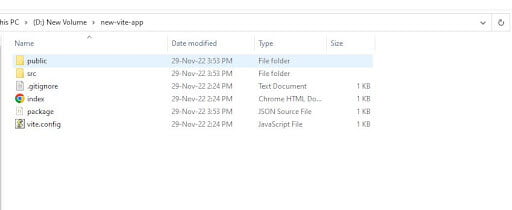
Understanding the Vite Folder Structure

Now, it’s time to understand the folder structure of the Vite application.

Vite JS Folder Structure

1. node_modules folder

All the essential dependencies of your Vite applications are maintained under the “node_modules” folder. And yes, all such dependencies information is well-defined in the package.json file itself.

So, once you run the command “npm install”, all such dependencies that are available in the package.json file will be directly downloaded into the node_modules folder.

If you’re pushing your source code directly to Github, it’s not essential to push the node_modules folder.

The reason behind it is that users have an option where they can directly install required dependencies through the application’s package.json file.

This json file plays an essential role to prominent ReactJS development services for your business needs.

The package.json file is available in the root directory of your Vite application.

2. src folder

The src folder is one of the most important folders you can use to interact with almost all the folders, especially when creating the Vite application. In this src folder, you’ll find vital files like app.jsx, main.jsx, app.css file and index.js.

You can also efficiently keep or maintain the application’s highly optimized static assets, like images, videos, and other files, in the src folder.

The good part of Vite JS is that it is solely responsible for automatically rebasing all URLs inside index.html.

3. App.jsx and main.jsx

Inside your Vite application, the app.jsx file is considered the most important file. This is because it serves as a container for all of the other components used in the application.

The base component file, app.jsx, allows you to easily target the root id from the index.html and make it easy to render all the components used in the vite application.

4. index.css and app.css

You can beautify your Vite project by applying different CSS styles in your coding. Moreover, you can even add your customized CSS files and styling in these files.

Vite 4.0 – New Features and Upgrades

At Qcon International Sofware Development Conference, Vite 4.0 release date was March 27–29, 2023. So, if your next question is what’s new in Vite 4.0?, I’ve come up with major updates introduced in Vite version 4.0.

Vite 4.0 comes with advanced vite.new

With the help of the command, pnpm create vite, you can easily create a new vite project with any framework. Alternatively, you can use vite.new to open a standard template online.

Moreover, you can also run the command pnpm create vite-extra to get access to different templates directly from other available frameworks.

Vite 4.0 introduces a new React plugin using SWC.

One of the best alternatives for React web projects after Babel is Speedy Web Compiler (SWC). So, if you’re dealing with the implementation of React Fast Refresh, SWC is the right option for your business project.

Here, we are talking about Vite 4.0, so two advanced plugins help you deal with React modern web projects: @vitejs/plugin-react and @vitejs/plugin-react-swc (new).

Vite 4.0 are fully compatible with modern browsers.

By default, Safari 14 is the browser that is considered to be a modern browser build, especially for wider ES2020 compatibility.

So, you can efficiently use BigInt and nullish coalescing operator for modern builds without transpiling.

Environment Variables with Vite 4.0

Vite 4.0 is the latest version that uses dotenv 16 and dotenv-expand 9. So, for example, you need to wrap value with quotes if you have a value including # or ` .

-VITE_APP=xy#za bc

+VITE_APP=”yz#ab cd

Apart from these features, there are some other major upgrades like:

  • Vite 4.0 allows you to import CSS as a String.
  • With its environmental impact, Vite 4.0 plays a vital role in enhancing the app installation and increasing Vite’s packaging size.
  • To provide better performance with collaborators, Vite Core and vite-ecosystem-ci makes your vite development process a smooth one.

Performance

ViteJS is a modern, lightweight, and fast development build tool and web framework for building web applications.

It was created to address the performance issues of traditional bundlers like Webpack by leveraging native ES module support in modern browsers.

ViteJS offers excellent performance for web development by taking advantage of native ES module support, optimizing build processes, and providing a seamless development experience.

Its focus on speed and efficiency makes it a popular choice among developers looking to build modern, high-performance web applications.

Developer Experience

Full stack developer experience on ViteJS is highly regarded and praised by many developers. ViteJS aims to provide a smooth and enjoyable development process with features and tools that enhance productivity.

ViteJS offers a developer-friendly experience with its fast development server, efficient HMR, extensive plugin ecosystem, instant feedback, and flexible configuration options.

These features contribute to increased productivity, faster iteration cycles, and an overall enjoyable development experience.

We Help You Build Single-Page Applications for All Business Verticals

Our team of talented developers strives to provide the best optimum web app solutions.


Contact Us

Conclusion

I hope you got a clear vision of what is Vite and how it plays a vital role in enhancing the developer’s experience to a great extent.

Compared with other tools like Parcel and Snowpack, Vite is a front-end build tool that is easy to set up and takes minimized effort to work with this tool.

If you ask me personally about Vite JS, I would prefer Vite as a built tool, especially when I’m avoiding a framework involved in minified scripts and styles.

If you’re planning for front-end development services contact Albiorix. We have a team of passionate developers who constantly strive to provide the best possible IT solutions.

Why Software Maintenance Matters for Business Growth?

Software’s life is not just limited to writing code only. Instead, it needs to be available to go through the stages of the ongoing lifecycle that typically stop and start as and when required.

Software is constantly changing, and as per its usage, it must be monitored and maintained correctly. This is partly performed to adjust for upcoming organisational changes but is even more critical because technology keeps changing.

Software maintenance plays a crucial role in enhancing the growth of your business. So, we’ve come up with an article about software maintenance.

But first, let’s start with the basic definition of what is software maintenance and will highlight the importance of using software maintenance in your business.

What is Software Maintenance?

Software maintenance is the process that allows you to modify or update the software product before it is deployed on the live server.

Maintaining the software is as important as developing the software for your business needs. You need to keep detailed information on all the primary aspects of the software solutions that you want to implement for your business.

Do you know that the global CMMS software market is estimated to reach $1.26 billion by the end of 2026?

Generally, there exist four essential types of software maintenance which are bounded by four key aspects like bug fixes, monitoring, enhancements, and support as shown above.

What are the Different Types of Software Maintenance?

Let’s highlight four types of software maintenance to make it easy for you to select the best option for your software development lifecycle.

Types of Software Maintenance

1. Corrective Software Maintenance

Corrective software maintenance is the typical and classic form that quickly eliminates and fixes bugs in the existing software.

In simple words, this type of software maintenance is solely responsible for identifying errors in the existing solution and correcting them to make it works more accurately. It is primarily done in the form of minor updates frequently.

Planning To Develop Robust and Secure Software Solutions?

We are experts in designing and building web and mobile app solutions for your business needs using full-stack technologies.


Contact Us

Let’s go through an example of Facebook.

If you’re working on Facebook and suddenly receive an error message highlighting “Unable to login with your Facebook Credentials, ” as shown below.

Facebook Error

So you need to contact your developer and discover the authentication code that talks to Facebook has a minor defect and needs to be updated to restore login functionality.

It’s nothing but the type of software maintenance called corrective maintenance, defined as the reactive modification of a software product performed after delivery to correct discovered problems.

In a nutshell, corrective software maintenance occurs when you encounter various errors in business logic, code, and even design perspectives.

With the help of this Corrective software maintenance, you can efficiently correct software bugs, errors, and defects that are coming to your software.

What are the best examples of corrective software maintenance?

  • If you found that the software needs to be fixed as per your expectations due to some faulty logic flow, wrong implementation, or even invalid or incomplete tests.
  • Once your software is published, your end-users may face some issues.

2. Preventive Software Maintenance

Preventive software maintenance plays an essential role in helping you in protecting the system from any upcoming vulnerabilities.

This type of software maintenance typically defines software improvements that are specially done to safeguard the software for the future. Moreover, it helps your software from any potential software alteration.

Let’s take an example of preventive software maintenance.

If you’re making a slight change in your working system, there are high chances that your user base might increase or decrease depending on the software.

But your server may not be able to tackle the server’s load. On the other hand, if your server is not working correctly or slowed down, you must be prepared to have multiple angry customers.

But, if follow the right procedure to implement the perfect software maintenance process, your user base will improve automatically as depicted in the following figure.

User Base after Software Maintenance Process

To avoid such an upcoming disaster, you must strive to protect yourself from such a disaster by upgrading the hosting server to be more scalable.

No wonder you’re having a lot of traffic only on one server; your upgrades will ensure new servers automatically come online to handle the extra traffic. This effort is categorized as preventive maintenance.

The excellent part of preventive software maintenance is code scalability or code maintainability. So you can eventually handle your software’s legacy system smoothly.

Preventive Software Maintenance defines the adaptions and modifications of the software that mitigate the deterioration risk.

Preventive maintenance offers:

  • You can easily create a document updating policy as per the existing state of the system.
  • Efficiently deal with code optimization for better software execution
  • Reconstructing or reducing the code of the software to make it understandable

3. Perfective Software Maintenance

With the help of perfective software maintenance, you can easily modify all essential elements, functionalities, and even abilities to efficiently deal with system operations and app performance.

This type of software maintenance is solely responsible for dealing with the software’s receptiveness and usability. You can quickly improve, remove, or add additional features to your software by altering current software functionality.

I’ll highlight a simple example of preventive software maintenance.

Consider the scenario that Facebook has slowed and stopped breaking your site, but you are now bounded with multiple feedback from the user base within some days. You’ll receive a list of feedback from the users that you need to work on.

So, rather than sending you back to your profile after logging into your system, it directly redirects you to view the recent activity dashboard.

Once you’ve attached a reasonable request to your developer and after a sudden update to the system, your users will be greeted with the latest action.

The primary goal of using perfective software maintenance is to deal with functional enhancements to improve the user experience of your software.

If you want to update the software system to improve its value per user requirements, you can execute the perfective software maintenance.

Perfective software maintenance typically includes

  • Performance enhancement for your better user availability
  • Enhanced user interfaces and software usability
  • Better software functionality and performance

4. Adaptive Software Maintenance

Adaptive software maintenance deals explicitly with the compatibility approach per your business needs and technical perspectives.

An essential part of this maintenance of software is that it handles the system conversion process, making it easy for you to adapt quickly to significant changes.

Once the user enters the system by providing the correct credentials and things are working fine, it’s good. But what happens if the same error comes back to you, and your end-users cannot log in with their credentials?

Facebook error message

Your development team will have an issue with the API authentication change with the Facebook server. In such a case, you must deal with the support team to develop a new method and identify the best possible solution.

While adaptive software maintenance looks an awful lot like corrective software maintenance on the surface, it’s made possible with the help of changing a third-party system that you specifically rely on a different root cause.

You must instruct your respective developer to work for additional hours on updating the site to support Facebook’s new authentication method, and everything is back to normal.

This maintenance of software primarily focuses on dealing with the software frameworks that make your work easier. Such responsive software is developed to efficiently work with any new operating systems, platforms, and hardware to retain continuity with the software.

Adaptive software maintenance is especially used for modifying the software when there are following conditions.

  • The operating system your software executes is evolving
  • Your users generally require the product to work with new hardware as well as software.
  • The expectation of software defects will affect your customers in many ways in the upcoming future.

Primary Reasons For Software To Require Maintenance

Software’s lifespan depends entirely on the system upgradation to run efficiently on the system. So, to make it easy for you, we highlight some of the best reasons you must follow to maintain the software on a large scale.

Michael Bolton, a prominent software testing professional says that Everybody is a tester or can become one to some degree. I mean, we’re born testers.

1. Bug Fixing Process To Minimize Errors

In the software maintenance management process, bug fixing is one of the biggest priorities in running the software smoothly.

But what’s the bug fixing? It’s just a methodology you need to run to identify the errors or bugs in code and correct them to run your software successfully.

Bug fixing typically occurs in hardware, operating systems, or software. Therefore, you can efficiently perform this process without hurting the rest of the functionalities of existing software.

2. Capability Enhancement To Improve Software Performance

The next on our list is to improve the software features to build a robust solution capable of dealing with almost all market environments.

The primary goal of this procedure is to enhance or improve the performance of software platforms, work patterns, hardware upgrades, compilers, and other aspects that affect system workflow.

Boost your business using a technically updated solution by applying software maintenance services regularly.

Easily Build Customized Software Solutions With Us

We have a team of expert developers who strives to provide the best possible optimum solutions as per your business requirements.


Contact Us

3. Removal of Outdated Functionalities For Better Results

One of the most challenging factors you must consider in your software maintenance process is removing unwanted functions. If you include such useless kinds of stuff in your software solutions, it’ll make a significant impact on solution efficiency.

Your system easily adapts to changing circumstances by replacing maintenance of software parameters like UI and coding elements with new software development. And it is made possible with the help of the latest tools and technologies.

4. Improving the Software Application Performance

One of the biggest reasons for using software maintenance is to improve system performance. And that depends on your developers on how they detect issues or bugs, especially by driving through essential testing processes and resolving them smoothly.

Data and coding reengineering are the most significant part of the management of software maintenance process. And that’s what is essential in preventing solutions from upcoming vulnerabilities.

Moreover, such functionalities help prevent harmful activities like hacking the software application.

So, these were the primary reasons crucial to understanding your business’s software maintenance process. So, select the best and most reliable custom software development company to help you choose the best possible solutions for your business needs.

Before that, I want to share one thing it’s going to take a long way to make the software robust and free from bugs of any kind.

Understanding the Software Maintenance Process

The software maintenance planning method is the essential phase of the software development lifecycle. So, it takes place in your system through a standardised management of software maintenance process known as the Software Maintenance Life Cycle (SMLC).

You can efficiently implement SMLC in seven different phases, as mentioned below:

1. Identification

The first phase of the software maintenance life cycle initiates with the identification.

Before you implement any specific change in the software for the requests raised, the modifications are first analyzed and classified according to the attention or maintenance required.

You have complete freedom to perform manual or automated software updates, depending on your business needs.

2. Analysis

To incorporate any change in the software solutions, you need to efficiently deal with every modification request’s practical and feasible aspects.

The analysis phase of the software maintenance process includes validated changes or input where the modification cost is estimated.

3. Design

The next phase is the designing phase, where you have to develop a new software framework as per the pre-determined survey. Moreover, it would help if you built testing software and that too for safety and security purposes.

4. Implementation

Now, it’s time to design and develop a new software framework by adding the codings to your application. But, again, it depends on your business needs on how you want to add functionality or specification to your system.

5. System Testing

The testing phase is the core part of the software maintenance process. You need to mandatorily perform the testing of every code and specification that you implemented on your system.

This phase is solely responsible for determining if you require any further changes or additions are needed for the new model of software.

6. Acceptance Testing

This stage of software maintenance is solely handled by third-party end-users. What they actually do is simply perform a “dry run test” just to verify whether the specification or functionality is working as per the predefined modification requests or not.

7. Delivery

The delivery stage is the final phase of the software maintenance process, where the testing phase is completed successfully by the tester. Then, the developers start to initiate the delivering the software solutions to the end users.

Do You Have Any Project Ideas to Discuss?

Create seamless one-page web applications with reusable code components with our ReactJS development solutions.


Contact Us

Strategies That Make Successful Software Maintenance

What’s the main planning that you can implement for making the perfect software maintenance? It’s identifying the techniques that drive through the solutions making a significant impact on strategic plans.

Let’s go through two essential terminologies that play a vital role in maintaining your software efficiently.

  • Your Software Documentation Must Be Clean – Documentation of your software users must be pure as it involves detailed information related to code operation.

    Moreover, you’ll also get a clear vision of identifying robust solutions to problems that may occur in the future. As a result, the upgradation is considerably more manageable.

  • Performing the Perfect QA (Quality Analysis) For Your Software – The next important factor you need to consider for the software maintenance process is completing the QA for your application.

    It would help if you integrated QA either before the launch or during the planning stage itself, and you also need to make sure to deploy software without any errors or bugs.

So, these are the major strategies you must implement before building software solutions for your business needs. If you follow these strategies strictly, you’ll gain a secret key to opt for successful software project delivery.

Related Post:  cost of software development

Conclusion

Software maintenance is a mandatory process to implement in the software development lifecycle. It’s just like our human body. If we don’t maintain our body, there are many chances of getting severe health problems.

Likewise, if you don’t consider software maintenance in your application, there will be a lesser scope for optimum business growth.

So, plan accordingly to implement the best strategies and methodologies for making the software maintenance process smooth. Moreover, you can even take the tremendous support of a leading software development company.

Top Software Development Trends To Look For Better Growth in 2026

In this technologically advanced world, the demand for software development is taking a new leap daily, creating multiple possibilities for enterprises, startups, and entrepreneurs.

And as you’re aware that bundles of apps are being launched on Google play and Apple store on a daily basis. So, the big question arises: how to make your software on top of this competition?

You must know the latest software development trends to grow your business in this neck-to-neck competition.

As per the recent survey for software development in Australia, it has been expected to increase the revenue by 6.49% CAGR rate (2022-2027), resulting in a market volume of US$14.04bn by 2027.

You need to take care of such trends while developing an application for your business to achieve business goals.

Top Software Development Trends To Look Out For Your Business

Let’s look at some of the top software development trends in 2025. The list has been taken from feedback from industry experts, surveys and other relevant information.

Key Software Development Trends

Image Source: Statista

1. Low Code/No Code Development

One of the top software development trends in 2025 is to shake up the software development space. And it is made possible with the invention of low-code and no-code development.

Low-code platform allows you to quickly build a simple application for your business without needing specific coding.

With basic programming knowledge, software development becomes easy with the low-code platform, and you can efficiently create your apps. For SMEs, this opportunity is especially valuable.

As per the survey, it has been estimated that Low-code and No-Code development can reduce mobile app development time by 90%.

So, this software development trend will definitely achieve business goals in 2025.

Not only this, this trend is expected to make $187 billion in revenue by 2030, which is 65% higher than it will generate in 2024.

Benefits of Low Code no Code Development

If you’re a new techie, it’s one of the best options to jump-start in the industry, and companies can rapidly develop prototypes and MVPs without putting much effort into place.

Appian, Wix, and Microsoft PowerApps are superior examples of low-code platforms.

Shape Your Business With Custom Software Solution

We help you deliver custom software development solutions for your business success.

2. Cloud Computing World

Cloud computing is one of the easiest ways to deal with infrastructure setup and management. And this is the primary reason that many businesses are adopting cloud computing technology to migrate their applications and systems to the cloud.

Cloud Computing Trends

In this competitive and ever-growing market, IaaS and PaaS software solutions are ruling the technical world. They are actively responsible for creating and deploying software solutions, as well as they, help cut down development and maintenance costs.

Since the Covid pandemic, the advancement of remote working came into existence. Hybrid working provides you great flexibility where you can efficiently work remotely.

This current work landscape calls for solutions like cloud services since they can help employees work efficiently even when they’re at home.

3. Internet of Behavior

Internet of Behaviour (IoB) is the next logical step in developing IoT technology. IoB collects a wide range of information on customer behaviour, interests and preferences using IoT combined with Big Data, Business Intelligence, and customer data platforms.

Internet of Behaviour Work Flow

With the help of IoB, you can effectively improve business products from human psychology’s perspective and develop and adopt more precise marketing strategies.

IoB is about creating an innovative and more advanced customer experience for your business application. So, you can efficiently build robust applications primarily based on user needs.

In addition, IoB is solely responsible for providing a unified and cohesive experience and making the development solution more relevant and valuable.

4. Web 3.0 – The Future of Software Development

Web 3.0 – The third generation of the World Wide Web is a complex notion that implies the usage of the latest Tech advancements when building digital solutions.

Exciting Layers of Web 3.0

And if I talk about the advancements included in Web 3.0, includes

  • Developing decentralised applications
  • Implementing Blockchain
  • Machine Learning
  • Artificial Intelligence
  • Big Data technology
  • 5G and 6G technologies

Technology is taking new steps daily, and so the list continues. And the excellent part of such technologies is that it typically results in a data-driven approach to offer the best customer satisfaction for your business.

Currently, the global society is adopting the transition stage from Web 2.0 to Web 3.0. However, businesses only partially use decentralised databases and implement AI in their digital solutions.

However, it’ll be impossible for businesses to compete without leveraging these technologies in their mobile and web application development shortly.

We help you deliver custom software development solutions for your business success

Create seamless one-page web applications with our software development Services.

5. Blockchain Will Rule the Technological World

Although most of the attention that blockchain technology has been getting is focused on cryptocurrency, it has potential applications in the software development industry.

Blockchain technology has been used for the past decade to develop secure and reliable digital solutions in healthcare, government, banking, gambling, logistics, and other industries.

Importance of Blockchain

Blockchain-oriented software (BOS) systems are highly stable and secure. Its data is replicated and stored in a decentralised manner, which ensures its security.

Multiple layers of safety help prevent unauthorised access. For example, users can only view and record the data and cannot modify or delete it.

Another instance of blockchain-based software is a specific type of app called a decentralised application (dApp). As referred by its name, there is no centralised place to store code or any companies to manage it. This means no middleman is required.

While enhancing security, blockchain solutions also provide transparency in all operations and show a positive impact by introducing smart contracts for process automation and improving trust between partners.

Blockchain technology shows unprecedented growth rates. The global market share is expected to reach $19 billion by 2024, whereas in 2021, it reached $6.6 billion.

Related Post: Top 10 Digital Transformation Trends 2025

6. Microservices Architecture

Microservice architecture is one of software development’s essential aspects and is considered the best software development trend in 2025.

You can quickly use micro-services architecture for creating various innovative digital solutions, ranging from mobile app development to web app development to cross-platform app development.

Features of Microservices Architecture

As a novel approach to software development, microservices architecture is now ruling the world, making it easy for you to design and build software solutions.

And if we talk about monolithic architecture, it’s the traditional approach that involves coupling all application processes and running them as a single service.

Because the code is all grouped, changing one process means changing the whole application. This method needs to be more flexible and scalable.

On the other hand, a microservices architecture is a framework that allows developers to build applications independent of other services.

You can smoothly manage such modules and change them as per your business needs without affecting the other components.

7. Cross-Platform App Development

Cross-platform app development is rising, allowing you to develop mobile applications for Android and iOS platforms easily. Additionally, it does not require specific knowledge about learning new skill sets.

Cross Platform App Development Trends

It’s an innovative approach that quickly enables you to create a seamless experience for users who want to switch between devices. So, I can say that cross-platform app development is definitely going to be one of the best software development trends in 2025.

Let’s say you have multiple devices designed explicitly for dealing with work, gaming, travelling, or other things; the cross-platform app development process will rule the world in the upcoming years.

I will highlight some of the trending technologies of cross-platform app development.

  • React Native – You can easily create mobile apps using JavaScript technology with the help of React Native app development and primarily focus on creating an interface rather than rewriting the entire code.

    One personal recommendation is that if you’re planning to hire Android app developers or React-Native developers, check whether they have basic JavaScript knowledge.

  • Xamarin – You can efficiently utilise the C# programming language with Xamarin app development. In addition, you can efficiently share up to 90% of code across Android, iOS, macOS, tvOS, and watchOS.

  • Flutter – Flutter lets you quickly adopt significant traction in the developer community. And yes, Flutter app development indeed comes up with multiple benefits compared to other mobile app development frameworks.

    Flutter provides better performance than React Native, more customisation than Xamarin, and improved hot reloading than React Native.

The list does not end here; you’ll find multiple mobile app development frameworks that make your work easier. Ultimately, it depends on your business requirements about how you want to deal with the mobile app framework.

Looking For the Best Front-End Development Services?

Our mobile app development team strives to delight users with expressive and feature-rich native iOS / Android, cross-platform or Progressive Web Apps.

8. DevSecOps

As the name suggests, DevSecOps is the combination of security, operations, and development. It is a new approach that enables you to develop secure software throughout the entire software development lifecycle.

Decsecops Trends

DevSecOps integration is essential in dealing with security implementation, irrespective of slowing down development or delaying releases.

So, you or your developers can efficiently resolve security flaws in the code in real time rather than worrying about the security process that takes place during development.

So, the secure software solution is made available to you as soon as possible.

DevSecOps is one such innovative technology that dramatically impacts business operations and user experience.

With the help of this terminology, you can easily deploy new software applications with minimal risk by leveraging new technologies like automated testing and continuous integration.

Software Development Trends to Enhance Your Business Growth in 2025

I hope you got a basic idea about the best software development trends in 2025 that you can implement in your business. However, you need to research such software development trends to make your software a big success.

By implementing software development trends for your business, you can efficiently deal with the following:

  • Automating tasks
  • Streamlining process
  • Improving efficiency

Once you leverage the recent advancements in software technology, you can efficiently gain a competitive edge and improve your business’s bottom line.

However, it’s also essential to have a sound strategy in place. Without a clear plan, businesses may struggle to achieve their desired results.

By following this software development technologies list, you will be better equipped to adapt to trends and ensure that you will always be at the forefront of your industry.

Conclusion

In the fast-growing world of software development, trends usually come and go quickly. It depends on your ability about how you want to implement it.

Whatever technology stack implementation you do today is definitely going to replace tomorrow with the invention of new technology.

It becomes our prime duty to stay updated on recent trends in software development to be at the top of the competition. But, of course, this can be difficult as new technologies emerge every day.

Suppose you plan to upgrade the existing software or consider building a new one from scratch.

In that case, we’re ready to help you and provide you with the best software development with tremendous experience working with new technologies and innovations.

Top 10 JavaScript Data Grid Libraries For Your Next Project

Summary: In 2026, choosing the right JavaScript data grid library is the difference between a laggy interface and enterprise-grade performance. This guide compares the top 10 libraries, from powerhouse engines like AG Grid and Glide Data Grid for large datasets to headless solutions like TanStack Table. Whether you need a React-specific grid like MUI X or a lightweight open-source tool like Grid.js, we’ve broken down the speed, features, and licensing to help you pick the perfect fit.

JavaScript data grid libraries are used by more than 94% of organizations to create their business applications. Additionally, JavaScript data grid are a crucial component of a web application.

By utilizing its incredible functionalities, businesses can leverage best JavaScript data grid components to enhance the value of their business web applications.

So, pick the JavaScript data grid component library from the list above that best meets your company’s demands.

To create application dashboards, you can also look at some of the top JavaScript Grid libraries.

Key Takeaways

  • JavaScript grid library is a programming language that is used explicitly for interacting with leading web technologies.
  • A JavaScript Data Grid is an innovative interface that allows you to display data in a tabular format.
  • JavaScript datagrid plays a vital role in your business applications as it allows you to easily track statistics, perform real-time reporting, and, most importantly, perform data analysis.
  • We’ve compared the top 10 libraries, identifying AG Grid for enterprise scale and Glide Data Grid for handling millions of rows.

What is a JavaScript Library?

JavaScript is the most widely used programming language that is essential for interacting with web-related technology. It plays an essential role in dealing with web application development.

To run scripts on various platforms, modern browsers often develop a separate engine just for JavaScript.

There exists prewritten code that is essential for web development and web design. Such prewritten code is called JavaScript Library.

You can search for any standard JavaScript function from this library. Dashboard charts, standalone charts, data grips, data maps, and many other components are all included in JavaScript libraries and may be easily implemented anytime you need them.

What Exactly is a JavaScript Data Grid?

Library NameBest ForFramework SupportLicense
AG GridEnterprise & Big DataReact, Angular, Vue, JSMIT / Commercial
TanStack TableHeadless UI & Custom StylingFramework AgnosticMIT (Free)
MUI X Data GridMaterial UI / React AppsReactMIT / Commercial
HandsontableExcel-like Data EntryReact, Angular, Vue, JSCommercial
Glide Data GridPerformance (Canvas-based)ReactMIT (Free)
FusionGridDashboard & ChartsReact, Angular, Vue, JSCommercial

A JavaScript Data Grid is a user interface component that helps display data in a table format on websites or web apps. It works like a spreadsheet, letting users sort, filter, and edit data directly in the grid.

It’s useful for showing large datasets clearly and efficiently. Features like in-cell editing, paging, and server-side data handling make it easier to manage and interact with complex data.

Many businesses use data grids to organize information from databases or APIs. They’re flexible, fast, and can be customized to suit different needs across industries.

Looking For Best JavaScript Development Services?

We offer full-stack JavaScript development services to build top-notch applications for your business needs.


Contact Us

What is the Importance of Data Grids?

Data grids are a crucial component of online applications that display various data, such as tracking statistics, real-time reporting, and much more.

There are numerous explanations for using a DataGrid in your upcoming project.

  • Data grids are lightweight and play a vital role in improving the speed of your application and shortening load times for your website.
  • Large data sets can be deployed thanks to most DataGrid frameworks’ virtual and infinite scrolling capabilities.
  • Large datasets may be mapped even more quickly because of their capabilities like filtering, sorting, pagination, etc.

7 Best JavaScript Data Grid Libraries

Let’s explore the list of 7 best JavaScript Data grid libraries that will aid you in making your web application more responsive and secure.

1. FusionGrid

Fusion Grid Best JavaScript Data Grid

FusionGrid is a responsive JavaScript data grid from FusionCharts that helps developers easily display large datasets in a clear, interactive table format.

It works smoothly across all modern browsers and devices, making it a flexible choice for dashboards and reporting tools.

FusionGrid supports popular frameworks like Angular, React, and Vue, making integration simple for developers. You can sort, search, and filter data directly within the grid, which helps users find what they need quickly.

This grid is especially helpful for creating interactive dashboards that pull from the same data source. With FusionGrid, you get a clean, fast, and customizable way to present complex data without slowing down your app.

It’s a trusted tool for anyone building data-heavy web applications.

Related Post: What is Angular?

Top Features of FusionGrid

  • Less learning curve
  • Adaptability
  • Column & Layout Customization
  • Mobile Optimized & Touch-friendly
  • Drag-and-drop functionality
  • Performs chart integration smoothly
  • Amazing performance; draw integrated charts with one million data in just 2 seconds
  • Simple to integrate with tech stack
  • Fast and responsive
  • Negligible maintenance charges
  • Great customer support

2. Ext JS

Ext-JS-JavaScript Data Grid

Sencha offers a framework, UI elements, and building blocks for high-performance mobile and web enterprise applications. Developers can give their apps strong data analytics capabilities by using Sencha’s grid component.

Sencha’s high-performing grid can handle large data sets, compatible with the preferred best JavaScript grid library.

Top Features of Ext JS

  • Customizable UI widgets
  • Code compatibility of new versions with the older ones
  • A flexible layout manager for data management
  • It is protocol agnostic, and can access data from any back-end source
  • Customizable Themes Ext JS widgets
  • Supports Lazy Loading features
  • Drag and drop columns functionality for UI containers and other components.

3. Handsontable

Handsontable Best JavaScript Data Grid Libraries

Handsontable is a JavaScript data grid that looks and feels like a spreadsheet. It’s easy to use, even for beginners, and works well with popular frameworks like React, Angular, and Vue, as well as plain JavaScript.

With Handsontable, you can sort, filter, and edit data right in the grid. It’s highly customizable, and developers can modify the source code to fit their exact needs. You can install it easily using npm install handsontable.

Handsontable is known for its fast performance, even with large datasets, making it a strong choice for business-critical applications. It also comes with a full-featured API, helpful documentation, and both free community and paid support.

Whether you’re building a finance dashboard or a data-entry tool, Handsontable offers a user-friendly and flexible way to manage and display complex data without compromising speed or usability.

Top Features of Handsontable

  • Supports all spreadsheet features
  • A developer-friendly API
  • Designed to perform
  • Database editing
  • Configuration controlling
  • Drag-and-drop functionality
  • Data and cell merging
  • Workforce planning
  • Sales reporting
  • Financial analysis

4. Kendo UI

Kendo UI Best JavaScript Data Grid Libraries

With Kendo UI, you can obtain the best JavaScript grid component library required for your business applications and websites.

It includes four JavaScript UI frameworks with consistent APIs developed for Angular Data grid, Vue, React, jQuery and Angular.

Whatever option you select, your user interface will be quick, accessible, responsive, and modern.

Kendo UI makes your job simple by enabling you to integrate cutting-edge, high-performance, and feature-rich extensible data table views into your business applications.

More than 100 Javascript grid components include filters, sorting options, and more sophisticated hierarchical data and pagination data grouping options.

In addition to endless scrolling and adaptive virtual rendering, it provides column interactions, frozen columns, data editing, data grouping, data binding, data summaries, virtualization, exporting data to PDF formats or Excel export functionality, templates, and more.

You can advance data processes with features including inline editing, advanced filtering, sorting, aggregating, interacting, and even freezing columns.

You can have total control of every choice with Kendo UI, from data operations (CRUD operations) and theming to quicker rendering and responsive interactions.

Top Features of Kendo UI

  • Supports Angular, Vue, React, and jQuery
  • Especially built with editable consistent API
  • Comes up with responsive, accessible, modern, and fast API
  • Execute upgraded and full-featured table views on your web applications
  • Offers 100+ data grid components with features such as hierarchical and paginated grouping

Related Post: Angular Vs React Vs Vue

5. Griddle

Griddle JavaScript Grid Library

Griddle is a flexible data grid component built for React applications. It helps developers display and manage data in table format while offering options to customize how the grid behaves and looks.

Griddle provides core features out of the box, like sorting and styling, but its real strength is in customization.

You can modify components, use plugins, and adjust methods to fit your exact needs. This makes it ideal for projects that need a personalized data table setup.

It’s also easy to use, even for those new to building data grids. Griddle’s plugin system and support for grouped styles help teams create unique, well-organized tables that are easy to maintain.

You can install Griddle using npm and start building interactive, styled data grids that fit seamlessly into any React project.

Top Features of Griddle

  • Extremely handy and flexible components
  • Offers basic operations and conventions with the option of advanced customization for seasoned hire web developers
  • Provides plugin support for easier component customization
  • Keeps data tables different through group styling and other functionalities

6. AG Grid

AG-Grid The Top JavaScript Grid

One of the top libraries for vanilla JavaScript data grid component development is AG Grid. You have never seen a feature set, quality, or performance like what AG Grid provides.

This solution stands out from the competition thanks to its many distinctive features.

The low-code approach typically involves using a drag-and-drop interface to design and customize the UI, and pre-built templates to create and configure the underlying application logic.

The low-code platform takes care of the back-end coding, infrastructure, and deployment, allowing web app developers to focus on the front-end user experience using various no-code tools available in the target market.

A forward-thinking custom software development company can leverage these platforms to deliver rapid, tailored, and scalable web applications that meet unique business requirements.

You will receive the grid options, grip API, grid events, and row node for the grid interface. Through the column interface, which is part of columns visible to the public, let your application communicate with the columns.

All the attributes, events, methods, and so forth are listed in the column interface section. AG Grid also provides theming, style, grid options, grid instances, row grouping data, and accessing API.

Top Features of AG Grid

  • Provides sets, quality, and performance unlike anything else
  • Unique and differentiating features from other JS Data Grid Libraries
  • Doesn’t compromise the performance and quality
  • Builds your data grids dashboard easily
  • Comes with a free and open-source community, that will help you with style features and functionality issues if any
  • Gives free access that other data grids don’t have

7. TanStack Table

Tansdtack Table Top JavaScript Data Grid Libraries

TanStack Table is a headless UI library that lets you build fully customizable data tables and grids. It gives developers full control over the layout, design, and behavior of each table element, making it ideal for React, Vue, Svelte, Solid, and plain JavaScript/TypeScript projects.

Unlike ready-made table components, TanStack Table provides only the logic and structure. You decide how it looks and behaves by defining your own HTML and styles.

It supports features like sorting, filtering, grouping, pagination, and more—all without adding extra weight to your code.

This makes it a great choice for building lightweight, fast, and flexible tables that fit your specific app needs.

Whether you’re working with large datasets or just need fine control over every table element, TanStack Table offers a developer-friendly, framework-agnostic solution you can rely on.

Related Post: Vue 2 vs Vue 3

Top Features of TanStack Table

  • Build a data grid from scratch for React, Solid, Svelte, Vue, and TS/JS while owning multiple themes and formats.
  • Complete control of every HTML tag, class, style, and component.
  • Offers a pixel-perfect data table.
  • Supports data sorting functionality
  • Built to filter, sort, materialize, aggregate, group, display, and paginate huge data sets that have a small API surface.
  • Make users more efficient by repackaging existing or new tables.
  • Promises speed and performance as engine and API are framework-independent and highly modular with great ergonomics.

8. MUI X Data Grid

MUI X Data Grid React Library 2026

MUI X Data Grid is the gold standard for developers already using the Material UI design system. It is a React-specific library that offers a massive suite of advanced features like row pinning, column spanning, and advanced filtering out of the box.

If your project requires a polished, “Google-style” interface with deep React integration, this is your best choice. It balances ease of use with enterprise power, making it a favorite for modern SaaS dashboards.

Best for: React-based projects using Material UI that need a high-performance, feature-rich table with minimal configuration.”

Top Features of MUI X Data Grid

  • Column Pinning: Keep important data visible while scrolling.
  • Seamless Material UI Integration: Matches your app’s design system perfectly.
  • Advanced Filtering & Sorting: Sophisticated data manipulation out of the box.
  • Row & Column Virtualization: Handles large datasets with ease.
  • Excel Export: Easily export data to CSV or Excel formats for business users.

9. Glide Data Grid

When you need to handle millions of rows without a single frame drop, Glide Data Grid is the winner. Unlike other grids that use the standard DOM (which can slow down with too much data), Glide uses an HTML5 Canvas to render cells.

This makes it incredibly fast and memory-efficient, specifically designed for high-performance financial dashboards and massive data-heavy applications where speed is the only priority.

Best for: Finance apps, real-time data monitoring, and any project where you need to display 1,000,000+ rows with zero lag.”

Top Features of Glide Data Grid

  • Canvas-Based Rendering: Unbeatable performance for massive datasets.
  • Lightweight Footprint: Does not bloat your application’s bundle size.
  • Excel-Like Interaction: Supports keyboard navigation and cell selection.
  • Custom Cell Renderers: High flexibility for rendering complex data types.
  • Lazy Loading: Only renders what is visible, saving browser memory.

10. Grid.js

pen source lightweight JavaScript table plugin

Grid.js is a lightweight, open-source library that works with almost any framework (React, Angular, Vue, or Vanilla JS). It’s perfect for developers who need a simple, clean, and responsive table without the “enterprise bloat” of larger frameworks.

It is remarkably easy to theme and supports global search and pagination natively, making it an excellent choice for smaller projects or startups that need to get a clean table running in minutes.

Best for: Small to medium-sized web apps and startups that need a fast, open-source, and easy-to-style table.”

Top Features of Grid.js

  • Framework Agnostic: Works with React, Vue, Angular, or plain JavaScript.
  • Built-in Search & Pagination: No extra configuration needed for core features.
  • Responsive Layout: Automatically adjusts to fit mobile and desktop screens.
  • Extremely Lightweight: Small size ensures fast page load times.
  • Clean API: Very easy to learn and implement for junior developers.

Looking For Best JavaScript Development Company?

Albiorix offer full-stack development services to build applications for your business.


Contact Us

Parameters to Select JavaScript Grid Library

Before selecting the best JavaScript Data Grid library for your project, you need to consider the following parameters to make the selection easier.

1. Performance and speed

Many JavaScript grids are inoperable because the data loads slowly, degrading the user experience. Therefore, it is essential to consider performance and speed when selecting a grid.

Additionally, assess how smoothly users can scroll across large datasets. Users can scroll tables quickly without experiencing loading delays when the virtual scrolling speed is good.

2. Components, Features, and Customizations

The grid library should offer a variety of parts and functionalities for the best UX. For instance, the Javascript library should show a date picker component whenever a table requests that the user select a date or time.

The extended functionality of your grid can be increased by supporting fundamental and additional features.

Therefore, picking a grid library with various features and sophisticated data manipulation capabilities is essential. Additionally, they must provide adjustments to change the table experience as needed.

3. Support for Different Frameworks, Browsers, and Platforms

You can opt for different languages to deal with the coding aspects for the various elements of web pages.

In those circumstances, picking a grid library that supports major Javascript frameworks is preferable. In addition, businesses create web applications to deploy them globally.

Thus, grid compatibility with all platforms and modern browsers is essential. Moreover, the grid ought to support numerous displays without degrading its functionality.

If you have a question like how much does it cost to build a website for your business, this parameter is the most important for you to consider.

4. Flexibility in Data Handling

Websites’ information comes from many nearby and far away sources. As a result, the grid library must effectively support data binding and data validation from all sources.

This allows app developers to link data from different live data streaming platforms for analytics and insights.

Conclusion

It can be difficult to implement a responsive and user-friendly JavaScript data grid. But if you pick the proper one, it’s not!

To deploy all of your data in a tabular format and proceed with web development, you can utilise a variety of libraries.

The fundamental framework of many web apps is JavaScript. It is useful for development needs, saving time and effort that would otherwise be spent on testing and development.

Additionally, it maintains everything under one roof so that you can quickly access and use the key features in your application.